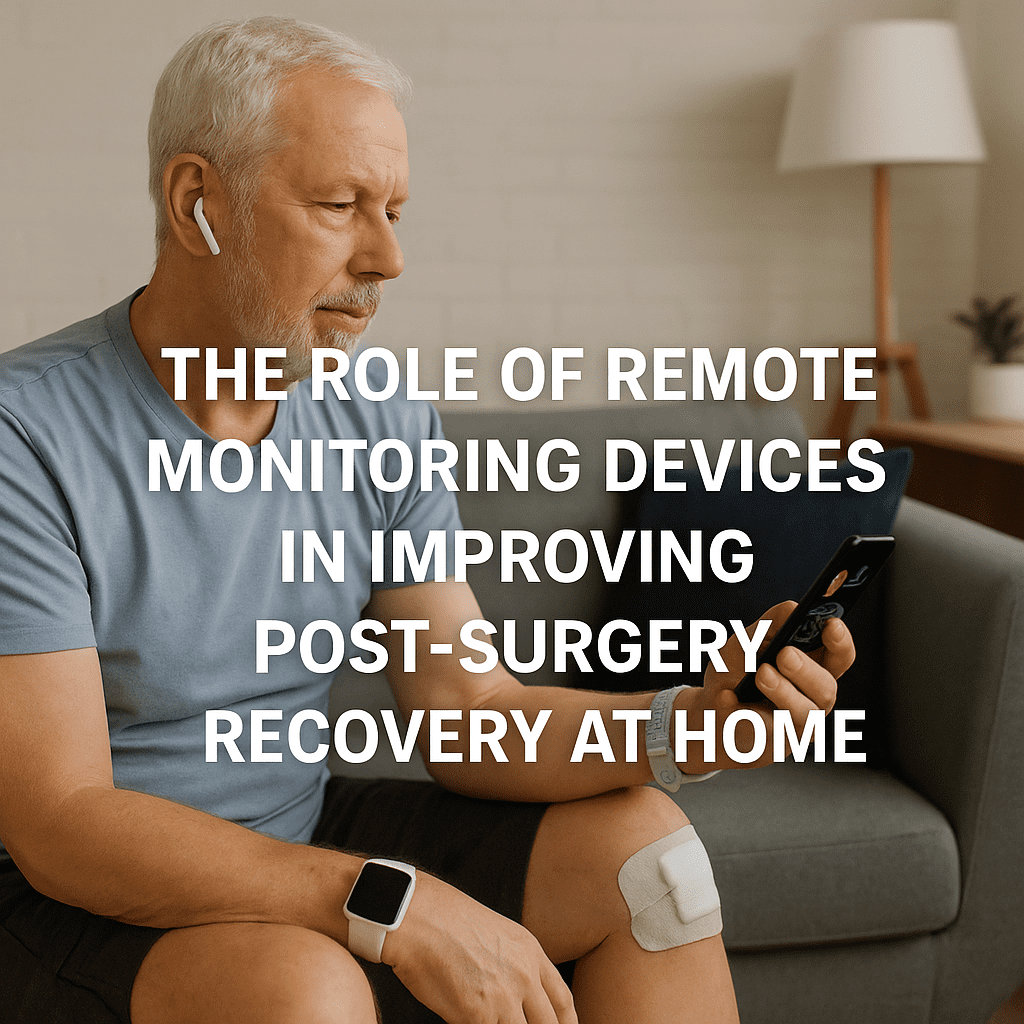
The Role of Remote Monitoring Devices in Improving Post-Surgery Recovery at Home
By SMPLSINNOVATION – Health Technology Consulting Experts With a Smile
1. Introduction
Imagine this: you just had surgery, you’re tired of hospital food, and can’t wait to get home to your favorite blanket and socks. But recovering at home isn’t just about relaxing and watching TV. It’s also a time when small problems can turn serious if they aren’t noticed early.
In the past, follow-ups after surgery usually meant a few phone calls and one or two doctor visits weeks later. That means doctors often wouldn’t know if something went wrong right away. But in a world where even our fridges can send us reminders, shouldn’t your doctor get an alert if your wound starts to show signs of infection?
That’s where Remote Patient Monitoring (RPM) devices come in. These smart tools help doctors keep an eye on you from far away. They make healing safer, faster, and less stressful.
At SMPLSINNOVATION, we believe in turning advanced health technology into comfort and better results for real people. Let’s look at how remote monitoring is changing recovery at home in 2024.
2. The Current Landscape of Post-Surgery Recovery
Even with a great surgeon, most recovery challenges happen after you leave the hospital.
Common Problems
1. Delayed detection. Patients might not notice redness or fever until the infection has already started.
2. Communication gaps. Getting in touch with a doctor after surgery can be tough and slow.
3. Limited data. Without continuous updates, doctors make choices based on only part of the picture.
Current Research
Studies in 2024 show:
– About 20% of patients are readmitted within 30 days after surgery, often for problems that could be prevented.
– Hospitals using RPM saw a 35% drop in readmissions.
– Around 80% of patients said they preferred to recover at home if they could stay connected to their care team.
Why Patients Like Digital Support
People today enjoy using technology to track their health. Remote devices help them feel safe and cared for without going back to the hospital.
3. What Are Remote Monitoring Devices?
Remote Patient Monitoring (RPM) devices let your doctor check how you’re doing using sensors and apps that share your health information in real time.
Main Parts of an RPM System
1. Sensors that measure things like heart rate, blood pressure, oxygen levels, and temperature.
2. Wireless connections that send data safely to your healthcare team.
3. Dashboards that help doctors understand your progress.
4. Connections to your medical record.
5. Alerts that warn doctors if something unusual appears.
New Innovations (2023–2024)
1. Cameras with artificial intelligence that spot early signs of infection.
2. Smart bandages that track wound healing.
3. Connected pulse meters that show oxygen and heart information.
4. Smart socks that alert patients to fall risks.
5. Continuous temperature patches that detect early fevers.
6. Wearable heart monitors that work for days at a time.
7. Digital inhalers that remind patients to take medicine.
8. Bluetooth scales that track body fluid levels.
9. Chatbots that give 24/7 support.
10. Home hubs that connect all the devices together in one place.
4. How RPM Improves Post-Surgical Care
Here are ten ways RPM helps patients recover.
1. Finds infection early with constant tracking.
2. Watches vital signs like heart rate and blood pressure all the time.
3. Uses smart cameras to find wound problems fast.
4. Adjusts recovery exercises based on your progress.
5. Sends reminders to take medicine on time.
6. Gives quick access to medical advice through messages or video calls.
7. Lets patients see their own healing progress.
8. Reduces trips to the emergency room.
9. Builds confidence and helps people feel in control.
10. Helps doctors learn from data and improve surgeries in the future.
5. Examples of Remote Monitoring Devices Used After Surgery
Here are real tools being used today:
1. Wearable patches that track heart rate and movement.
2. Smart wound dressings that notice infection early.
3. Bluetooth blood pressure monitors for heart patients.
4. Smart glucose monitors to manage blood sugar.
5. Digital scales that check for fluid buildup.
6. Temperature patches that spot early fevers.
7. Mobile apps that show progress charts.
8. Telehealth systems that bring all the data together.
9. AI wound imaging that checks healing color and texture.
10. Home hubs that link patients and nurses easily.
6. Evidence from Recent Studies (2024)
Research results from 2024 are very positive.
Health Outcomes
– 35 to 40% fewer infections that lead to hospital readmissions.
– Faster recovery times by about a week.
– Better movement and activity scores for patients after surgery.
Cost Savings
– Hospitals saved between $1,000 and $3,000 for each patient.
– Health insurance companies now pay more often for RPM.
– Many hospitals see a return on investment within two years.
Patient Experiences
– 90% of patients felt safer at home.
– 82% were more motivated to follow their recovery plans.
– 76% said using these devices made recovery less stressful.
7. Challenges and Ethical Considerations
There are still a few challenges to solve:
1. Keeping patient data private and secure.
2. Making sure all devices work well together.
3. Poor internet in rural areas.
4. Managing too many devices can feel tiring.
5. Doctors getting too many alerts.
6. Some patients can’t afford the devices.
7. New rules and approvals take time.
8. Some older or low-income patients struggle with new technology.
9. Accuracy can vary between devices.
10. Making sure AI tools are fair and checked by real people.
Most of these problems are being solved through better design, education, and strong teamwork. SMPLSINNOVATION continues to help hospitals and clinics make this process easier.
8. The Future of Post-Surgical Remote Monitoring
The future looks bright. Soon, we’ll see:
– Smart systems that can predict problems before they happen.
– Tools that use augmented reality to train nurses remotely.
– Robots and wearable sensors that guide physical recovery.
– Better insurance options that make RPM more affordable.
– Tiny invisible sensors built into clothes or furniture.
Healing at home is becoming smarter, simpler, and more comfortable than ever before.