The Rise of AI in Personal Healthcare: Revolutionizing Patient Monitoring
By SMPLSINNOVATION Health Technology Consulting
I. Introduction: The Dawn of Intelligent Healthcare
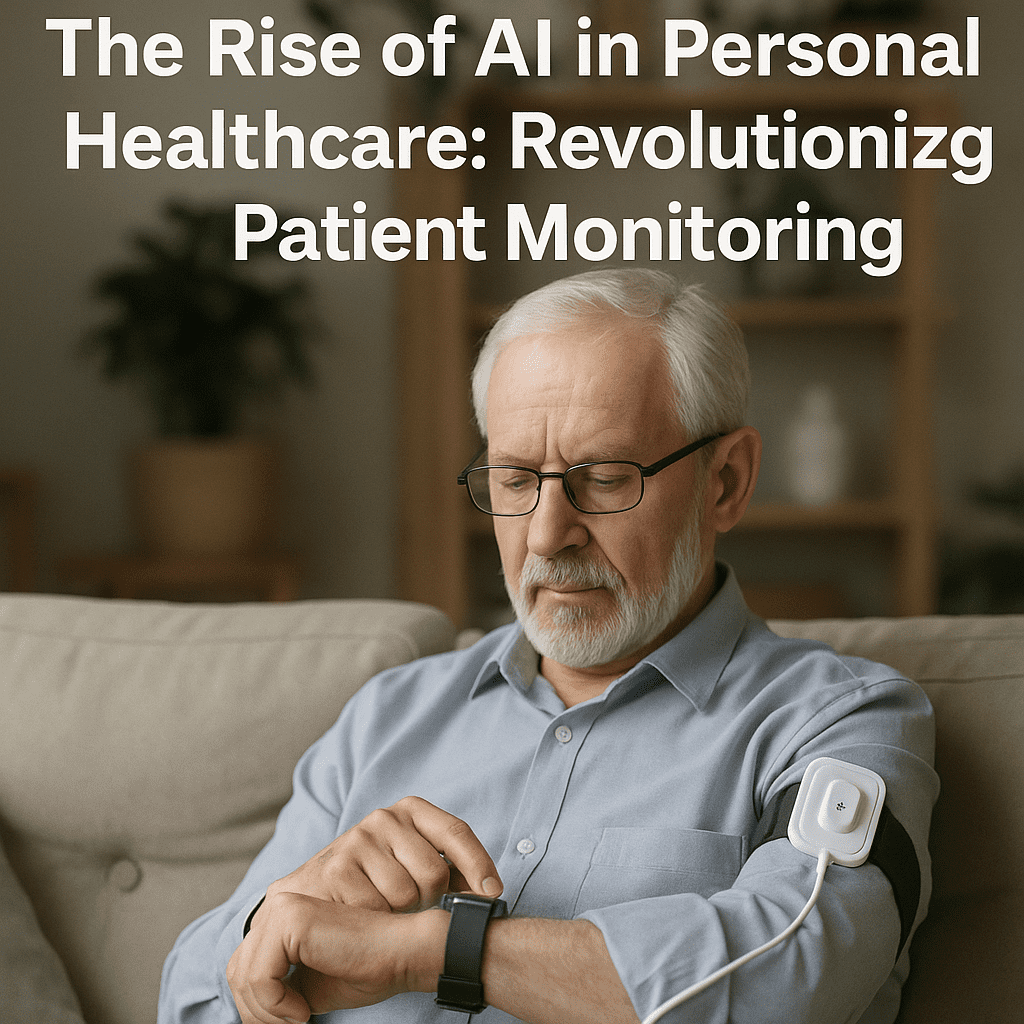
Imagine your smartwatch caring about your health as much as your favorite barista knows your coffee order. That’s not a dream—it’s today’s reality. Artificial intelligence (AI) has become a personal health helper, changing how people and doctors understand, manage, and even predict health needs.
According to the McKinsey Health Institute (March 4, 2024), more than 45% of adults in the U.S. with chronic conditions now use remote patient monitoring (RPM) and AI-powered wearables—an increase since 2021. The global AI-in-healthcare market is expected to pass $200 billion by 2030, making it one of the fastest-growing areas in digital health.
But this isn’t just about cool gadgets. It’s about being precise (finding the right health information at the right time), personal (fitting care to each person’s habits), and preventive (catching problems before they happen). AI is helping health care become not only smarter but also more caring.
II. The Evolution of Personal Healthcare Monitoring
Before AI, healthcare was reactive. You got sick, you went to the doctor. You got better, you stopped going. Continuous tracking of health mostly happened in hospitals.
A. From Periodic Visits to Continuous Monitoring
In the past, doctors only saw pieces of your health—like a blood pressure number here or a lab result there. Now, sensors and AI models can watch your health all day, helping to catch small problems before they become big ones.
B. Technological Shifts Enabling Change
Three big advances made this possible:
1. Cloud-Based Health Data Management – Safe online storage that connects devices and medical records.
2. Smaller, Smarter Sensors – Wearable biosensors can now track up to 20 health signs at once.
3. Federated Learning – AI can learn from data while keeping it private and secure.
C. 2024 Trends Taking Center Stage
Recent studies show three main trends:
1. Mixing many kinds of data, like heart rate, genes, and lifestyle, for a full picture of health.
2. Predicting health events, like heart issues, days or weeks in advance.
3. Turning wearables into health partners that give real-time advice on diet, exercise, and stress.
III. Top AI Applications in Patient Monitoring in 2024
AI is changing the way doctors and patients work together. Here are 12 major examples:
1. Smartwatches that detect heart rhythm problems accurately.
2. Glucose monitors that warn about low blood sugar early.
3. Sleep trackers that study sleep patterns for better rest.
4. Medicine reminders that learn your habits.
5. Phones that analyze coughs and voices to check lung health.
6. AI that reads facial expressions to understand pain or mood.
7. Language tools that track early signs of memory decline.
8. Smart patches that monitor hydration and electrolytes.
9. Digital twin models that test treatments on virtual versions of your body.
10. Automated systems that help prioritize who needs care first.
11. Fertility trackers that use temperature and hormone data.
12. Mental health dashboards that predict stress or depression.
Each tool helps make care more personal, preventive, and participatory—patients become active partners in their health.
IV. Infrastructure Supporting AI-Enhanced Monitoring
Behind every smart device is strong technology support.
1. Data and Connectivity
AI needs fast and reliable data. With 5G and edge computing, wearables can process information instantly and alert you in real time.
2. Interoperability and Secure Cloud Integration
Health data once existed in disconnected systems. Now, shared standards let different tools work together safely. AI systems can now combine information from hospitals, labs, and wearables while protecting privacy.
3. Federated and Explainable AI
Federated AI keeps data secure where it belongs, and explainable AI helps doctors understand how and why the system makes its recommendations.
V. Benefits Driving Adoption
For Patients:
1. Personalized advice for better health choices.
2. Alerts before problems happen.
3. Guidance and education through AI coaching.
4. Added safety for seniors and people with long-term conditions.
For Clinicians:
1. Smarter triage and fewer unnecessary alerts.
2. Better, faster diagnoses.
3. More time to connect with patients.
For Health Systems:
1. Fewer hospital readmissions.
2. Stronger management of chronic diseases.
3. Smarter use of resources.
4. More data for research and planning.
VI. The Challenges
AI healthcare has great promise, but also hurdles:
1. Protecting data privacy.
2. Avoiding bias in AI training.
3. Making sure systems are tested and trusted.
4. Connecting with older hospital systems.
5. Building patient trust and understanding.
6. Keeping up with rules and standards.
7. Guarding against cyber threats.
8. Training staff to use new tools.
9. Managing the cost of adoption.
10. Creating eco-friendly, low-power devices.
VII. The Road Ahead: A Healthier, Smarter Future
According to the World Economic Forum and Stat News, the next five years will take AI beyond monitoring to helping doctors make decisions. AI will never replace doctors, but it will free them from some routine work so they can focus more on people. At the same time, patients will play a bigger part in their care through devices that can “listen, learn, and adapt.”
VIII. Conclusion: The SMPLSINNOVATION Perspective
At SMPLSINNOVATION, we believe the mix of human insight and AI power is the most exciting step in healthcare yet. AI-driven monitoring gives people better access to health knowledge, helping to bridge gaps in geography, cost, and attention span. It’s a new era of connected care—smarter, safer, and more human.