The Impact of AI on Home Healthcare: Revolutionizing Patient Monitoring
By SMPLSINNOVATION — where health meets happy innovation!
I. Introduction
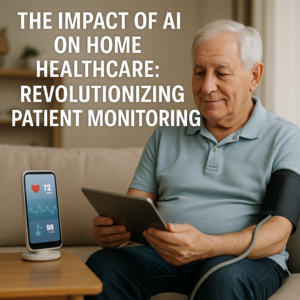
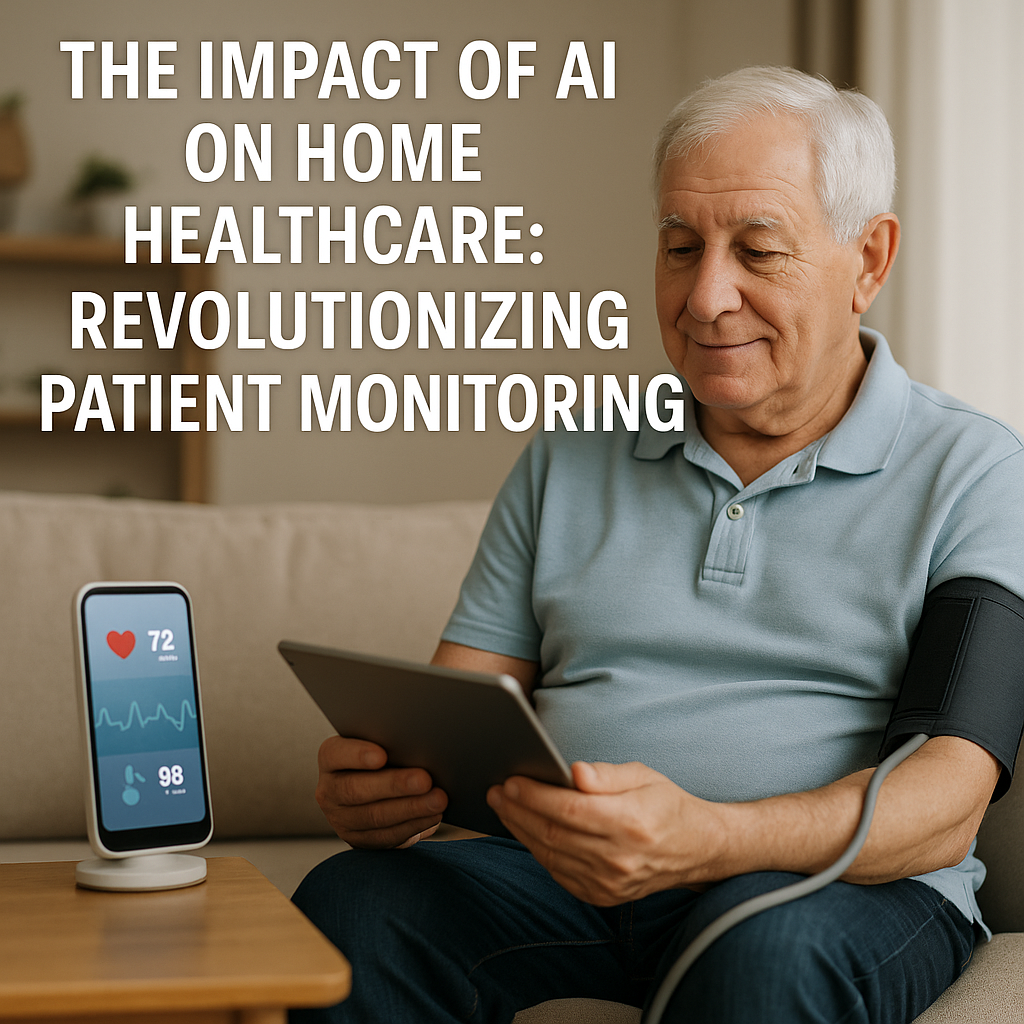
If you think smart fridges are cool, wait until you hear what artificial intelligence, or AI, is doing for home healthcare. From checking heart rhythms to spotting health problems before breakfast, AI has become a friendly helper that keeps millions of people healthier at home.
Home healthcare means getting medical care and support at home instead of at the hospital. It’s becoming one of the fastest-growing parts of medicine, and it’s easy to see why. For patients, it means comfort and convenience. For doctors and nurses, it offers better information and smart tools to help with care.
Since the COVID-19 pandemic, remote care has become normal. Tools like remote patient monitoring, or RPM, are now used by nearly 60% of people with long-term health conditions in the U.S. Experts believe the global home health market could grow to more than 190 billion dollars by 2026, thanks to digital tools and AI.
In short, AI isn’t just knocking on our doors — it’s already moved in, ready to help.
II. The State of Home Healthcare Technology in 2024
Home healthcare technology in 2024 feels like something from a science-fiction story, but it’s very real and safe. Let’s look at what’s happening.
Main Trends in Home Healthcare Technology:
1. Smart wearables and sensors like glucose monitors and heart patches now work with AI apps to send personal alerts.
2. Telemedicine visits now include full services with tests, data tracking, and online therapy.
3. Smart home systems like Alexa Health and Apple HealthKit help manage devices and schedules.
4. AI can use voice and image recognition to spot speech or movement changes that may show illness or fatigue.
5. Health apps for long-term conditions bring together data for things like diabetes, high blood pressure, and heart disease.
6. Edge computing keeps health data safe and fast by processing it on local devices.
7. New sharing tools make it easier for doctors to exchange information securely.
8. Portable tools like digital stethoscopes and home test kits help make care more accurate.
9. AI now validates digital health signs, improving how we measure health at home.
10. AI helps doctors make better decisions and care plans for remote patients.
Regulation and Reimbursement
As of early 2024, rules from CMS and the FDA are becoming clearer. CMS has added more coverage for remote monitoring, and the FDA has updated its digital health rules to make AI tools safer and more understandable. This makes it easier for new ideas to reach patients faster.
III. How AI Is Changing Patient Monitoring at Home
Think of AI as the perfect helper for both patients and doctors. It doesn’t need coffee or sleep — just data — and it’s making home monitoring smarter than ever before.
1. AI-Powered Wearables and Sensors
Modern wearables can do much more than count steps. They can:
– Watch over heart and blood sugar levels all the time.
– Predict health problems before they get serious.
– Link to smart home devices for smooth data sharing.
– Notice small changes in sleep or mood before symptoms show.
– Share easy-to-read reports with doctors and families.
– Detect falls or signs of memory decline.
– Help with movement aids like prosthetics.
– Track if medicine is taken on time.
– Automatically adjust personal care plans.
– Let families share and see progress together.
2. Remote Patient Monitoring with Machine Learning
Remote patient monitoring systems today are like smart assistants for doctors. They can:
– Alert doctors early when someone’s health is getting worse.
– Cut down on false alarms so patients feel less stress.
– Combine data from different devices for a full health picture.
– Highlight patients who need quick help.
– Use AI chatbots to guide patients with devices or care steps.
– Track how well patients follow their treatment plans.
– Connect with pharmacies for auto refills.
– Share updates directly into health record systems.
– Check emotions and mental well-being.
– Keep patients motivated with fun challenges and rewards.
3. Personalized Health Insights and Predictions
Before, care was the same for everyone. Now AI makes it personal. It can:
– Create plans made just for each person.
– Help prevent hospital visits before problems get serious.
– Suggest when patients should rest or move more.
– Give food advice that fits each person’s needs.
– Combine genetics and history for precision care.
– Adapt tone and style when talking to patients.
– Estimate risk levels for people with more than one condition.
– Adjust advice based on lifestyle and environment.
– Give easy-to-read reports for doctors.
– Studies show AI home monitoring can cut hospital readmissions by about 25%.
4. Connecting with Electronic Health Records
AI is saving doctors from paperwork. It can:
– Write visit notes using language tools.
– Organize and tag health events automatically.
– Keep data safe under new privacy rules.
– Link everything securely to cloud systems.
– Alert providers when readings are critical.
– Keep proper records for reviews.
– Merge data across different record systems.
– Remove repeated or incorrect patient records.
– Create automatic referrals based on symptoms.
– Verify identities through wearable devices.
IV. Key AI Innovations in 2024
Here are the top 10 exciting AI tools changing home healthcare:
1. Edge AI gives real-time health checks without needing the internet.
2. Federated learning keeps patient data private while training smarter AI.
3. Digital biomarkers make health tracking more accurate.
4. Voice-based care assistants remind patients about medicine and offer support.
5. AI tools track if medicines are taken using cameras or smart packs.
6. Energy-saving AI chips make wearables last longer.
7. AI-based imaging allows at-home scans and clearer pictures.
8. Generative AI helps create fun, easy-to-understand learning materials.
9. Multimodal AI combines sound, text, and visuals for better health insights.
10. Smart home hubs with AI can manage calls, health data, and checkups from the living room.
Each one brings us closer to smarter, more caring healthcare — something SMPLSINNOVATION is proud to help build.
V. Benefits for Patients and Providers
When AI and home healthcare work together, everyone benefits.
Patient Benefits:
1. 24-hour health tracking for peace of mind.
2. Early warning signs for faster treatment.
3. More independence for seniors and people with long-term conditions.
4. Comfort and care from home.
5. Personalized plans that change with each person’s needs.
Provider Benefits:
1. Less paperwork for doctors and nurses.
2. Better accuracy in diagnosing and treating.
3. Improved public health insights from shared data.
4. Fewer hospital readmissions and lower care costs.
AI is making home healthcare smarter, safer, and more personal for everyone.