Remote Patient Monitoring in Home Care: Helping People Manage Chronic Diseases with Smart Devices
By SMPLSINNOVATION
Date: April 6, 2024
Introduction
Have you ever had your smartwatch remind you to stand up, or your phone tell you to drink more water? Welcome to the world of connected care. Today, our devices help us stay healthy in ways that once sounded like science fiction.
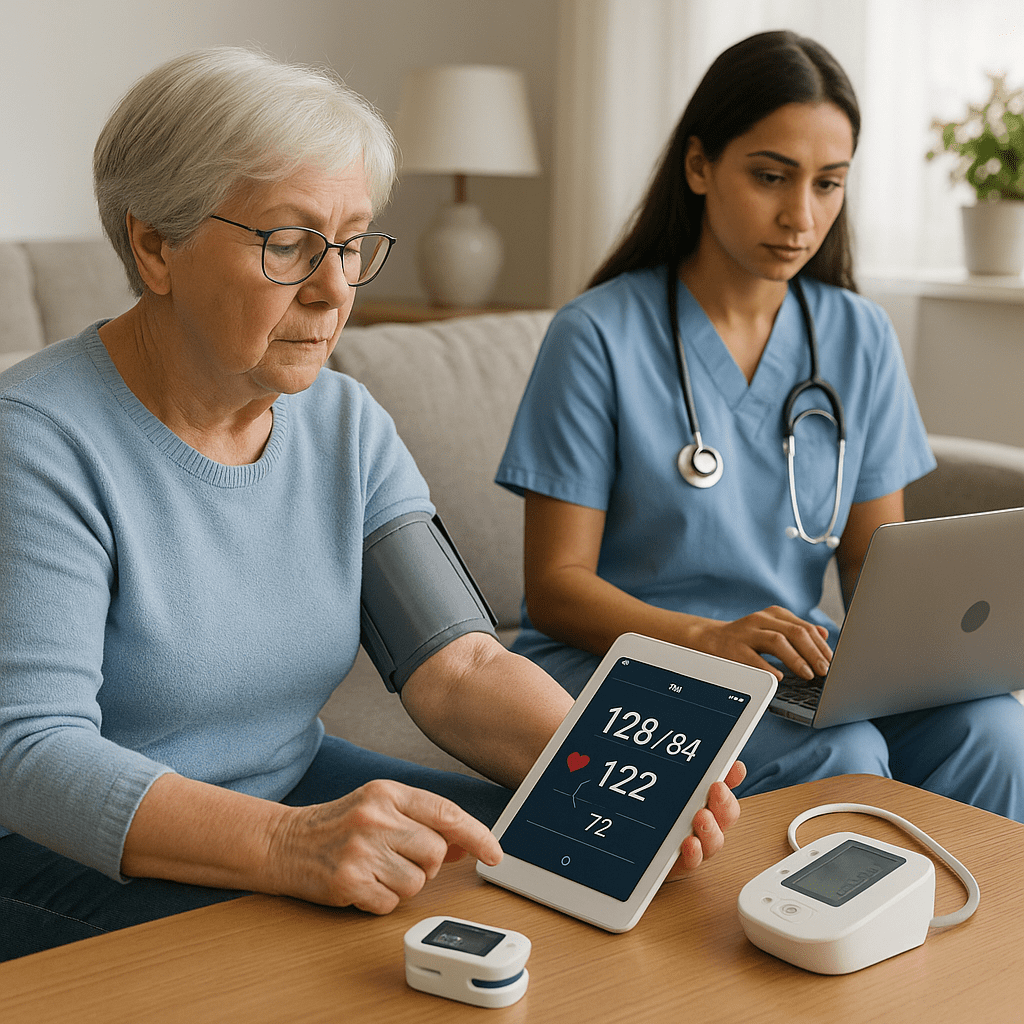
Remote Patient Monitoring, or RPM, has moved from being an idea to something many people use every day. Since the pandemic, more people and hospitals have turned to it to help manage long-term illnesses without always needing to visit a clinic. RPM collects health data from people at home so doctors can keep track of their patients safely and easily.
Studies show that RPM use has grown by more than half since 2020. The United States is leading this change, while Europe and Asia-Pacific are quickly following with new programs that help pay for and support these systems.
RPM isn’t just a passing trend. It’s becoming a key way to care for patients with chronic diseases—giving them constant support, real-time data, and peace of mind, all from the comfort of their homes.
The Current State of Remote Patient Monitoring in 2024
In 2024, remote monitoring has become part of everyday healthcare. Reports show that more than 70% of large U.S. health systems use RPM, and countries like Germany, Japan, and Singapore are catching on.
United States: New payment options now help cover the costs of monitoring several conditions at once.
European Union: New rules require that devices share data safely across systems.
Asia-Pacific: Government programs are improving internet access in rural areas, helping more people use connected devices.
Three main things are helping RPM grow:
1. Better internet access for people in rural and remote areas.
2. Smarter data systems that warn doctors before a health crisis happens.
3. Devices that easily connect and share information together.
Connected Devices Changing Care at Home
Home care today is powered by smart technology. Instead of basic tools like thermometers, we now have devices that send real-time updates to doctors. These tools are helping patients manage diseases more effectively.
Here are the top connected devices used today:
1. Continuous glucose monitors for people with diabetes.
2. Cuffless blood pressure monitors.
3. Wearable ECG patches that track heart rhythms.
4. Smart inhalers for asthma or lung disease.
5. Pulse oximeters that check oxygen levels.
6. Bluetooth weight scales for managing weight and heart failure.
7. Smart pill dispensers that remind patients to take medicine.
8. Sleep trackers that check for sleep apnea.
9. Digital thermometers that connect to health apps.
10. Smart wound sensors that help with recovery and healing.
New devices released in 2024 include systems that can connect multiple medical devices at once, wearable heart patches that use artificial intelligence, and non-invasive glucose monitors that actually work well. All new devices also meet the latest safety standards to keep personal data private.
How RPM Improves Care for Chronic Diseases
RPM is not just about cool gadgets—it’s about better health and easier communication between patients and doctors.
The main benefits include:
1. Fewer hospital visits and readmissions.
2. Early warnings before health problems get serious.
3. Quick and accurate treatment changes.
4. More patient involvement and understanding.
5. Fewer missed or forgotten medications.
6. Easier and faster sharing of data.
7. Keeping track of multiple conditions at once.
8. Giving families better insight and support.
9. Lower healthcare costs.
10. More efficient doctors with less paperwork.
Conditions that benefit the most include diabetes, heart failure, COPD, high blood pressure, and recovery from stroke or Parkinson’s disease. In some studies, RPM has reduced hospital readmissions for heart failure by more than one-third and cut asthma and COPD emergencies in half.
Challenges and Barriers
Even though RPM offers many benefits, it also faces a few tough challenges.
1. Devices from different companies sometimes don’t work well together.
2. Doctors can feel overwhelmed by too much incoming data.
3. Keeping data safe from hackers is a constant concern.
4. Some patients are not comfortable using technology.
5. The setup costs for devices and training can be high.
6. Smaller clinics struggle to see financial benefits right away.
7. Low-cost devices can give inaccurate results.
8. Privacy and consent rules are sometimes confusing.
9. Payment rules can differ by country or insurance provider.
10. Some doctors resist changing how they work.
Still, things are improving. New policies and smarter systems are solving many of these issues.
The Future of Remote Patient Monitoring
The next step in RPM will be even more connected and intelligent. By 2025, we can expect three big changes:
1. Smarter alerts that predict problems days before they happen.
2. Voice assistants that help with care at home.
3. Global standards that let devices from anywhere work together smoothly.
Homes are quickly turning into command centers for good health, with technology powering everyday care.
Conclusion
Remote Patient Monitoring is changing where and how care happens. People can now manage their health at home with tools that keep them connected to doctors and loved ones. With real-time data and personalized support, healthcare is becoming more proactive, more personal, and easier for everyone.
SMPLSINNOVATION