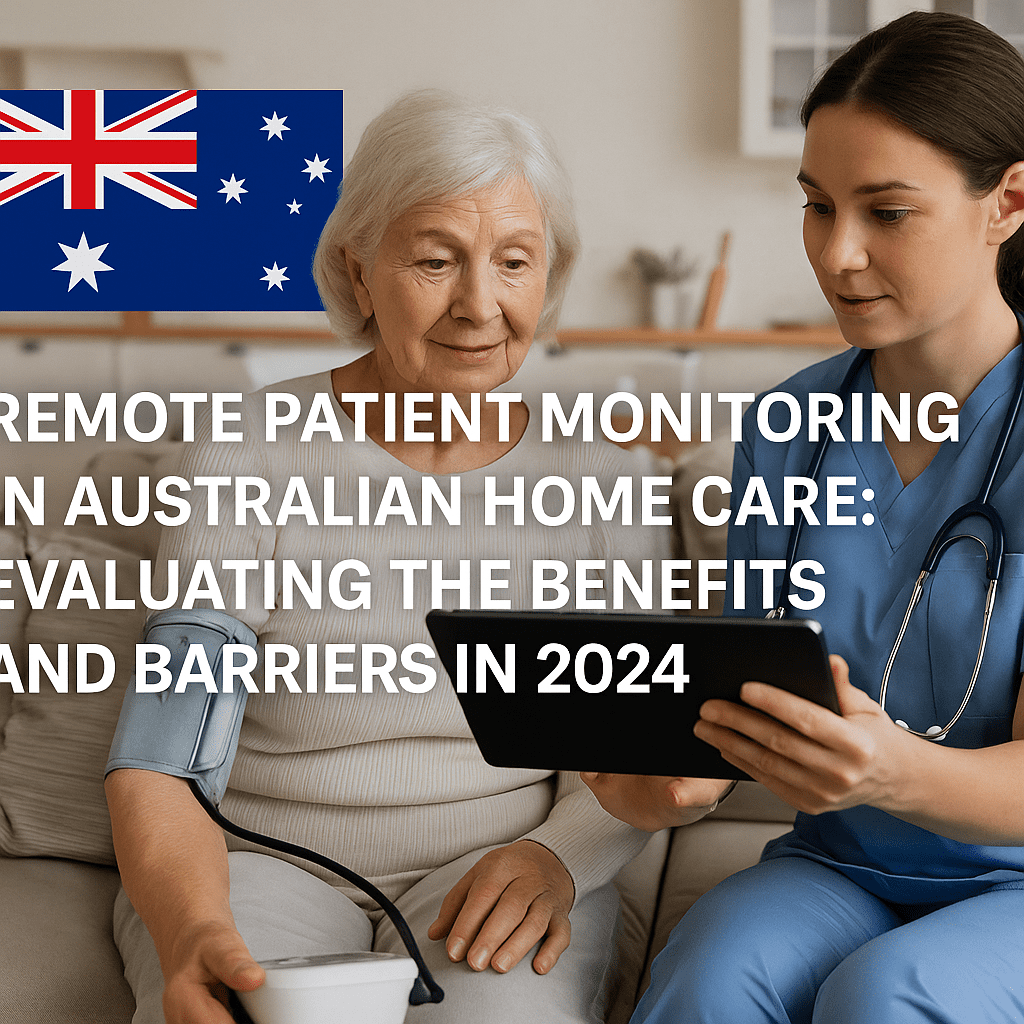
Remote Patient Monitoring in Australian Home Care: Evaluating the Benefits and Barriers in 2024
By SMPLSINNOVATION, Health Technology Consulting | Published April 2024
1. Introduction
If you have ever tried to book an appointment with your doctor and were told “the next available time is two weeks away,” you can understand why remote patient monitoring, or RPM, has become so popular in Australia in 2024.
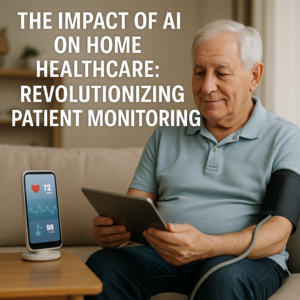
RPM uses digital tools like wearable devices, smart sensors, and health apps to collect health data from people’s homes and send it to doctors in real time. It is like getting a check-up without leaving your couch or worrying about parking at the clinic.
Australia’s digital health system is growing quickly, with big pushes from the Australian Digital Health Agency, the Department of Health and Aged Care, and CSIRO’s Digital Health Mission. After years of progress, 2024 looks like the year RPM truly takes off, helped by changes in policy, technology, and culture.
At SMPLSINNOVATION, we want to make complex health technology easier to understand and use, turning digital tools into real improvements in care and quality of life. Let’s explore how RPM is changing home care in Australia, what’s driving its growth, and what challenges still need to be solved.
2. The Current State of Remote Patient Monitoring in Australia (as of 2024)
Reports from the Australian Digital Health Agency and CSIRO show that the use of RPM in home care almost doubled between 2022 and 2024. Around 18% of home care providers used RPM two years ago, and now about 34% include it as a standard service.
Some examples from different states include:
– New South Wales: Remote care hubs support people with chronic diseases using Internet of Things wearables.
– Victoria: State-funded trials help heart patients go home from hospital earlier with RPM support.
– Queensland: Rural health networks work with telehealth companies to help monitor conditions like COPD and diabetes.
– Western Australia and the Northern Territory: Projects focus on improving care for Indigenous communities in remote areas.
Private companies are also moving fast. Telehealth providers like Teladoc Health, ResApp (now part of Pfizer), and new Australian startups are helping more people use digital health tools than ever before.
In 2022 and 2023, RPM was still in the testing phase. Now in 2024, it has improved systems, better safety, and stronger links to national health data networks.
3. Key Drivers of RPM Growth in 2024
RPM’s rise is no accident. Many factors are helping it grow in Australian home care. Here are the top ten:
1. New Medicare funding makes remote monitoring easier to pay for.
2. Government programs reward aged care providers who use digital tools.
3. Affordable smart devices like wearables and home health kits are widely available.
4. Faster internet thanks to recent NBN upgrades helps rural areas connect.
5. My Health Record links make it easier to share RPM data across the system.
6. Chronic illnesses like heart disease and diabetes are increasing, creating more need for home monitoring.
7. People got used to telehealth during the pandemic and still prefer it.
8. Artificial intelligence helps spot warning signs before problems get serious.
9. Doctors and nurses are more confident with digital care tools.
10. Australians want more control and independence in managing their health.
RPM has become the health version of remote work — once optional, now essential.
4. Key Benefits of RPM in Home Care
RPM offers strong benefits for patients, families, and the whole health system. Here are ten of the biggest advantages:
1. Early detection of health changes helps prevent emergencies.
2. Fewer hospital stays thanks to quick intervention when issues arise.
3. Helpful reminders improve medication routines.
4. Patients get more involved by tracking their own data.
5. Shared health data keeps all care providers on the same page.
6. Family members feel more confident and informed about loved ones’ health.
7. Doctors can make real-time decisions instead of waiting for the next visit.
8. Clinicians can care for more patients efficiently without losing quality.
9. People in remote areas get the same level of care as those in cities.
10. Fewer hospital visits mean lower costs for everyone.
As the CSIRO says, RPM makes care more sustainable and supports a healthier country.
5. Barriers and Challenges in 2024
Even with all its promise, RPM still faces some tricky challenges before everyone can benefit from it. Here are ten of the biggest ones:
1. Keeping patient data safe is still a major concern.
2. Many systems cannot easily share information with others.
3. Some older people find the technology hard to use.
4. Many devices cost too much without subsidies.
5. Too many alerts can overwhelm doctors and nurses.
6. Complex regulations make it hard for small providers to keep up.
7. Different data formats create problems with consistency.
8. Internet connections are still weak in some remote areas.
9. Funding is not always long term, with some programs ending after trials.
10. Some staff resist change and prefer traditional care methods.
Fixing these problems will take teamwork between government, industry, and healthcare providers — along with time and patience.
6. The Road Ahead: Opportunities for 2024 and Beyond
Despite the challenges, RPM is clearly becoming a regular part of care for chronic and aged care patients. Some new trends we can expect include:
– Artificial intelligence tools that help doctors handle data and spot urgent cases.
– New forms of remote monitoring that include behavior and rehabilitation tracking.
– Cloud systems that make it easier for different health services to share data securely.
– Inclusion of RPM in official aged care standards and home care programs.
– “Green health tech” that reduces travel and energy use for a more sustainable system.
For health providers, the next step is choosing the right partners and technology to integrate these tools smoothly.
7. Conclusion: Making RPM Simple, Smart, and SMPL
As digital care becomes part of everyday life, remote patient monitoring is changing what it means to see the doctor. The tools are ready, the health system is adapting, and patients are open to new ways of getting care.
At SMPLSINNOVATION, we believe success in digital health means more than just using smart devices — it means building trust, keeping things simple, and always focusing on people. Installing new technology is easy, but building confidence and connection takes care and understanding.
Whether you are a provider starting an RPM program or a policymaker planning the future of connected care, remember this: the goal is not just to collect more data, but to make better choices and create a healthier Australia.