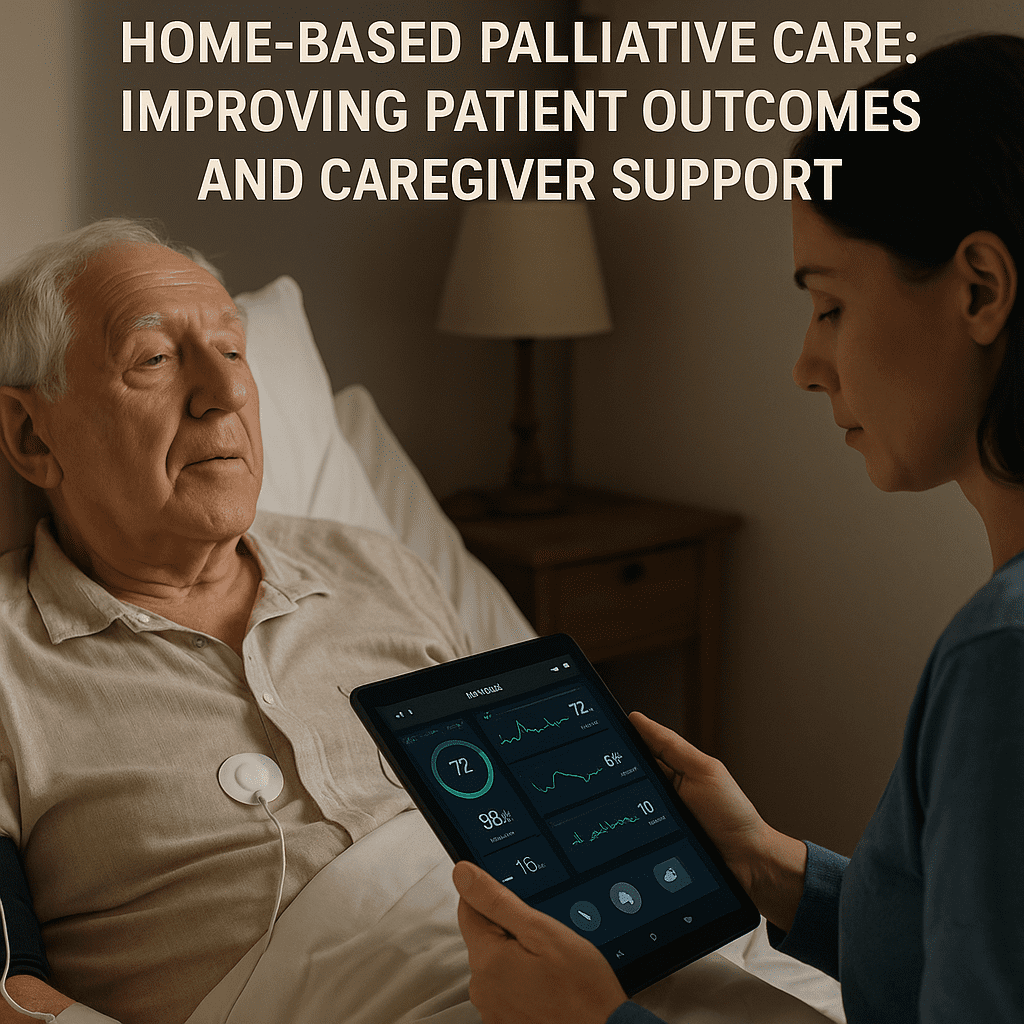
Remote Monitoring Technologies for Home-Based Palliative Care: Improving Patient Outcomes and Caregiver Support
Published by SMPLSINNOVATION (Health Technology Consulting) — May 26, 2024 Edition
I. Introduction
We live in a time when caring for very sick people at home doesn’t have to mean guessing or calling the doctor in the middle of the night. Remote monitoring (RM) technologies, like smart sensors, wearable trackers, and easy-to-use apps, are changing how we give care at home instead of in hospitals.
This change is important. More people live with serious illnesses, healthcare workers are busy, and many patients would rather stay home. The challenge is big, but the opportunities are even bigger.
The main idea is simple: RM technologies help patients feel better, manage symptoms sooner, and help caregivers feel more prepared. Technology can actually make care at home more personal, not less.
II. The Changing World of Palliative Care
Palliative care is moving fast and getting smarter. Based on recent reports from leading health journals, here’s what’s happening:
1. More home-based care teams are working together, including doctors, nurses, social workers, and tech experts.
2. Telehealth is here to stay, making it easier for patients to see doctors from home.
3. Data is helping doctors predict problems before they get worse.
4. New 2024 rules now pay for digital palliative monitoring.
5. Artificial intelligence helps sort symptom alerts and plan care.
6. Countries like the UK and Singapore are testing national RM programs.
7. Rural areas are getting better access to specialists through online tools.
8. Training now teaches both tech skills and empathy.
9. Patients are starting to own and manage their own health data.
10. Families are more involved through shared communication platforms.
All these changes are building a new kind of care — one that combines human kindness with smart technology.
III. Remote Monitoring Technologies in Palliative Care
RM tools turn a regular home into a safer and more responsive place for care. Here are 10 common examples:
1. Wearable sensors that track heart rate, oxygen, and movement.
2. Smart pill dispensers that remind people to take medicine and record missed doses.
3. Motion and fall sensors that send quick alerts if someone falls.
4. Simple digital diaries for logging pain or tiredness.
5. AI software that predicts health problems before they happen.
6. Systems that connect patient data to electronic health records.
7. Voice assistants that give gentle reminders to take medicine or drink water.
8. Video calls that let doctors see patients and guide caregivers.
9. Mobile apps where patients record symptoms quickly.
10. Secure chat tools that connect families and care teams.
These tools help patients and families without replacing the personal care that matters most.
IV. Proven Benefits
Recent studies show real results from using RM in palliative care:
1. Hospital visits went down by about 28%.
2. Early alerts helped doctors act within 1–2 days if symptoms worsened.
3. Over 85% of patients said they felt more in control of their care.
4. Caregivers felt less stress and slept better.
5. Teams communicated better with real-time information.
6. Care became more personal to each patient’s needs.
7. Clinicians saved two to four hours each week with automated tracking.
8. Some programs caught early signs of infection and dehydration.
9. Smart pill tools improved medicine use from 70% to 92%.
10. Families felt more at ease knowing care was being watched closely.
When technology helps organize care, everyone feels safer and more supported.
V. How RM Technologies Help Caregivers
Caregivers are the heart of home care. Technology can make their job a little easier and less stressful by:
1. Sending alerts that explain when to relax and when to act.
2. Giving learning tips based on symptom data.
3. Showing simple data charts that build confidence.
4. Letting several family members check on updates.
5. Allowing quick questions to doctors anytime.
6. Reducing the need for heavy lifting or travel.
7. Creating online support groups for caregivers.
8. Keeping automatic care logs instead of paper notes.
9. Warning families early if health is declining.
10. Helping caregivers find time to rest and recover.
At SMPLSINNOVATION, designing these systems is not just about gadgets — it’s about creating peace of mind through clear and caring communication.
VI. Challenges and Ethical Concerns
Of course, no technology is perfect. Here are some main issues experts are watching:
1. Some older adults find digital tools hard to use.
2. Privacy and consent must be handled carefully.
3. People can get tired of constant alerts and screens.
4. Internet problems can stop devices from working well.
5. Not everyone can afford new technology.
6. Some systems don’t work well together.
7. Predictive tools about end-of-life care must be used carefully.
8. Machines should never replace human compassion.
9. Paying for these services long-term is still a challenge.
10. Some healthcare workers are still unsure about using new tech.
As we say at SMPLSINNOVATION, “A smart tool is useless if it confuses people or causes stress.” Good design must always focus on people first.
VII. Looking Ahead
The future of palliative care will use even smarter tools. Some new ideas include:
1. Emotion-sensing technology that detects sadness or worry.
2. Chatbots that give comfort and simple education.
3. Wearables that track stress levels using body chemistry.
4. Virtual reality programs to calm pain and fear.
5. Flexible systems that adjust care as needs change.
6. Smart assistants that schedule nurse visits automatically.
7. Predictive tools that help families understand what might come next.
This future is not about replacing care — it’s about supporting it, making sure patients and families feel calm, connected, and cared for at every step.