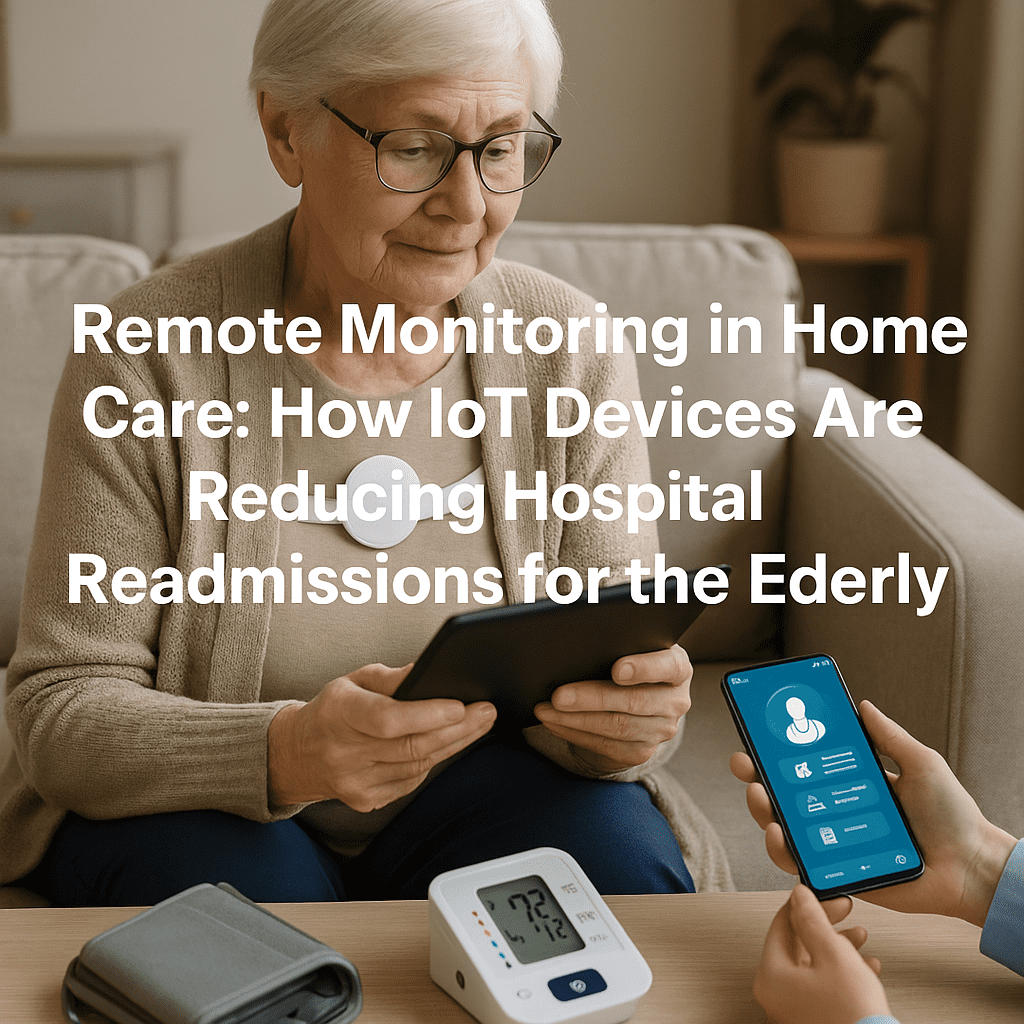
Remote Monitoring in Home Care: How Smart Devices Are Reducing Hospital Readmissions for Older Adults
By SMPLSINNOVATION
Published: February 2024
I. Introduction
There’s an old saying, “An ounce of prevention is worth a pound of cure.” If that’s true, then an ounce of remote monitoring might be worth even more for elderly care today.
As the world’s population gets older, health systems everywhere are feeling the pressure. Traditional home care—where a nurse or caregiver visits only once in a while—isn’t enough anymore. That’s where the Internet of Things, or IoT, comes in.
These small, connected devices work around the clock to collect health information and share it safely with doctors and caregivers. This helps spot problems early, keeps seniors safe at home, and lowers the chances of going back to the hospital.
II. Understanding Remote Monitoring and Its Role in Home Care
1. What Is Remote Monitoring?
Remote monitoring means collecting and sharing health information from patients at home through connected devices. It’s like having a smart fitness tracker—but made for senior care.
2. Main Goals
Every remote monitoring system focuses on three things:
– Patient Safety – Watching for warning signs before anything serious happens.
– Early Action – Noticing small changes in health before they become emergencies.
– Cost Savings – Fewer hospital stays mean saved time and money.
3. Remote Monitoring vs. Telehealth
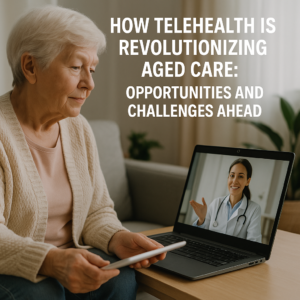
Telehealth is when patients talk directly with doctors, usually by video call. Remote Patient Monitoring, or RPM, keeps track of health data automatically through devices that send updates all day long.
4. How It Fits Into Daily Care
RPM devices share data with doctors and nurses right away. If something looks unusual, the care team gets a quick alert so they can check in before things get worse.
5. How Data Travels
The information flow is simple and safe:
Patient Device → Cloud System → Doctor’s Portal → Care Team Dashboard
III. The Current State of IoT in Elderly Home Care
By 2024, IoT in home care is no longer new—it’s already making a big difference.
1. Market Growth
Reports from medical journals show global spending on IoT healthcare has gone over $190 billion, with elder care tools making up about 22% of that.
2. Top Countries Leading the Way
– United States – Encouraged by value-based healthcare.
– Japan – High-tech culture and strong government support.
– Sweden – Uses IoT through national digital health plans.
3. Use in Senior Programs
Almost half of home care agencies in developed countries now use some kind of IoT tool, from smart blood pressure cuffs to full monitoring systems.
4. Challenges
– Poor Internet in some rural areas.
– Some seniors are shy about using new technology.
– Too much data can be hard for staff to manage without good software filters.
5. Support from Global Organizations
The World Health Organization’s 2024 Digital Health Report lists remote monitoring as a key part of its “Ageing in the Digital Era” plan.
IV. Top 10 IoT Devices Changing Elderly Home Care
1. Continuous Glucose Monitors – Tiny sensors that check blood sugar and send updates to phone apps.
2. Smart Medication Dispensers – Pillboxes that remind patients when it’s time for medicine.
3. Wearable ECG Monitors – Patches that track heart rhythm and warn of changes.
4. Fall Detection Sensors – Devices that sense sudden falls and alert caregivers.
5. Smart Blood Pressure Cuffs – Track blood pressure and share results with doctors automatically.
6. Connected Scales – Watch for weight changes linked to heart or kidney problems.
7. Smart Sleep Trackers – Measure sleep and breathing to help find sleep or breathing issues.
8. Movement Sensors – Notice activity changes that may signal illness or sadness.
9. Smart Bandages – Check wounds for early signs of infection.
10. Voice Assistants – Remind seniors about medicine and doctor visits and connect them to care when needed.
V. How IoT Devices Help Stop Repeat Hospital Visits
1. Real-Time Alerts – Devices send warnings right away when readings are off.
2. Spotting Symptoms Early – Small changes in data help stop bigger health problems later.
3. Managing Ongoing Conditions – Continuous tracking helps manage diabetes, lung disease, or heart failure.
4. Helping with Medication – Smart reminders make sure treatments stay on track.
5. Better Doctor Decisions – Data lets doctors personalize care quickly.
6. Fast Notifications – The right person gets the message when something’s wrong.
7. Predictive Tools – Smart systems find patients most at risk before problems happen.
8. Stronger Teamwork – Shared dashboards help hospitals and families work together.
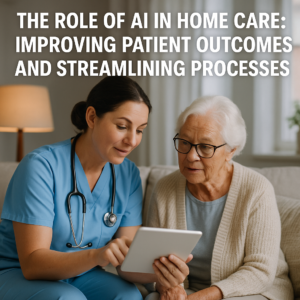
9. Smart Sorting – AI helps teams focus on real emergencies first.
10. Smooth Hospital-to-Home Care – Remote monitoring helps patients stay safe and confident after leaving the hospital.
VI. The SMPLSINNOVATION Perspective
At SMPLSINNOVATION, we think digital health should be simple and friendly. Our goal is to help care providers set up monitoring systems that are:
– Easy for seniors and caregivers to use
– Ready to grow with care networks
– Private and secure for every user
We believe every piece of data should be clear, useful, and humane—no confusion, no extra noise.
VII. What’s Next for IoT and Elderly Care
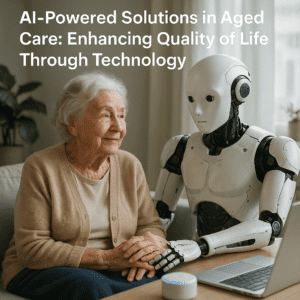
Soon, smaller sensors, smarter software, and friendly AI will make remote monitoring even smoother. Devices will blend into the home and talk naturally with patients—maybe even give cheerful updates like, “Good morning, your blood pressure looks great today!”
The future of elder care is smart, kind, and connected.