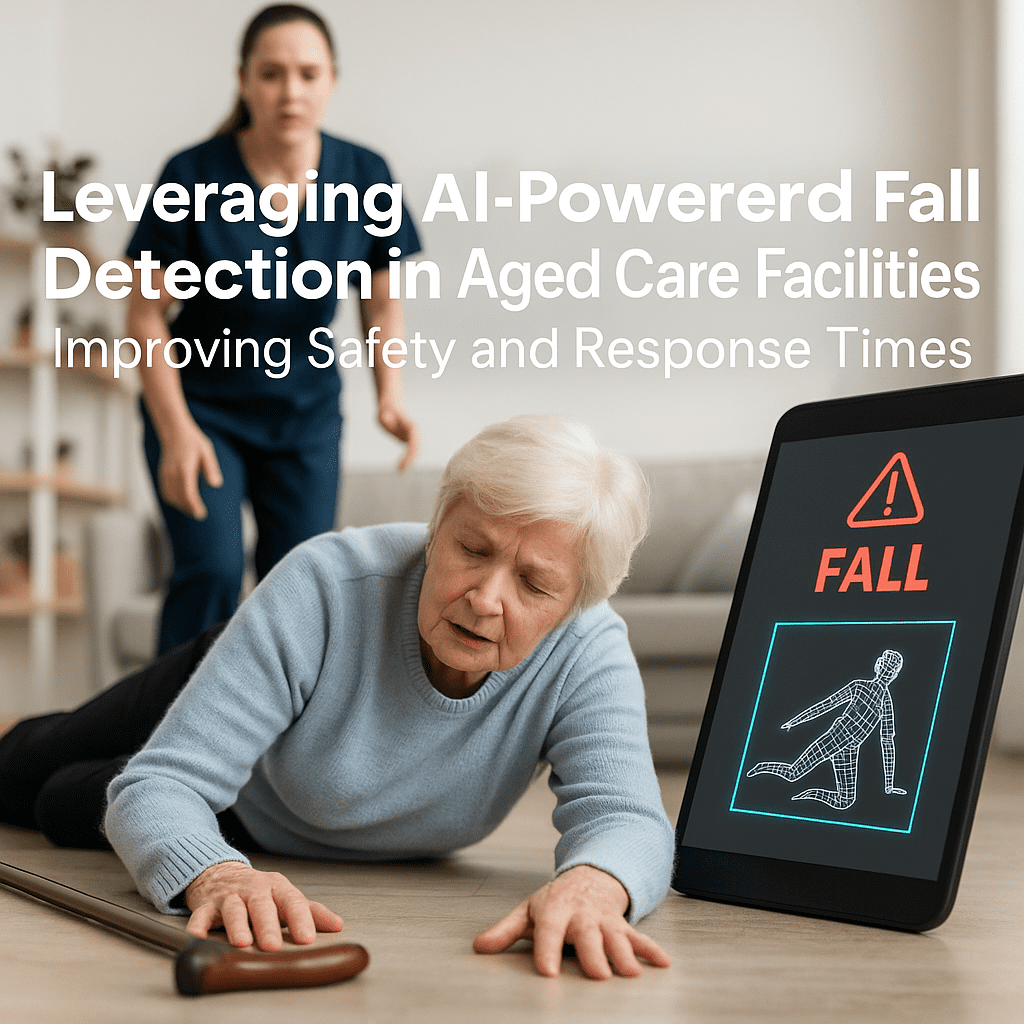
Leveraging AI-Powered Fall Detection in Aged Care Facilities: Improving Safety and Response Times
By SMPLSINNOVATION – Health Technology Consulting (where we make complicated healthcare tech feel simple, and sometimes even a little fun!)
Introduction
If you’ve ever been in an aged care home, you know that falls are not just small accidents. They are scary events that can change lives in seconds. Add in staff shortages, more residents needing care, and higher safety expectations, and it feels like a big storm of challenges.
This is where Artificial Intelligence, or AI, comes in. It’s no longer just for science labs. Today, AI is helping keep older people safe in real care facilities. In 2024, AI fall detection isn’t something far away—it’s something homes are ready to install now.
At SMPLSINNOVATION, we work with care providers who need simple and effective digital solutions they can actually use. For aged care homes, AI fall detection is a clear win. It helps keep residents safe while giving staff more time to focus on care.
The Problem: Falls in Aged Care
Falls are one of the biggest dangers for older adults. The World Health Organization says falls are the second leading cause of accidental deaths worldwide. The CDC says:
– 1 in 4 adults over age 65 falls each year.
– Every 11 seconds, an older adult is treated in the ER because of a fall.
– Every 19 minutes, an older adult dies after a fall.
The impact goes beyond injuries. Falls can cause lasting physical problems, lower confidence, and fear. This can lead to less independence and loneliness. Facilities also face higher costs and strain on staff. Families feel added worry and stress too.
How AI Fall Detection Works
AI fall detection may sound like science fiction, but it’s happening now. It combines sensors, smart algorithms, and strong connections to existing health systems.
Here are the main parts:
1. Sensors: Cameras with AI, wearable devices, or radar systems track movement and notice unusual patterns.
2. Machine learning: AI models learn from data and get better at spotting falls. With shared learning, facilities can improve the systems together while protecting private information.
3. System integration: Alerts connect to nurse call systems and electronic health records, so staff know right away and care teams can plan better.
Think of it like having a watchful helper who never takes a break and never misses a sign of trouble.
Benefits for Aged Care Homes
Why should facilities use AI fall detection? The list of benefits is long:
1. Residents stay safer with faster fall detection.
2. Response times improve—staff get alerts within seconds.
3. Staff time is used better, with fewer unnecessary room checks.
4. Nurse call systems connect directly with fall alerts.
5. Admin work is easier with automatic reports.
6. Care plans improve when tracking near falls and patterns.
7. Families feel peace of mind.
8. Data shows risk areas around the facility.
9. Facilities save money by preventing hospital visits.
10. Staff feel more supported and confident.
This technology changes care from reacting to emergencies into preventing problems before they happen.
Evidence From Research
Recent studies show that AI fall detection works:
– A clinical trial showed response times were cut by 40%.
– Shared AI models trained across facilities were more accurate and still kept data private.
– A European pilot project found staff felt less stressed and more supported with fewer false alarms.
This isn’t just theory—AI is already proving its value in real care homes.
Challenges and Barriers
No technology is perfect, and homes may face some challenges:
1. Costs for equipment and setup.
2. Poor Wi-Fi or unreliable networks.
3. Privacy and data rules to follow.
4. Staff need training to feel confident.
5. False alarms if systems are not adjusted right.
6. Older systems may be hard to connect with.
7. Different rules in different countries.
8. Residents or families may worry about cameras or privacy.
9. Sensors and software need upkeep.
10. Facility leaders need to commit budget and support.
At SMPLSINNOVATION, we help solve these issues with clear, simple plans. We make sure facilities get the benefits without the headaches.
The Role of SMPLSINNOVATION
So how do you actually make AI fall detection a reality? That’s our specialty. We help by:
– Checking the facility’s readiness.
– Helping choose the right vendor or system.
– Planning and managing installation and integration.
– Training staff to feel confident in using the technology.
– Tracking improvements and showing results to leadership.
We act as the guide for healthcare facilities, helping them avoid mistakes and move forward smoothly.
Looking Beyond Fall Detection
Fall detection is exciting, but it’s only the start. AI has many other uses in aged care:
– Personalized meal and nutrition planning.
– Predicting health risks before they turn serious.
– Virtual assistants for social interaction and mental well-being.
– Smart reminders for safe medication.
The future of aged care is moving from simply reacting to problems toward predicting and preventing them.
Conclusion
Aged care facilities are under pressure to keep residents safe, staff supported, and budgets under control. AI-powered fall detection helps achieve all of this—it gives instant alerts, improves response times, and brings peace of mind to families.
Research proves its effectiveness, and while there are adoption challenges, the benefits make it worth it. With expert support, any aged care home can build a safer, smarter system.
At SMPLSINNOVATION, we believe healthcare technology should be smart, scalable, and enjoyable to use—not frustrating. Fall detection is just the beginning of a brighter future in digital health and elder care.