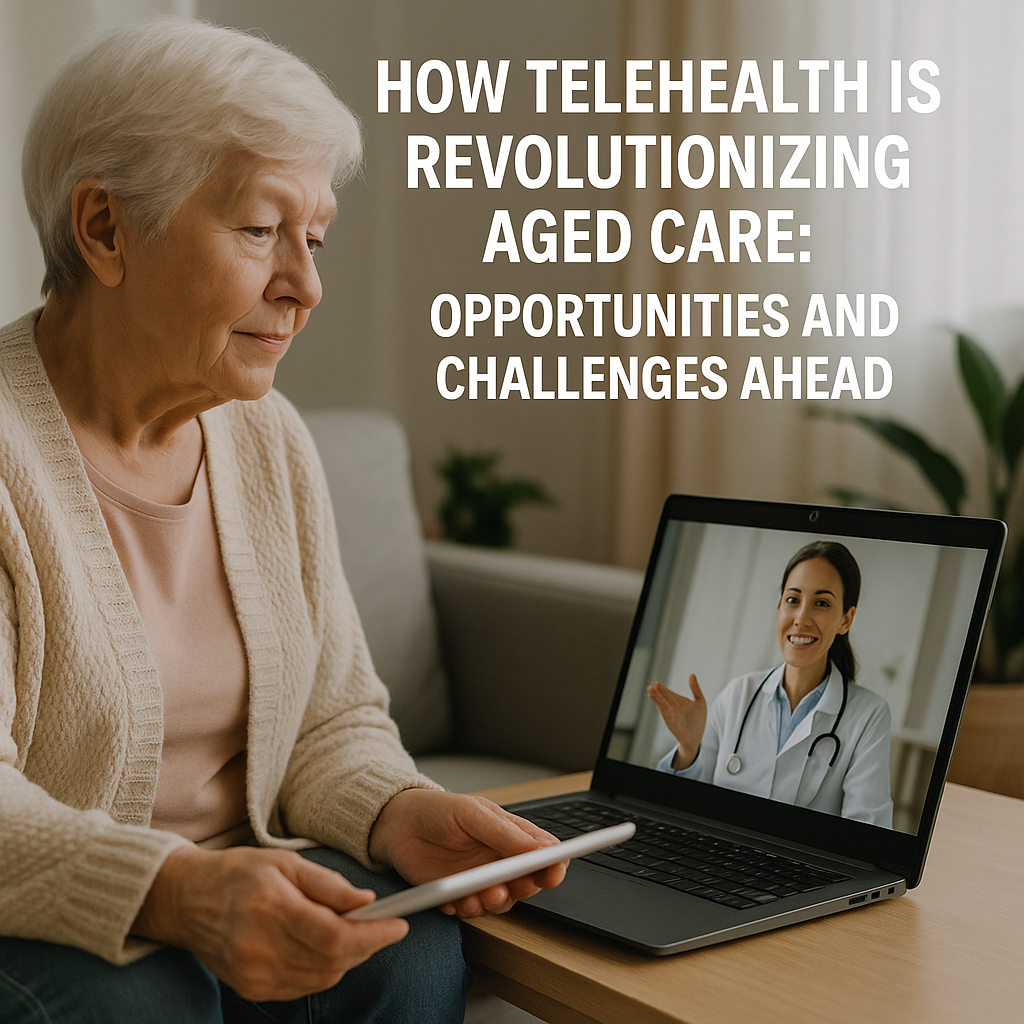
How Telehealth Is Changing Care for Older Adults: New Chances and Challenges
By SMPLSINNOVATION Health Technology Consulting
1. Introduction: Digital Change in Aged Care
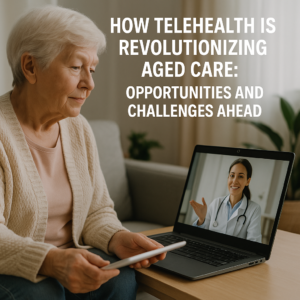
Not long ago, “telehealth” sounded like science fiction. Now, in 2024, it’s a normal part of life, especially for older adults. What began as a way to keep people safe during the pandemic has become a lifeline for seniors, families, and healthcare workers.
Since 2020, the question has changed from “Should we use telehealth?” to “How can we make it better, fair, and long-lasting?”
Main reasons for the change:
– After the pandemic, many seniors kept using virtual visits they first tried during lockdowns.
– It’s easier and more convenient for people who have trouble walking, live far away, or can’t always travel.
– There are not enough healthcare workers, and telehealth helps fill that gap through remote consultations and monitoring.
In 2024, reports show that nearly 58% of older adults in developed countries now use some kind of telehealth service. The World Health Organization says telemonitoring use among seniors has grown by about 45%. This shows how quickly things are changing.
2. Telehealth Today in Aged Care
Telehealth today is more than video calls. It’s part of a full system that’s changing how care is delivered.
Governments and health groups around the world are creating rules and funding to help telehealth grow. Countries like Australia, Japan, Sweden, and Canada are improving care for older adults with the help of digital tools.
Current trends include:
– Programs that track vital signs using wearable devices.
– Home-based physical and occupational therapy with remote guidance.
– Virtual management of long-term conditions like diabetes and heart disease using artificial intelligence.
Ten leading telehealth platforms for seniors in 2024 include Teladoc Health Senior+, Amwell Care+, Philips VirtualCare Suite, Omada for Seniors, HonorLink, Ping An Good Doctor, SilverCloud Health, Cerner VirtualWard, MyClinic@Home, and eConsult Global. These services are helping older adults stay healthy and connected without leaving their homes.
3. Opportunities From Telehealth Innovation
Telehealth brings many benefits in aged care:
1. Better access to doctors, even in remote areas.
2. Easier management of long-term diseases.
3. Lower costs for families and healthcare providers.
4. Personalized health plans based on real data.
5. Fewer hospital readmissions through early warnings.
6. Tools that keep family members involved from anywhere.
7. Online mental health and memory care.
8. Smart technology that predicts health risks.
9. Around-the-clock monitoring for safety.
10. Online groups that help seniors stay social and active.
Telehealth offers a mix of medical, emotional, and daily life support through simple technology.
4. New Technology Changing Aged Care
Big advances are pushing aged care forward:
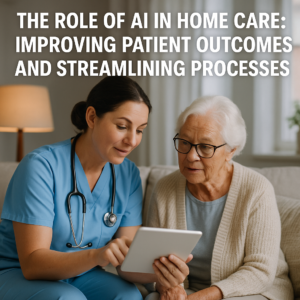
– Artificial intelligence can help spot heart problems, memory loss, and drug issues early.
– Wearable gadgets now track sleep, oxygen levels, and movement.
– Smart sensors in homes make living alone safer.
– 5G internet makes video calls smoother and clearer.
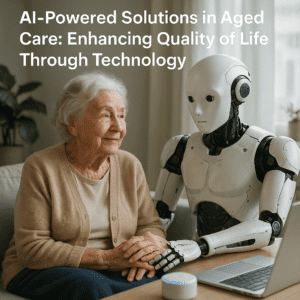
– Voice assistants remind seniors to take medicine and check their health.
These tools make care not only modern but also more personal.
5. Challenges Holding Back Telehealth
There are still problems that need to be solved:
1. Many seniors need help learning to use new technology.
2. Online data must stay private and protected.
3. Some areas still have weak internet connections.
4. Laws and rules around telehealth are complex.
5. Insurance and payment systems sometimes lag behind.
6. Too many apps and passwords can overwhelm users.
7. Some systems don’t link well with existing medical records.
8. New tools appear faster than safety tests can be completed.
9. Not everyone can afford devices or fast internet.
10. Some healthcare workers prefer traditional ways of working.
Working together, governments, tech companies, and health experts can overcome these issues. That’s part of what SMPLSINNOVATION focuses on.
6. Policy and Regulation Trends for 2024–2025
Rules are changing to support telehealth:
– Countries are updating payment systems so telehealth visits are treated like in-person visits.
– Stronger data privacy laws protect older users.
– Efforts are being made to allow doctors to treat patients across borders more easily.
The next two years will show which countries can make telehealth easy, fair, and accessible for everyone.
7. Looking Forward: A Connected and Caring Future
Picture older adults talking with doctors through voice-controlled screens, wearing devices that send health data automatically, and getting alerts before health issues appear. This isn’t far away—it’s happening today.
But to make sure no one is left behind:
– Technology companies should design tools that are simple and caring.
– Healthcare providers need to feel confident using digital tools.
– Policymakers must make sure telehealth is affordable and open to all.
At SMPLSINNOVATION, we believe telehealth is about more than technology. It’s about empathy, creativity, and human connection.
8. Final Thoughts
Growing older shouldn’t mean struggling with confusing apps or devices. The future looks bright: studies from global health groups show telehealth is here to stay. It’s changing how we care, connect, and live as we age.
At SMPLSINNOVATION, our goal is to make digital health easier, friendlier, and accessible for everyone.