How Remote Monitoring Devices Are Changing Chronic Disease Care at Home
By SMPLSINNOVATION – Health Tech Made Simple, Smart, and Fun
1. Introduction
If you’ve ever tried to get a loved one to check their blood pressure, write down their sugar levels, or tell their doctor that their “I’m fine” cough is not really fine, you know that managing long-term health problems is tough.
Diseases like diabetes, heart failure, lung problems, and high blood pressure now cause more than 70% of deaths around the world, according to the WHO Digital Health Report from 2024. Hospitals are busier than ever, so more care is happening at home with help from new technology.
This is where Remote Patient Monitoring, or RPM, comes in. It’s like having the doctor’s eyes in your living room. Tiny sensors can send your heart rate to your healthcare team in real time, and smart devices can even predict problems before they happen.
Remote monitoring devices are helping patients stay healthy by collecting data all the time, letting doctors step in early, and helping people live better—all while relaxing at home instead of sitting in a waiting room.
2. The State of Chronic Disease Care in 2024
The numbers are big:
– Diabetes affects over 530 million adults worldwide.
– Heart failure causes one in eight hospital stays for people over 65.
– Lung diseases affect more than 600 million people.
– High blood pressure impacts more than 1 billion adults.
Old-style care depends on checkups that happen weeks or months apart. This can cause three big problems:
1. Doctors may miss early signs that things are getting worse.
2. People forget to take their medicine on time.
3. Patients end up in the emergency room too often.
Today, new digital tools like telemedicine, mobile apps, and remote monitors work together in what experts call digital-first care. Instead of reacting to problems, these systems help doctors and nurses act early, based on real data from home.
3. What Are Remote Monitoring Devices?
Remote Monitoring Devices, or RMDs, are tools that collect health data while patients are at home and send that information to their doctors safely.
The main types are:
1. Wearable sensors that track heart rate, oxygen, and movement using watches or patches.
2. Implantable sensors like continuous glucose monitors and heart recorders.
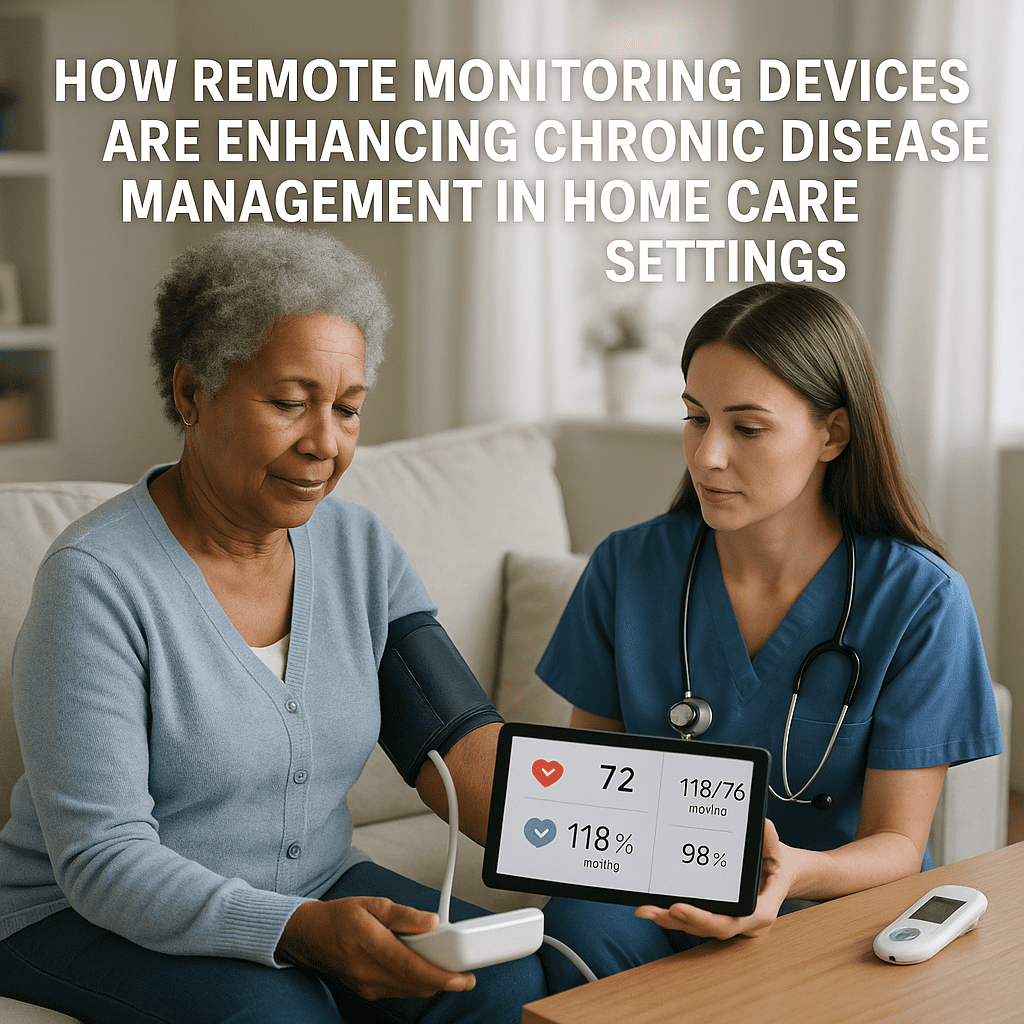
3. Smart home tools such as digital blood pressure cuffs and weighing scales that connect to apps.
New technology like 5G networks, the Internet of Things, and artificial intelligence makes these devices faster, smarter, and easier to use. Most people only need Wi-Fi, a smartphone, and a few taps to set everything up.
4. Ten Top Devices Changing Home Care in 2024
1. Continuous Glucose Monitors that use AI to help control sugar levels.
2. Smart Blood Pressure Cuffs that send readings straight to doctors.
3. Cardiac Rhythm Patches that track heartbeats and share data instantly.
4. Smart Pulse Oximeters that warn about low oxygen levels early.
5. Smart Inhalers that remind patients to take their medicine.
6. Digital Scales that help doctors watch for weight changes linked to heart failure.
7. Activity Trackers that record movement and sleep patterns.
8. Remote Spirometers that let people test their lungs at home.
9. Implantable Loop Recorders that keep track of heart rhythm problems.
10. Fall Detection Wearables that alert caregivers if someone falls.
All these tools help make care more personal, faster, and safer.
5. How These Devices Help
1. Better Medication Use
Studies show that people who use remote monitoring are more likely to take their medicine correctly. Reminders and coaching messages keep them on track.
2. Early Warnings
Smart systems can find subtle signs of problems, like changes in heart rhythm or weight, days before a crisis. Acting early means fewer emergencies and hospital stays.
3. Fewer Hospital Visits
Research shows that using remote monitors can reduce hospital readmissions by up to 30%. This saves time, money, and stress.
4. More Patient Control
Patients can see their own progress, learn about their health, and feel more confident managing it.
5. Lower Costs
Health systems save up to 25% in long-term costs when fewer people need hospital care.
6. Challenges to Overcome
Even great technology has hurdles:
1. Keeping health data private and safe.
2. Teaching people how to use the devices.
3. Providing better internet access in rural areas.
4. Making different systems work together smoothly.
5. Keeping up with changing rules for payment and approval.
At SMPLSINNOVATION, we work hard to make these tools simple, friendly, and useful for both patients and healthcare teams.
7. The Future of Home Care
The next few years will bring even smarter devices, including:
1. Wearables that diagnose health conditions in real time.
2. Systems that connect all devices under one platform.
3. Personalized medicine that adapts to each person’s data.
4. Sensors that track stress and emotions too.
5. Faster data processing for instant results.
Soon, your house will act like a small clinic—without the hospital smell.
8. Conclusion
Remote Monitoring Devices are more than gadgets; they are shaping the future of healthcare.
For patients, they mean peace of mind.
For doctors, they mean better insight and faster action.
For the whole healthcare system, they mean efficiency and savings.
At SMPLSINNOVATION, we believe simple, smart, and kind technology can make home health care better for everyone.