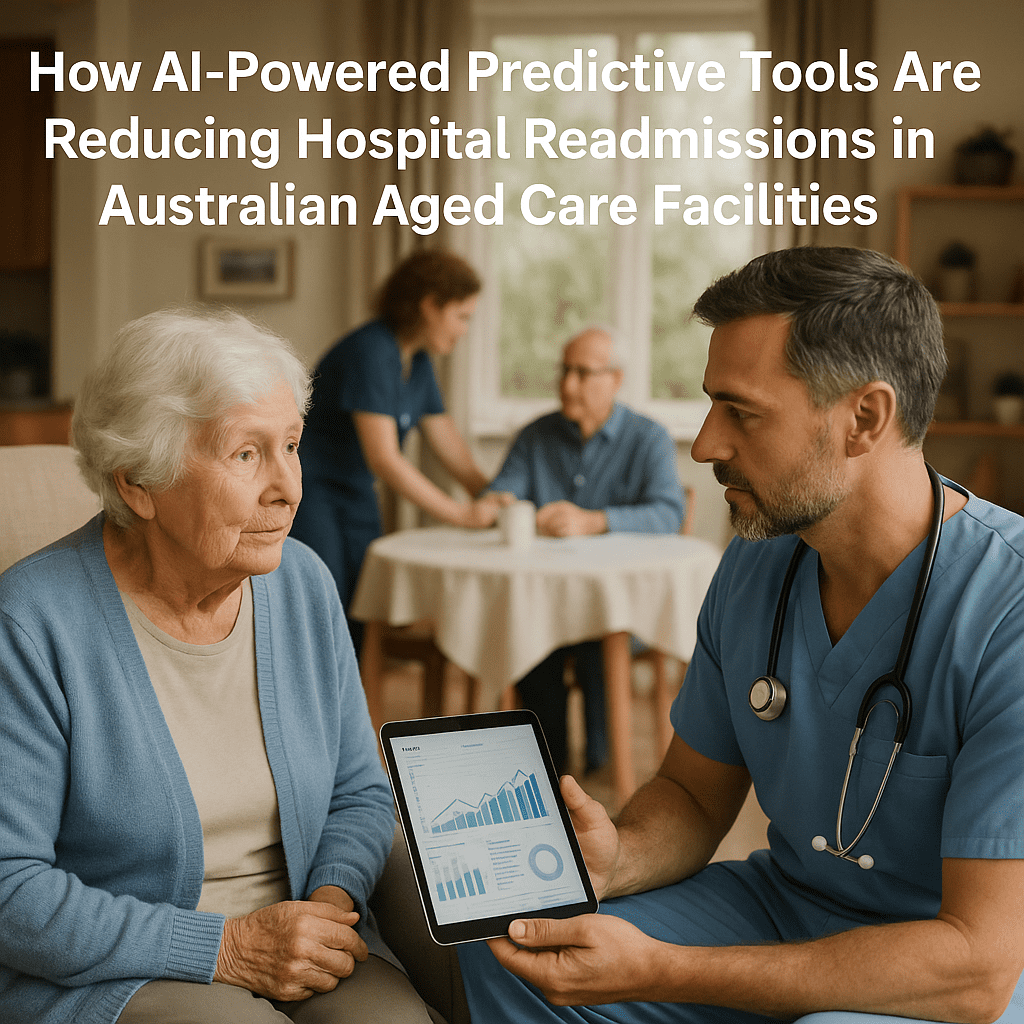
How AI Predictive Tools Are Reducing Hospital Readmissions in Australian Aged Care Facilities
Published: October 21, 2024
Based on updates from October 20–21, 2024
Sources: Australian Department of Health and Aged Care, CSIRO’s Data61, and The Medical Journal of Australia
By SMPLSINNOVATION – because healthcare tech doesn’t have to be complicated to be smart
1. Introduction
No one wants to go back to the hospital after finally coming home. For older Australians in aged care homes, another hospital trip can be stressful and tiring. Sadly, repeat hospital visits are one of the biggest challenges for our healthcare system.
People are living longer, which is great! But many also face health problems like chronic diseases and mobility issues. Add in staff shortages and heavy workloads, and it’s not hard to see why hospital readmissions keep happening.
This is where data and artificial intelligence (AI) come in. New AI tools help aged care teams notice early signs of health problems before they become serious. These systems analyze health data to spot small changes that might mean someone is getting unwell. That gives staff time to act early, prevent emergencies, and keep residents safer and happier.
AI isn’t just a futuristic idea anymore. It’s helping aged care providers move from reacting to problems to predicting and preventing them.
2. The State of Hospital Readmissions in Australian Aged Care
According to the Australian Institute of Health and Welfare (AIHW), almost one in five aged care residents who leave hospital are readmitted within 28 days. Many of these readmissions could be prevented if warning signs were caught sooner.
Common causes include:
1. Chronic heart problems
2. Respiratory infections like pneumonia
3. Urinary tract infections
4. Falls and fractures
5. Mistakes with medications
6. Dehydration or poor nutrition
7. Diabetes complications
8. Wound infections or sepsis
9. Accidents caused by cognitive decline
10. Fluid or electrolyte problems
Each hospital transfer costs time, money, and comfort. It’s stressful for residents and their families too.
The government’s Digital Health and Aged Care Reform 2024 program is helping aged care providers use AI. Research groups like CSIRO’s Data61 and universities are working with facilities to test and fund new predictive tools.
3. What Predictive AI Tools Are Being Used
Predictive analytics means using past data to guess what might happen next — like predicting weather, but for health. These tools track patterns in things like heart rate, movement, and medications. They can alert staff before something becomes serious.
Examples of AI tools being tried in Australia include:
1. CSIRO’s National Aged Care AI Predictive Module – predicts readmission risk within 7–14 days.
2. Silverchain’s Predictive Care Coordination Platform – uses data from wearables and carer notes to flag high-risk clients.
3. Healthdirect Australia’s AI-Enabled Clinical Alerts – adds automatic alerts into health records.
4. Telstra Health’s Aged Care Intelligence Dashboard – helps plan staff schedules and predict care needs.
5. CarePredict Australia Pilot – uses wrist sensors to track sleep and movement changes.
6. St John of God Health Care’s Readmission Model – spots residents most at risk in the 30 days after discharge.
7. ACU and Data61’s Frailty Tool – tracks signs of frailty and fall risks.
8. South Australia’s Local Health Network Dashboard – uses local data to predict hospital readmissions.
9. RMIT and Monash Predictive Care Models – focus on chronic disease and personalized care.
10. Australian Digital Health Agency’s AI Care Companion – helps carers and families with predictive reminders and check-ins.
All these tools have one goal: predict, prevent, and protect.
4. How Predictive Tools Work
So how do these systems actually help?
1. Data Sources
They pull information from health records, medications, wearables, care notes, vital signs, and even room environment data.
2. Algorithms
AI processes large amounts of data to find small changes. For example, fewer steps or more bathroom trips might signal an infection early.
3. In Daily Care
Alerts show up on screens for nurses and doctors, who can check on the resident or schedule a telehealth visit.
4. Team Action
Once an alert triggers, nurses, doctors, care coordinators, and data teams work together to adjust care and prevent a hospital visit.
This means moving from last-minute emergencies to early prevention.
5. Evidence of Impact
Trials across Australia are showing strong results.
For example:
1. CSIRO’s trials in Queensland cut 30-day readmissions by 18%.
2. Silverchain’s AI tool reduced emergency transfers by 22%.
3. Telstra Health’s program improved care planning by 30%.
4. South Australia’s dashboard reduced hospital bed days by 15%.
5. CarePredict’s pilot saw a 27% drop in fall-related hospital visits.
Staff also noticed less paperwork, better teamwork, and happier residents.
6. Challenges and Ethics
AI isn’t perfect yet. There are still challenges to solve, such as:
1. Protecting data privacy and consent.
2. Different electronic health record systems that don’t connect well.
3. Training staff to understand AI tools.
4. Small data sets that can cause bias.
5. High costs of setting up systems.
6. Poor internet in rural areas.
7. Transparency about how AI decisions are made.
8. Making sure doctors still trust and use their own judgment.
9. Connecting new AI tools with old systems.
10. Rules and regulations not keeping up with technology.
Australia is already working on stronger safety and accountability rules for AI in healthcare.
7. The Future: From Prediction to Prevention
In the next few years, AI tools won’t just predict health problems — they’ll help prevent them altogether. We might soon see systems that:
– Spot early signs of cognitive decline from speech or movement patterns.
– Adjust care plans on their own based on live updates.
– Suggest personal exercise or recovery routines.
– Track medication use in real time.
– Keep families informed and involved through updates and reminders.
At SMPLSINNOVATION, we believe technology works best when paired with human care, empathy, and teamwork. AI is here to help, not replace people.
8. Conclusion
Hospital readmissions have always been a challenge in aged care, but AI is changing that. With smarter tools and stronger teamwork, aged care facilities can prevent more hospital visits, support healthier residents, and build a more proactive care system.
And this is only the beginning.