How AI Predictive Analytics Is Changing Fall Prevention in Aged Care
By SMPLSINNOVATION | June 2024
1. Introduction
Here’s a friendly truth: we’re all getting older. The number of people over 65 is growing faster than any other group. That means more birthdays to celebrate—but also more concern about falls. The World Health Organization says falls are one of the top causes of injuries for older adults. In aged care homes, staff try hard to protect residents while keeping their freedom and dignity.
At SMPLSINNOVATION, we help health organizations understand new technology. Right now, one of the most exciting changes is how AI-powered predictive analytics is helping to prevent falls.
This matters more than ever. Health agencies in places like North America, the UK, and Australia are paying closer attention to fall rates. Families also want to see data that proves safety. Thankfully, technology is finally ready to meet this need.
We’ve moved past waiting for a fall to happen. Now, with the help of AI, we can spot patterns that suggest someone might fall before it happens. Let’s explore how this shift came about.
2. Fall Prevention Before AI
Before digital tools were common, preventing falls in aged care looked like this:
1. Nurses used paper checklists to check fall risk.
2. Reports were written after a fall and stored in binders.
3. Staff often only learned about risk after something happened.
The problem wasn’t that people didn’t care—staff have always been committed—but no one can notice every small detail about hundreds of residents without help.
Even when facilities started using wearables and sensors, the data often stayed in separate systems that didn’t connect. That made it hard to get the full picture.
Now, predictive analytics links all those data sources together so caregivers can act before a fall occurs.
3. How Predictive Analytics Works
AI predictive analytics combines regular assessments with the power of algorithms. Here’s how it works:
It gathers information from many sources, such as:
– Medical records and medication lists
– Movement and walking sensors
– Wearable devices that track heart rate, sleep, and hydration
– Cameras that detect unusual movement
– Bed and chair sensors that show nighttime activity
– Records of past falls and medication side effects
– Environmental data like lighting and floor type
– Nurse call systems
– Cognitive and behavior assessments
– Past mobility scores
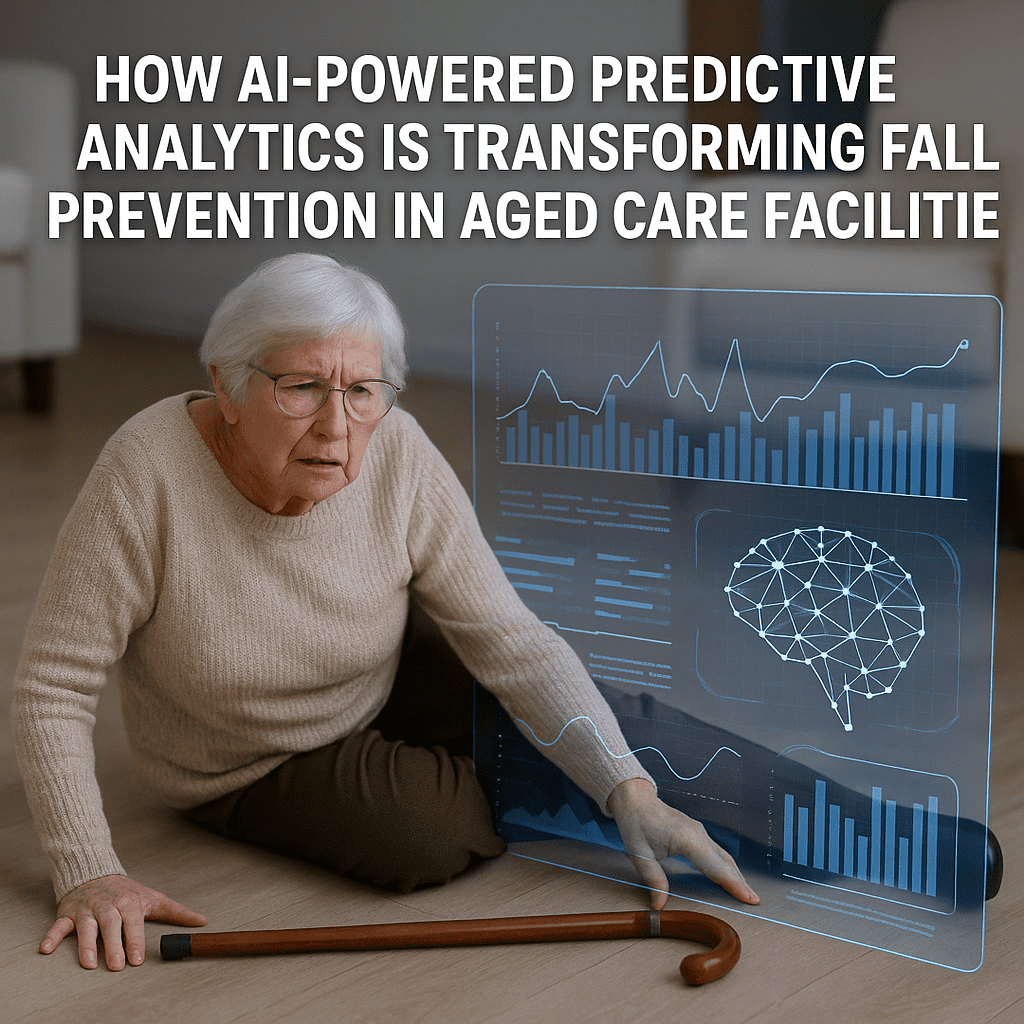
All this information flows into one secure system. The AI looks for patterns, such as slower walking, dizziness after certain medications, or frequent late-night trips. The system uses this information to predict future risk and alert caregivers before a fall happens.
Instead of just guessing, staff get clear information like “Mrs. Jansen has a high fall risk tonight.” They can then take steps to keep her safe, such as adjusting medication timing or lighting.
4. New Advances and Real-World Use in 2024
This year has brought big progress. Studies show that:
– Combining camera, sensor, and clinical data helps AI detect small changes in movement.
– Cloud-based systems make it easier for facilities to use AI without needing large IT setups.
– Real-world pilot programs are showing up to a 30 to 40 percent drop in preventable falls.
With better data security and more trust in healthcare AI, aged care is moving forward faster than ever.
5. Ten Ways AI Is Transforming Fall Prevention
1. Continuous, all-day monitoring.
2. Personalized fall risk for each resident.
3. AI combining camera and wearable data.
4. Smart alerts for slow or unsteady movement.
5. Predictive staffing so more help is available during risky hours.
6. Medication timing suggestions to lower dizziness.
7. Remote supervision of many facilities at once.
8. Easy-to-read dashboards for proactive care.
9. Heat maps showing where staff should focus their time.
10. Automatic reports for audits and quality checks.
AI doesn’t replace human care—it makes it even better. It gives caregivers new tools to protect residents.
6. Ethics, Privacy, and Implementation
With all this data, privacy is a big deal. Facilities must:
1. Get clear consent from residents and families.
2. Collect only the data needed for care.
3. Use strong security such as encryption and access controls.
4. Make sure staff understand why AI gives certain alerts.
5. Use fair and balanced data to avoid bias.
6. Involve both medical and ethics experts in planning.
7. Give staff clear, simple AI explanations they can trust.
8. Train staff to use the tools with confidence.
9. Choose systems that connect well with existing tools.
10. Work with transparent vendors who handle data responsibly.
When privacy and care go hand in hand, everyone benefits.
7. The Future of Predictive Prevention
The goal goes beyond stopping falls—it’s creating care that adjusts automatically to residents’ needs.
Future systems may include:
– AI built quietly into daily life.
– Voice assistants that explain data to caregivers.
– Shared, secure data that helps improve models around the world.
This creates a world where aging is safer, and care homes become more supportive and responsive.
8. Conclusion
AI predictive analytics isn’t just a fancy term—it’s a way to keep older adults safe and confident. It turns care from reacting to problems into preventing them.
At SMPLSINNOVATION, we believe if technology can predict your next song, it should also help prevent your next fall.
Aged care facilities that adopt predictive tools now will improve safety, strengthen trust, and work more efficiently.
So next time you see residents walking proudly in their care home, imagine an invisible AI system in the background, quietly helping them stay on their feet.
SMPLSINNOVATION—making healthcare technology simple, smart, and caring.