How AI Powered Predictive Analytics Is Changing Fall Prevention in Aged Care Homes
by SMPLSINNOVATION | Health Technology Consulting | May 26, 2024
1. Introduction: Falling for a Solution
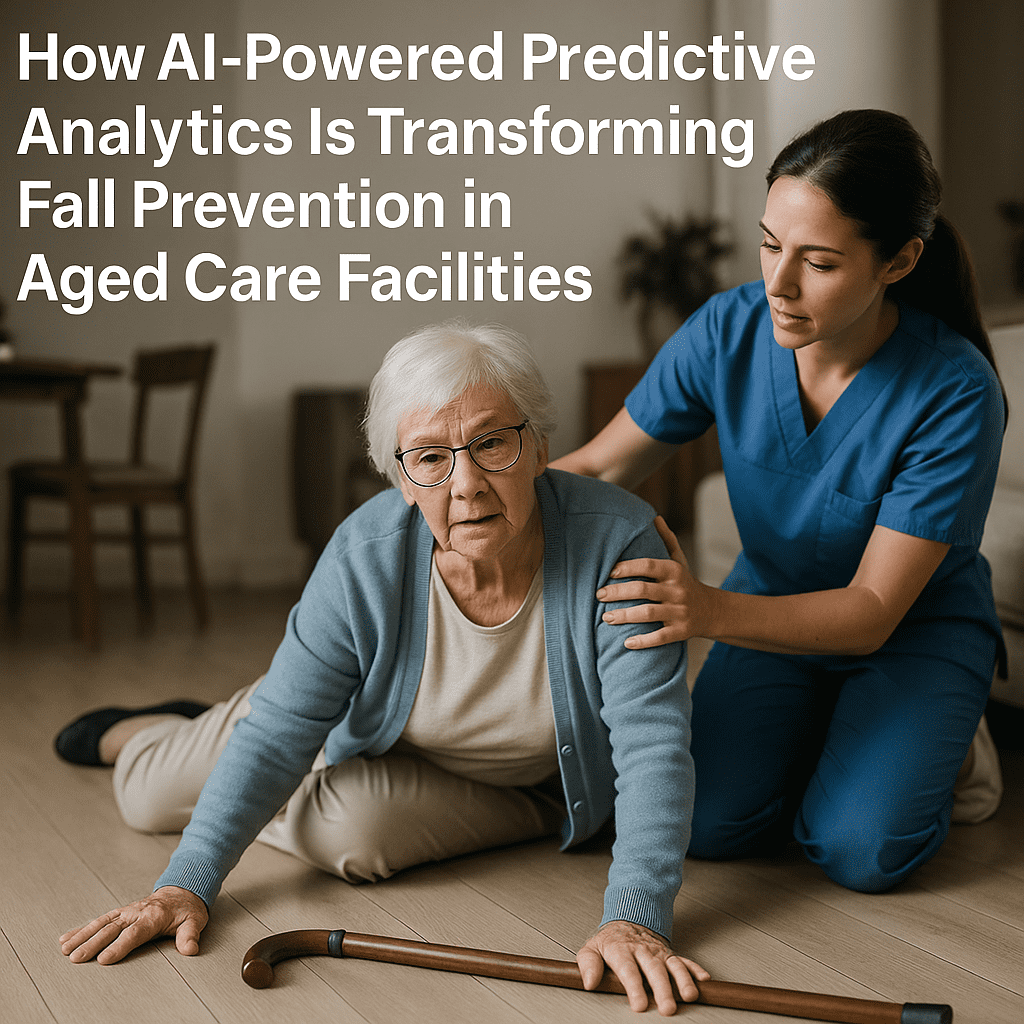
Let’s be honest—everyone trips sometimes. Maybe over a curb, a cat, or that one Lego waiting in the dark. But in aged care homes, a fall is serious. It can lead to broken bones, hospital visits, and a lot of worry for families.
For years, aged care has tried all kinds of things to stop falls—special socks, extra railings, and mats—but the problem hasn’t gone away.
That’s where AI powered predictive analytics comes in. It’s like a hero in scrubs that can spot a problem before it happens. This isn’t science fiction. It’s happening right now in care homes all over the world.
In this blog, we’ll look at how smart systems can predict and prevent falls, help staff feel less stressed, and keep residents safe.
2. The Scale of the Problem
According to the World Health Organization and the Centers for Disease Control and Prevention, about 684,000 people die from falls every year. It’s the second biggest cause of accidental deaths worldwide. About one in three adults over 65 falls at least once a year, and in aged care this leads to almost half of hospital visits for older adults.
Staff shortages and more complex medical needs make the situation even harder. Traditional tools like bed alarms and hourly checks aren’t enough anymore.
A fall might seem random, but AI shows us there are often signs first—like changes in walking speed, sleep, or new medicine. AI helps us notice these warning signs early.
3. What Is AI Powered Predictive Analytics
Predictive analytics means using data to guess what might happen next.
In healthcare, that means studying behavior and risk factors to stop problems before they happen.
Here’s what that looks like:
Descriptive analytics asks “What happened?”
Diagnostic analytics asks “Why did it happen?”
Predictive analytics asks “What might happen next?”
Prescriptive analytics asks “What should we do?”
AI powered predictive analytics sits between predictive and prescriptive. It doesn’t just warn you—it tells you what to do to fix it.
These systems use machine learning and other tools to study patterns from many sources such as how fast someone walks or their heart rhythm. They help staff make quick, informed decisions based on real data.
4. The Technology Behind It
Many smart tools work together to stop falls before they happen. Here are ten of the most important ones:
1. Computer vision and thermal cameras watch how people move and spot signs of falling early.
2. Wearable sensors collect movement data, like a Fitbit that also helps prevent falls.
3. Pressure mats on floors track how weight shifts while a person walks.
4. LIDAR and room mapping create 3D maps that understand space and movement.
5. Natural language processing reads nurse notes and flags words like “unsteady” or “confused.”
6. Digital twins make virtual copies of care homes to test safety changes.
7. Cloud data systems keep all the information in one safe place.
8. Federated learning shares learning between facilities without sharing private data.
9. Predictive dashboards show easy color coded alerts so caregivers can act fast.
10. EHR integration makes sure all updates go straight into medical records.
Together, these tools act like a safety net that’s always learning and improving.
5. Recent Developments
In May 2024, several studies showed just how powerful these systems are:
• The Journal of Geriatric Care Technology found that new models predicted fall risk a day in advance with 92 percent accuracy.
• HealthTech News reported that Australian aged care homes saw a 47 percent drop in falls after using AI systems for three months.
• Nature Digital Medicine showed that combining video and sensor data created more personal risk profiles.
• AI in Healthcare Review confirmed that AI plus human teamwork keeps residents safer while protecting their dignity.
The robots aren’t taking over—they’re helping people stay on their feet.
6. Real World Benefits
When used well, predictive analytics makes a big difference. Here are ten key benefits:
1. Fewer falls happen because risks are spotted early.
2. Staff can respond faster when an alert goes off.
3. Teams can plan shifts better by knowing peak risk times.
4. Residents stay more independent with less constant checking.
5. Staff feel less tired from fewer false alarms.
6. Decisions are based on real data, not guesses.
7. AI learns every day and adapts to each resident.
8. Lower hospital costs save thousands with every fall prevented.
9. Families feel more confident seeing real time safety updates.
10. Facilities meet health and safety rules while staying innovative.
7. Challenges and Ethics
Even smart systems need careful use. Predictive analytics raises questions about fairness, privacy, and human care.
Here are ten common challenges:
1. Keeping personal data safe and private.
2. Avoiding bias in algorithms.
3. Making sure results are easy to understand.
4. Ensuring humans stay in control.
5. Paying for the technology in smaller facilities.
6. Connecting new tools to old systems.
7. Training staff to use new technology confidently.
8. Not relying too much on machines over empathy.
9. Making devices work smoothly together.
10. Checking often that algorithms still work as expected.
SMPLSINNOVATION helps facilities face these challenges so technology and caring can work hand in hand.
8. The Future of Fall Prevention
By 2030, most aged care providers will likely use AI predictive tools to stop falls before they happen.
Soon we’ll see balance training exoskeletons, voice assistants that remind residents to use walkers, digital twins for care planning, and safer data sharing between facilities. Even smart home devices may join in to remind loved ones to move safely.
9. Final Thoughts
Preventing falls is about more than technology—it’s about giving older people confidence and freedom. Predictive analytics doesn’t replace kindness or care; it supports them. With the right balance of people and smart tools, we can build a safer, happier future for everyone in aged care.