How AI-Powered Predictive Analytics Is Reducing Hospital Readmissions in Australia
1. Introduction
Let’s be honest. No one wants to leave the hospital only to return a week later. It feels like watching the sequel of a bad movie. Coming back to the hospital is hard on patients, stressful for doctors and nurses, and very costly for the healthcare system.
In Australia, preventable hospital readmissions cost billions of dollars every year. They also take up resources such as beds, staff hours, and specialist care that could be used for new patients.
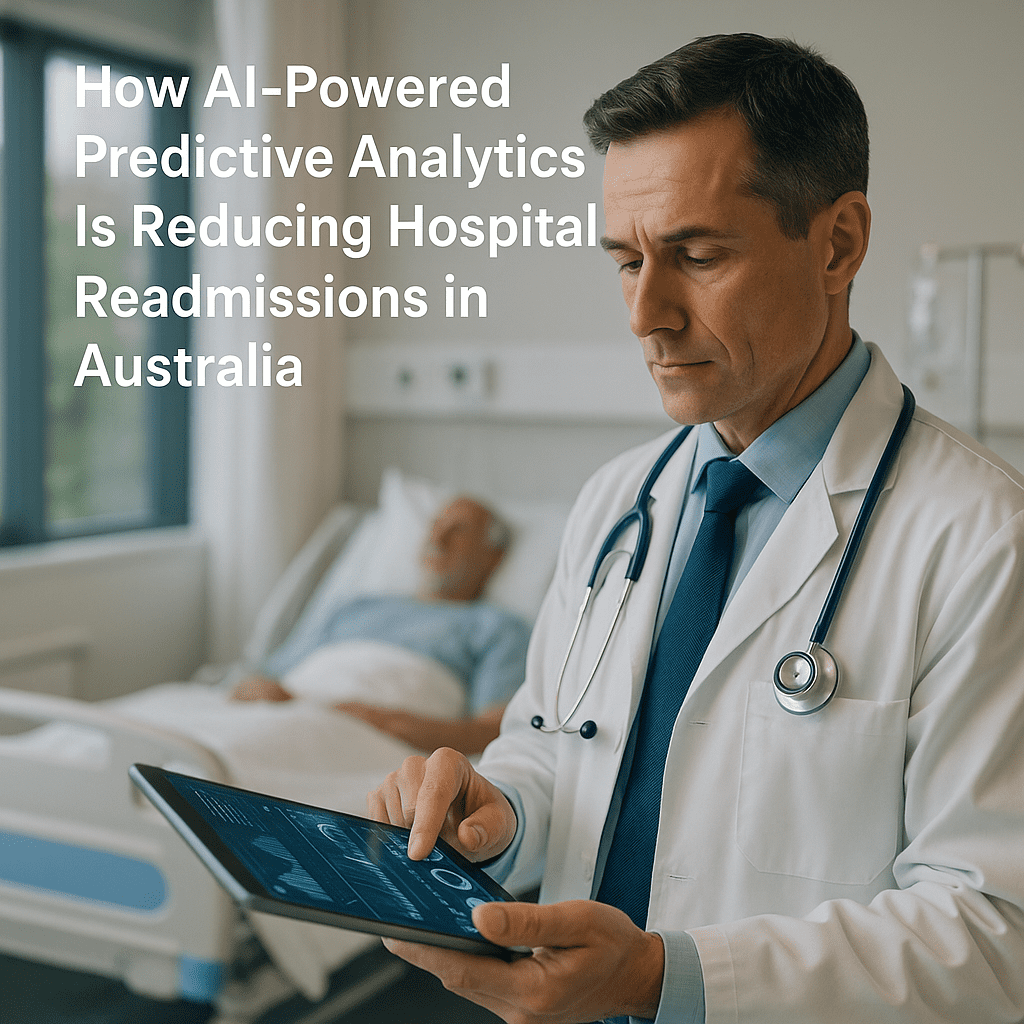
The exciting news is that technology, especially AI-powered predictive analytics, is helping turn things around. By studying patient data, spotting risks earlier, and even using information from wearable devices, hospitals in Australia are making smarter choices about care.
And the best part? AI doesn’t just save money. It also helps improve people’s lives — and that is the true goal of healthcare.
2. Understanding Hospital Readmissions in Australia
A hospital readmission is when a patient leaves the hospital but comes back again within a short period, usually 30 days.
Common causes include long-term conditions like diabetes, COPD, and heart failure, surgical complications, medication mistakes, or poor follow-up after care.
In Australia, thousands of these readmissions happen every year, and many could be avoided with better planning and tracking.
The impact is tough on everyone:
– Patients feel anxious, frustrated, and can suffer worse outcomes.
– Hospitals face added pressure, fewer free beds, and burnt-out staff.
– Policymakers worry about rising costs and public demand for better systems.
This is why predictive analytics can make such a difference. It helps stop preventable readmissions before they happen.
3. What Is Predictive Analytics and Why AI Matters
Predictive analytics is like a fortune teller, except it uses data instead of crystal balls.
Traditional analytics looks into the past and asks, “What happened?”
Predictive analytics looks forward and asks, “What might happen next?”
AI-enhanced analytics takes it further by learning from patterns and making surprisingly accurate predictions.
Here are some key ways AI works in healthcare:
1. Machine learning studies thousands of data points to flag patients at risk.
2. Natural language processing scans doctor notes and discharge papers to spot hidden details.
3. Risk stratification sorts patients into groups so hospitals know who needs the most care.
AI matters because health data is massive and complex. Old manual methods can’t keep up, but AI can handle it all quickly and with accuracy.
4. The Current Landscape of AI in Australian Healthcare
Australia may be known for kangaroos and cricket, but it is also making progress in healthcare AI.
Hospitals across states are testing predictive tools. Universities, research groups, and tech providers are teaming up with health systems. Government agencies like the Australian Digital Health Agency are encouraging this shift with strategies for smarter care.
We may not have robot assistants in every clinic yet, but the momentum is strong.
5. Ten Key Ways AI Is Reducing Readmissions
Here’s how AI helps stop patients from bouncing back into beds:
1. Identifying high-risk patients before discharge.
2. Predicting flare-ups in chronic illnesses.
3. Supporting patients to take their medications on time.
4. Spotting patients who skip follow-up appointments.
5. Detecting early signs of complications like infections.
6. Using data from wearables such as glucose monitors or blood pressure cuffs.
7. Sorting patients by risk levels so treatments match their needs.
8. Giving doctors supportive alerts when data looks unusual.
9. Improving the changeover from hospital to community care.
10. Freeing up hospital beds and easing pressure by avoiding unnecessary returns.
It’s about turning care from reactive to proactive, and that change is powerful.
6. Ten Case Examples and Projects in Australia
1. NSW Health pilots using predictive analytics in busy hospitals.
2. Queensland hospitals using AI dashboards for real-time patient monitoring.
3. Melbourne hospitals applying machine learning tools.
4. Rural areas using telehealth combined with predictive analytics.
5. CSIRO joining with hospitals to test algorithms.
6. Western Australia refining models to predict surgical complications.
7. Mental health programs applying AI to catch signs of relapse.
8. University of Sydney working on predictions for chronic diseases like diabetes.
9. South Australia building early warning systems with AI.
10. Hospitals partnering with big tech to expand solutions nationwide.
Each of these moves healthcare closer to a future with fewer preventable readmissions.
7. Challenges and Considerations
Of course, AI in healthcare isn’t without its challenges:
– Data privacy and security must remain strong.
– Older hospital systems can be difficult to update.
– Fairness and transparency are needed so results are free from bias.
– Doctors need to trust AI tools, not see them as another burden.
Still, these challenges can be managed with good planning, teamwork, and clear rules.
8. Looking Ahead
The future of predictive AI in Australia looks bright. We could soon see:
1. National systems connecting hospitals, clinics, and telehealth platforms.
2. Predictive tools patients can access directly through apps.
3. Lower costs as AI use spreads across the country.
4. More proactive care where repeat hospital visits become rare events.
One day, “avoidable readmission” might sound like an outdated problem of the past.
9. Why SMPLSINNOVATION Is Excited
At SMPLSINNOVATION, this combination of healthcare and technology is what excites us most. Our goal is to help hospitals, clinics, and governments put AI and predictive analytics into action to make care smoother and smarter.
We focus on:
– Helping with AI planning and adoption.
– Supporting system integration and vendor choices.
– Training staff for easier rollout of tools.
– Ensuring strong compliance, ethics, and governance.
And we truly enjoy this space. Every conversation with us brings energy, clear actions, and sometimes even a laugh or two.
10. Conclusion
Hospital readmissions have been a major challenge in Australia. But with AI-powered predictive analytics, healthcare is moving from fixing problems after they happen to stopping them before they begin. This means healthier patients, less pressure on staff, and big savings for the system.
The future of care in Australia looks brighter, smarter, and much more connected.