How AI-Powered Predictive Analytics Is Improving Hospital Discharge Planning in Australia
Date: February 4, 2025
By SMPLSINNOVATION
1. Introduction
Every hospital administrator in Australia knows one thing for sure – hospital beds fill up faster than coffee cups at a morning meeting. With a constant flow of new patients, busy staff, and the never-ending goal of safe and speedy discharges, managing hospital beds can feel like a tricky puzzle.
Since the pandemic, getting patients discharged on time has become one of the biggest goals in healthcare. A faster and safer discharge process helps patients get home sooner, keeps hospital beds open for others who need them, and reduces stress on hardworking nurses and doctors.
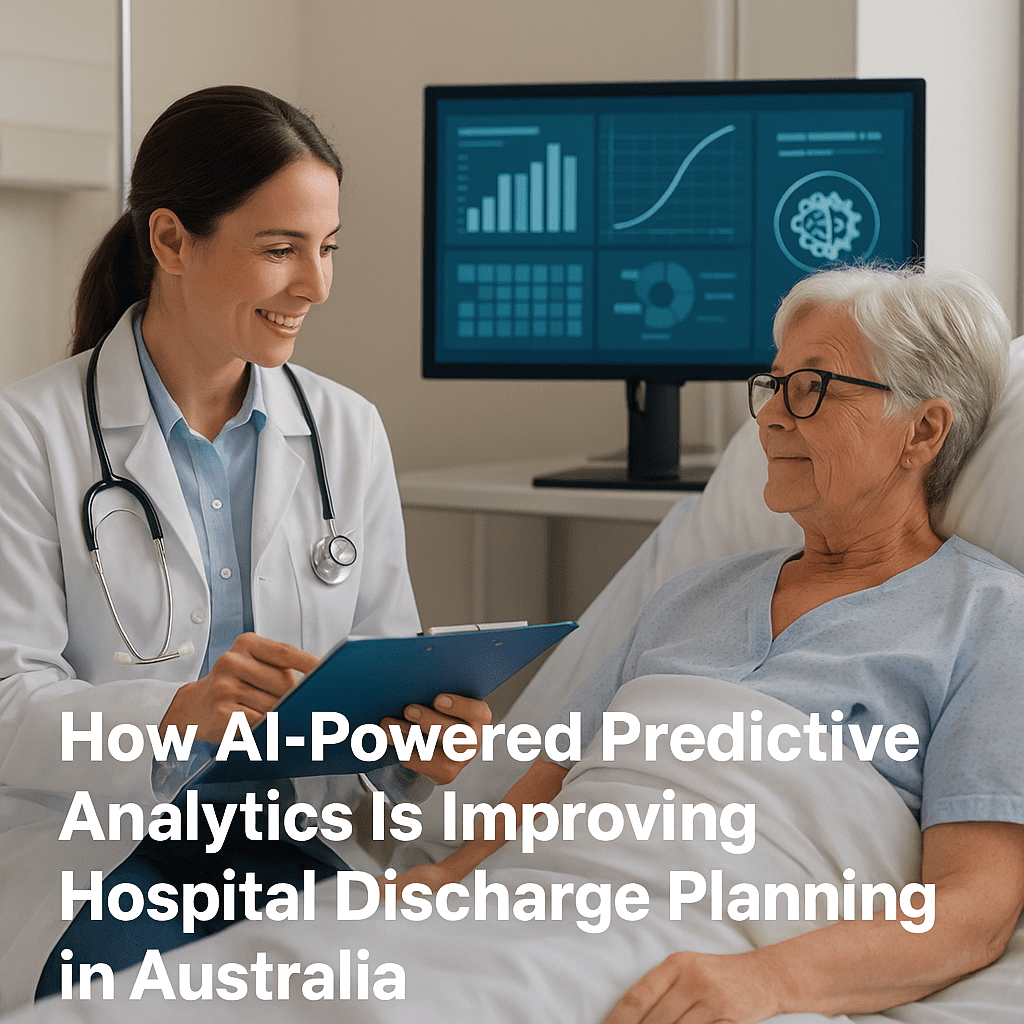
That’s where AI-powered predictive analytics comes in. By studying large amounts of patient data, these smart tools help hospitals know who will be ready to go home and when. They also help plan bed use and reduce chances of patients needing to come back.
This story from SMPLSINNOVATION explains how AI is transforming hospital discharge planning across Australia. It looks at the technology, highlights ten examples of Australian innovation, and explores the benefits and challenges ahead. The future looks bright and much more efficient.
2. The State of Hospital Discharge Planning in Australia
Australian hospitals have long faced challenges in getting discharge planning right. Even before COVID-19, patients who were ready to go home often had to wait extra days for paperwork, rehab approvals, or transport.
According to the Australian Institute of Health and Welfare, in 2024 thousands of bed days were lost because of these delays. Those same beds could have been used for emergency or planned surgeries.
Some of the key problems in 2024 included:
1. Delays from incomplete paperwork.
2. Poor coordination between hospitals, community care, and aged care homes.
3. Staff shortages in allied health teams needed for assessments.
4. Limited real-time tracking of bed use.
5. Waiting for patient transport or home-care package approvals.
The National Health Reform Agreement 2024–2025 encourages all states and territories to use smart digital tools and data to improve care coordination. Predictive analytics is one of those tools helping hospitals work smarter and faster.
3. Understanding AI-Powered Predictive Analytics
Predictive analytics means using computer models to turn large amounts of hospital data into useful insights. These models find patterns in clinical, operational, and patient information to predict what might happen next.
With artificial intelligence added in, the models can:
– Predict which patients are ready for discharge in the next one or two days.
– Forecast which patients may need to return to hospital soon.
– Suggest discharge options, such as at-home care or rehab.
These systems use information from:
1. Electronic medical records.
2. My Health Record for shared patient data.
3. Hospital workflow systems that track real-time activity.
Technologies like natural language processing help the AI read doctor notes and discharge papers. Federated learning allows hospitals to train models together without sharing private data. Machine learning combines different tools to make more accurate predictions. Even social factors, like transport or living conditions, are included to help predict safe and successful discharges.
4. AI Applications Transforming Discharge Planning
After a year of testing in 2024, many hospitals are now putting predictive analytics tools into full use in 2025. Here are ten examples across Australia making a real difference.
1. Monash Health and IBM Watson are using AI to predict recovery times after surgery.
2. NSW Health launched an AI bed management platform that forecasts discharge times.
3. Queensland Health and CSIRO’s Data61 use models to coordinate with community nurses.
4. Western Australia’s Telehealth system helps plan discharges for patients in remote areas.
5. The Royal Melbourne Hospital uses AI to guide safe discharges for mental health patients.
6. The Northern Territory uses a tool to help manage discharges for Indigenous communities.
7. St. Vincent’s Health predicts when patients will be ready for rehab after surgery.
8. Flinders University and SA Health use analytics to manage transfers between hospitals and aged care.
9. ACT Health has an AI system to predict demand during flu season and manage subacute beds.
10. The University of Sydney developed a model that links social factors, like transport and housing, to discharge success.
All these projects show how data can be turned into clear and helpful insights for hospitals.
5. Benefits Seen So Far
Although still early, results are highly positive. Across many pilot programs, hospitals using AI have seen major improvements.
Some benefits include:
1. Fewer discharge delays, with some hospitals reporting a 20% reduction.
2. Lower readmission rates thanks to better patient follow-up planning.
3. Improved coordination between hospital and community services.
4. Automated alerts that remind staff when their input is needed.
5. Cost savings from faster bed turnover.
6. Happier patients who appreciate smoother, more personal discharges.
7. Less stress for staff with fewer last-minute issues.
8. Better leadership decisions based on real-time data.
9. Improved training for junior staff using AI dashboards.
10. National data insights to help shape health policy.
In simple terms, predictive analytics is making hospital discharge planning more like using a GPS—fewer mistakes, quicker results, and a smoother journey.
6. Challenges and Things to Consider
Even with all these benefits, a few challenges remain.
1. Data quality is vital. Poor or incomplete data can cause wrong predictions.
2. Different hospital systems can be hard to link together.
3. Handling sensitive patient data must always follow privacy laws.
4. Some staff worry that AI may replace their judgment, though it’s meant to support them.
5. These systems can be costly to set up and require staff training.
6. Biased data can lead to unfair results if not carefully managed.
Australian hospitals and researchers are working together to overcome these challenges through strong ethics, transparent data practices, and shared learning.
7. The Future of Predictive Discharge Planning
Looking ahead, predictive analytics will become a normal part of hospital life. We can expect to see:
1. Better connection between hospital data systems across the country.
2. Voice-activated AI helping doctors with discharge notes.
3. Visual dashboards showing real-time patient flow.
4. Blockchain tools to verify discharge records securely.
5. Smart home-monitoring devices that keep track of recovery.
6. Statewide bed-use maps powered by AI.
7. Patients sharing their own recovery updates directly into the system.
With continued teamwork and innovation, AI-powered predictive analytics has the potential to make Australian hospitals safer, faster, and more patient-focused than ever before.