How AI-Powered Fall Detection is Making Aged Care Safer
By SMPLSINNOVATION
Date: February 5, 2024
I. Introduction: The Aging Population and the Risk of Falls
Getting older can be wonderful. We picture ourselves enjoying tea in the garden or winning the local Scrabble game. But as more people around the world age, the risk of falls in aged care homes is becoming a serious concern.
The World Health Organization’s 2024 Aging Report says that the number of people aged 60 and older has tripled in the last 50 years. By 2050, there will be about 2.1 billion seniors around the world. That’s a lot of experience—and sadly, a lot of possible falls.
Falls are the number one cause of injuries among seniors. They cost billions of dollars in medical care and cause a lot of worry for families. Traditional safety systems, like nurse checks or wearable emergency buttons, can help but they have limits. Some residents forget or choose not to wear devices, and staff can’t be everywhere at once.
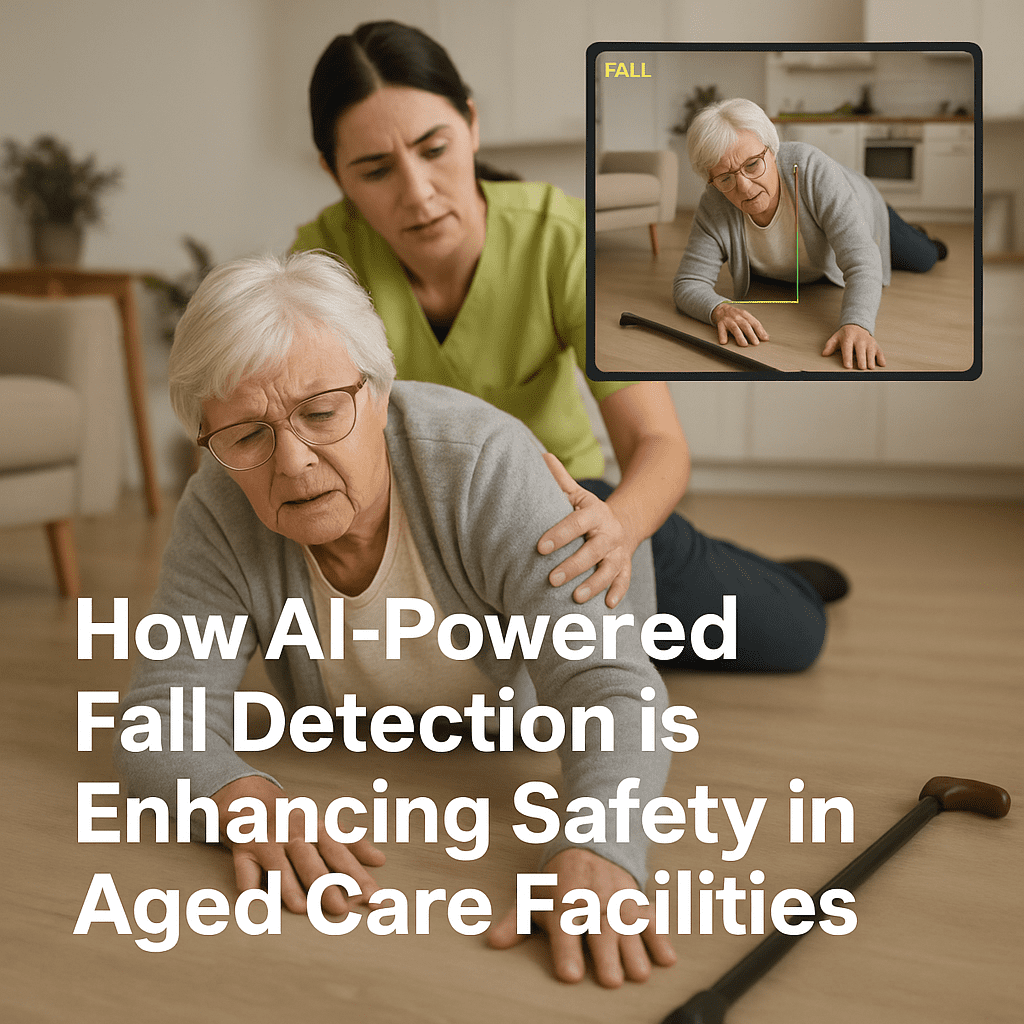
That’s where artificial intelligence (AI) comes in. Using computer vision, motion tracking, and instant alerts, AI-powered fall detection doesn’t just call for help when someone falls—it can also help stop falls before they happen.
According to Healthcare IT News, more aged care centers are using AI fall detection every month. This new technology is changing how we keep seniors safe.
II. What Is AI-Powered Fall Detection?
AI-powered fall detection isn’t a tiny robot helper who shouts for help when someone trips—though that would be cute. Instead, it uses cameras, sensors, and smart computer programs to watch how people move, notice sudden changes, and tell the difference between normal motion and a fall.
Here are some key parts:
1. Computer Vision – Cameras with AI watch movement and spot sudden posture changes.
2. Deep Learning – The system learns over time and gets better at spotting real falls, not just quick movements.
3. Multi-Sensor Technology – Sound, motion, and environment sensors work together to understand each situation better.
4. Edge and Cloud Processing – Some systems act right away using local data, while others store data in the cloud to see bigger patterns.
5. Privacy Protection – Many systems only use outlines or depth images, not clear video, to protect residents’ dignity.
Research has already shown that these systems greatly reduce missed falls. It’s smart technology that helps people, not one that invades their privacy.
III. Ten Real-Life Ways AI Helps Prevent Falls
AI fall detection is now part of a wider system that works quietly to keep seniors safer every day. Here are ten ways it’s used in aged care today:
1. Cameras that send instant alerts when a fall happens.
2. Motion sensors that notice strange movement patterns.
3. Smart floors that can feel sudden pressure changes.
4. Wearable devices that track walking habits and predict fall risks.
5. Voice systems that let residents call for help even if they can’t reach a button.
6. Predictive programs that show who might fall soon so care teams can step in early.
7. Digital twins that create virtual copies of movement to analyze risks.
8. Smart lights that adjust automatically at night to prevent confusion.
9. Systems that connect to health records to give context to alerts.
10. Shared data networks that help all care homes learn from one another.
Many facilities using these tools have seen a big drop in fall injuries. That means fewer hospital trips and more peace of mind for families.
IV. Ten Key Benefits of AI Fall Detection
1. Faster help when falls happen.
2. Fewer serious injuries thanks to quick response.
3. More confidence for residents to stay active.
4. Greater family trust and comfort.
5. Fewer false alarms compared to older systems.
6. More time for staff to focus on personal care.
7. Data that helps create better care plans.
8. Ability to prevent falls before they happen.
9. Lower care costs for homes and families.
10. Easier tracking for safety reports and regulations.
At SMPLSINNOVATION, we like to say, “If your fall detection is smarter than your phone, you’re doing it right.”
V. Challenges and Ethics
No new technology is perfect. Using AI in aged care brings some challenges we must handle carefully.
1. Balancing safety and privacy through clear rules and secure imaging.
2. Keeping sensitive health data protected.
3. Making different systems work together smoothly.
4. Teaching staff how to use AI tools correctly.
5. Setting clear limits on what data is collected and stored.
6. Managing costs, especially for smaller homes.
7. Testing AI fairly across different groups of people.
8. Remembering that technology should support, not replace, human care.
9. Getting residents’ permission to collect and use data.
10. Regularly updating systems to stay reliable.
As the WHO reminds us, technology must serve humanity and protect people’s rights. The goal is to keep residents safe, not watched.
VI. The Future of AI and Aged Care
AI in aged care is growing every year. With better prediction tools and smart design, these systems will soon move from reacting to preventing falls completely.
Imagine a room that changes lighting, floor grip, or temperature based on how someone walks. That world is almost here.
At SMPLSINNOVATION, we believe technology should make care more compassionate, not less. When used wisely, AI helps create safer, happier, and more respectful homes for seniors and staff.
The future of aged care is about more than preventing falls. It’s about improving lives—and that’s something worth standing tall for.