How AI-Powered Fall Detection Is Making Aged Care Safer in 2024
By SMPLSINNOVATION – Making healthcare safety smarter, one pixel at a time.
1. Introduction
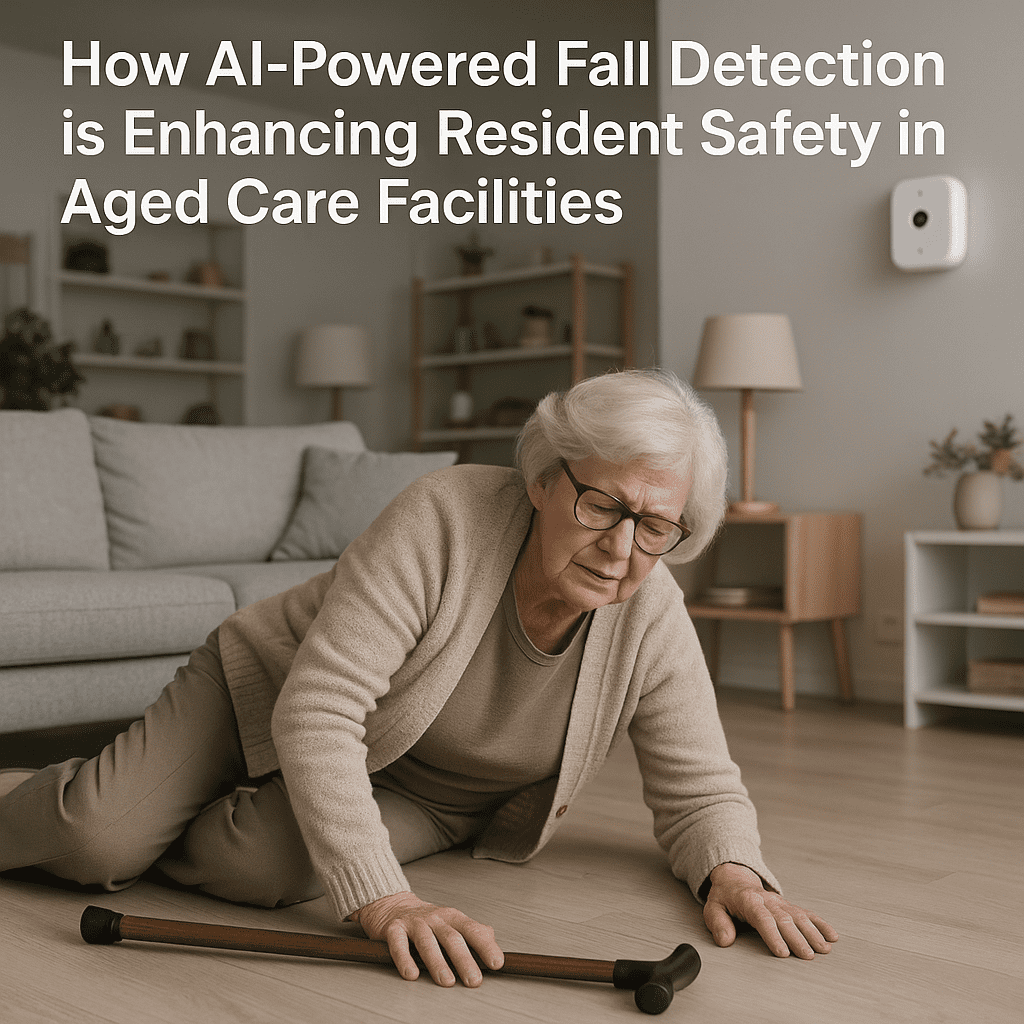
Imagine it’s movie night at your local aged care home. Everyone is laughing, the popcorn is ready, and suddenly someone slips and falls. In a normal setup, it might take a while before anyone knows what happened. But now, smart systems powered by artificial intelligence, or AI, can notice a fall right away, alert a caregiver, and even send a message to a nurse’s smartwatch. That’s the magic of AI-powered fall detection—and it’s changing safety in aged care for the better.
Falls are a big problem. The World Health Organization reported in 2023 that about 37 million people around the world need medical help each year after a fall. In 2024, the Centers for Disease Control and Prevention said that one in four adults over 65 falls every year, making falls the number one cause of serious injuries for older adults.
AI fall detection systems are changing how care homes respond. Unlike old models that rely on a person pressing a button, these systems can see, understand, and act automatically. They use special sensors and smart computer programs to recognize when someone has fallen, even before anyone calls for help.
2. The Growing Need for Modern Safety Tools in Aged Care
People are living longer, and aged care services need better ways to keep up with growing needs.
1. Population Growth: The United Nations expects that by 2030, one out of every six people in the world will be over 60 years old. That means more people to care for and more safety risks if facilities don’t improve.
2. Staff Shortages: The OECD says global caregiver shortages are continuing in 2024, so staff often have too many residents to look after.
3. Emotional and Financial Impact: A fall can cause more than physical harm. It can affect confidence, worry families, and increase costs for medical care and insurance.
Modern aged care homes need digital “eyes and ears” to help protect residents, even when staff can’t be everywhere at once.
3. How AI-Powered Fall Detection Systems Work
These systems aren’t robots from a science fiction movie. They’re smart tools that quietly watch for danger and act fast when needed.
Sensor Types
1. Wearable Devices – Smartwatches and pendants that track movement and position.
2. Ambient Sensors – Motion detectors or floor sensors that notice unusual movement or pressure.
3. Camera-Based Systems – Smart cameras that recognize unusual actions while keeping people’s privacy safe.
The AI Magic
AI uses something called machine learning and computer vision to understand movement. It can tell the difference between sitting down quickly and actually falling.
When the system thinks someone has fallen:
– It checks the data in real time to confirm what happened.
– It instantly sends alerts to caregivers or family members.
– If connected with smart building systems, it can even turn on lights or alarms to guide staff to the right place.
SMPLSINNOVATION helps clients connect these systems into one clear, simple platform so families, nurses, and doctors can all stay updated.
4. The Benefits of AI Fall Detection in Aged Care
Care homes are moving fast to adopt this technology. Here’s why it’s making such a big difference:
1. Faster Emergency Help – Caregivers are notified right away, so help arrives quicker.
2. Better Accuracy – The AI learns what normal movement looks like, so it avoids false alarms.
3. Around-the-Clock Monitoring – Residents are watched 24/7 without feeling like they’re being spied on.
4. Privacy Protection – Most systems show body outlines, not faces or details.
5. Useful Data – Staff can track fall patterns to improve safety.
6. Less Stress for Staff – Caregivers can focus on personal care while the system monitors for falls.
7. Remote Checks – Families and doctors can see updates through secure apps.
8. Fall Prediction – AI can warn who might be most at risk of falling before it happens.
9. Meeting Safety Rules – The systems help facilities meet new quality and safety standards.
10. More Confidence – Residents feel safer and more independent, which helps them stay happy and calm.
AI isn’t just about preventing accidents—it’s about building trust and comfort for everyone.
5. New Advances and Insights in 2024
Fall detection technology is improving faster than ever.
Recent Studies and Reports
– In June 2024, Nature Medicine published a study showing a 32% faster response time using new AI wearables.
– In May 2024, McKinsey Health Institute predicted the fall detection market could reach 2.3 billion dollars by 2027.
– In June 2024, IEEE researchers shared how AI devices can process fall data locally, keeping information safer.
Leading Companies and Products in 2024
1. SafrSense AI (US) – Camera systems with gesture recognition.
2. ElderGuard Technologies (Canada) – Stick-on patches that detect movement.
3. ViewProtect (UK) – Camera systems that keep video data private.
4. Fallsight Labs (Germany) – Predictive systems linked with health records.
5. StableStep (Japan) – Shoes that can sense balance.
6. GuardianBeam (Australia) – Sensors that use infrared light.
7. FallFree Health (Singapore) – AI wristbands that respond to voice commands.
8. NovaCare Systems (Sweden) – Cloud-connected safety platforms.
9. LifeWatchX (US) – Smartwatches linked to hospital systems.
10. SentraCare Robotics (Korea) – Wall sensors with emotion-recognition abilities.
Regulation Updates
– The European Union’s AI Act (2024) requires companies to be open about how health AI systems work.
– The U.S. FDA introduced new rules in 2024 to make sure AI in healthcare stays safe and fair.
6. How Aged Care Homes Can Successfully Use AI Systems
Introducing AI-powered safety systems takes careful planning and teamwork.
1. Data Privacy and Compliance
Facilities must follow laws like GDPR and HIPAA to protect resident data. Choose systems that use local data storage, anonymized videos, and clear privacy policies. Always make sure residents understand and agree to how technology is used.
2. Connectivity and Setup
A strong internet or 5G network is needed for real-time alerts. Backup power and storage keep things running if connections fail. Linking the AI system with nurse call buttons or smart lights makes responses even faster.
3. Staff Training and Support
Give clear training sessions that are easy to understand and a little fun. Encourage staff to share feedback to improve the system. Celebrate early successes—every saved moment counts.
7. Looking Ahead: A Smarter and Safer Future for Aged Care
AI-powered fall detection isn’t just about preventing falls—it’s about helping everyone feel more confident and cared for. SMPLSINNOVATION is proud to help healthcare teams bring together smart technology and human kindness.
The future of aged care will include fast alerts, predictive tools, and safe designs that put residents first. The goal is simple: a world where older people live freely, safely, and happily because their homes are always watching out for them.
Final Thoughts from SMPLSINNOVATION
At SMPLSINNOVATION, we believe in making aged care safer through innovation. AI-powered fall detection systems offer peace of mind for residents, families, and staff alike. Safety is serious work, but technology helps us handle it with care and confidence. Together, we can build a future where every fall is noticed, every response is fast, and every resident feels secure and supported.