How AI-Powered Discharge Prediction Tools Are Reducing Hospital Readmissions in Australia
By SMPLSINNOVATION Health Technology Consulting – January 2024
1. Introduction: The Growing Pressure of Hospital Readmissions
Hospitals across Australia are as busy as a coffee shop on a Monday morning. Beds are full, staff are tired, and many patients are coming back soon after being sent home.
This isn’t just the hospitals’ problem. It’s something the whole country is trying to solve through Australia’s National Health Reform Agreement. Governments and health networks are looking for smart ways to help people stay healthy after leaving the hospital.
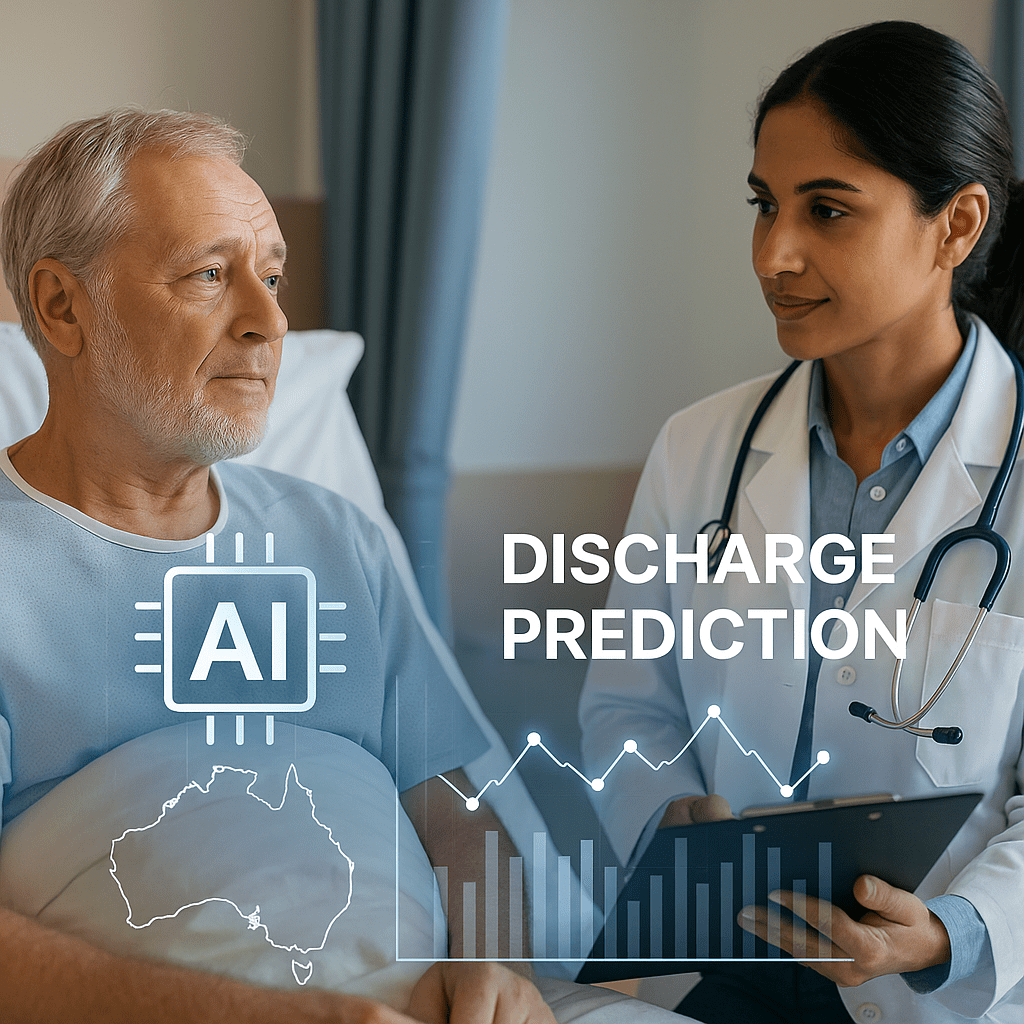
This is where AI-powered discharge prediction tools come in. These tools use machine learning and patient data to predict who might return to the hospital soon after being discharged. The goal is to help doctors plan better, give extra care when needed, and keep patients well at home.
This article looks at real results, new pilot programs, and what happened in late 2023 to early 2024 as Australian hospitals began using AI to prevent avoidable readmissions.
2. The Challenge of Hospital Readmissions in Australia
Many hospitals in Australia face the same ongoing problem — too many patients coming back soon after discharge. This causes stress for doctors and nurses, costs a lot of money, and can reduce the quality of care.
Key 2024 Statistics
1. Heart Failure: About 24% of patients return within 30 days.
2. COPD (Chronic Obstructive Pulmonary Disease): Around 20–22% come back within a month.
3. Diabetes Complications: Between 14–16%, depending on the area.
4. National Average: About 8.5% across all conditions, higher in rural and remote hospitals.
5. Financial Burden: Nearly 1.9 billion dollars each year in preventable readmissions.
This is not only costly but also hard for staff trying to care for both new and returning patients.
Why Traditional Discharge Planning Struggles
1. Manual data entry takes time and can include mistakes.
2. Different computer systems don’t always share information well.
3. Discharge rules vary between hospitals.
4. Doctors must often rely on instinct instead of data.
5. Follow-up care after leaving the hospital can be delayed.
Smart data tools can help by showing who is really at risk, based on facts instead of guesswork.
3. The Rise of AI-Powered Discharge Prediction Tools
AI discharge tools use computer models to study thousands of previous cases. They find hidden patterns that point to which patients are most likely to return. Think of them as smart helpers that tell doctors, “This patient might need more care before going home.”
These tools use information from electronic health records, test results, scans, and even social data such as how someone lives or how much help they have at home.
Examples of Australian Projects (as of January 2024)
1. CSIRO’s Predictive Readmission Model with Queensland Health uses machine learning to spot chronic disease patients at risk, improving accuracy by 19%.
2. NSW Health’s NextGen Discharge connects to the My Health Record system to offer real-time predictions for doctors.
3. Monash Health and IBM created easy-to-read dashboards that show readmission chances.
4. WA Health’s Rural Triage Pilot helps smaller hospitals plan better follow-ups.
5. The Royal Children’s Hospital in Melbourne is testing a special tool for kids.
These projects show how Australian teams are blending local ideas with world-leading technology.
4. How These Tools Work — The Data and the Models
You don’t need to be a data scientist to understand the basics. Let’s look at how the system works.
AI models mix many types of data, such as:
1. Clinical information like diagnoses, vital signs, and treatments.
2. Demographic details like age, gender, and location.
3. Behavior data about medication use or activity levels.
4. Social data such as family support and access to transport.
5. History of past admissions and test results.
By putting these data sources together, AI finds complex risk patterns that people alone might miss.
Developing the Models
1. Data is cleaned and checked for errors.
2. The system learns from past examples of who was readmitted.
3. Important factors are chosen that affect outcomes.
4. The model is tested with new data to make sure it’s accurate.
5. Results are checked to make sure they are fair.
Privacy and Security
AI health tools must follow strict privacy and data rules in Australia, such as:
– The Australian Digital Health Agency’s 2024 Interoperability Blueprint.
– Updated privacy guidance from the Office of the Australian Information Commissioner.
– ISO 27701 standards for protecting private information.
Data safety is a key part of every system.
5. Top 10 Features in Current Australian AI Systems
1. Risk scores for 7-, 30-, and 60-day readmissions.
2. Alerts that appear on doctor dashboards.
3. Natural language processing to read written notes.
4. Use of wearable data to track movement and readiness.
5. Adjustable risk levels by condition.
6. Clear explanations showing why certain risks were predicted.
7. Smooth data sharing across systems.
8. Models that learn and improve over time.
9. Feedback from doctors to make the system smarter.
10. Automatic post-discharge links to community health services.
These tools don’t replace doctors — they make their work easier and more reliable.
6. The Impact So Far — 2023 to Early 2024
Early trials show very positive results.
1. The CSIRO-Queensland program saw a 15% drop in unplanned readmissions for heart failure patients.
2. The NSW Health pilot improved discharge speed by 22%.
3. The Monash dashboard made doctors 30% more satisfied with discharge planning.
4. WA Rural Hospitals found 40% of at-risk patients earlier than before.
5. The Royal Children’s Hospital saw a 12% drop in non-urgent returns within 60 days.
Patients also say they feel more confident when they know their discharge plan has digital support behind it.
7. Challenges and Future Directions
There are still a few bumps in the road.
Current Challenges
1. Data is separated between different systems.
2. AI models can be biased if the data isn’t balanced.
3. Doctors need clear proof and explanations to trust the tools.
4. Legal questions remain about responsibility when mistakes happen.
5. Smaller hospitals may find costs and setup harder to manage.
Looking Ahead
The main goals for 2024–2025 are:
1. Expanding data to include more regional hospitals.
2. Using secure shared learning across hospitals while protecting privacy.
3. Mixing AI with telehealth and wearable devices for ongoing patient monitoring.
With continued teamwork and careful planning, AI prediction tools could help hospitals across Australia reduce readmissions, save money, and keep patients healthier at home.