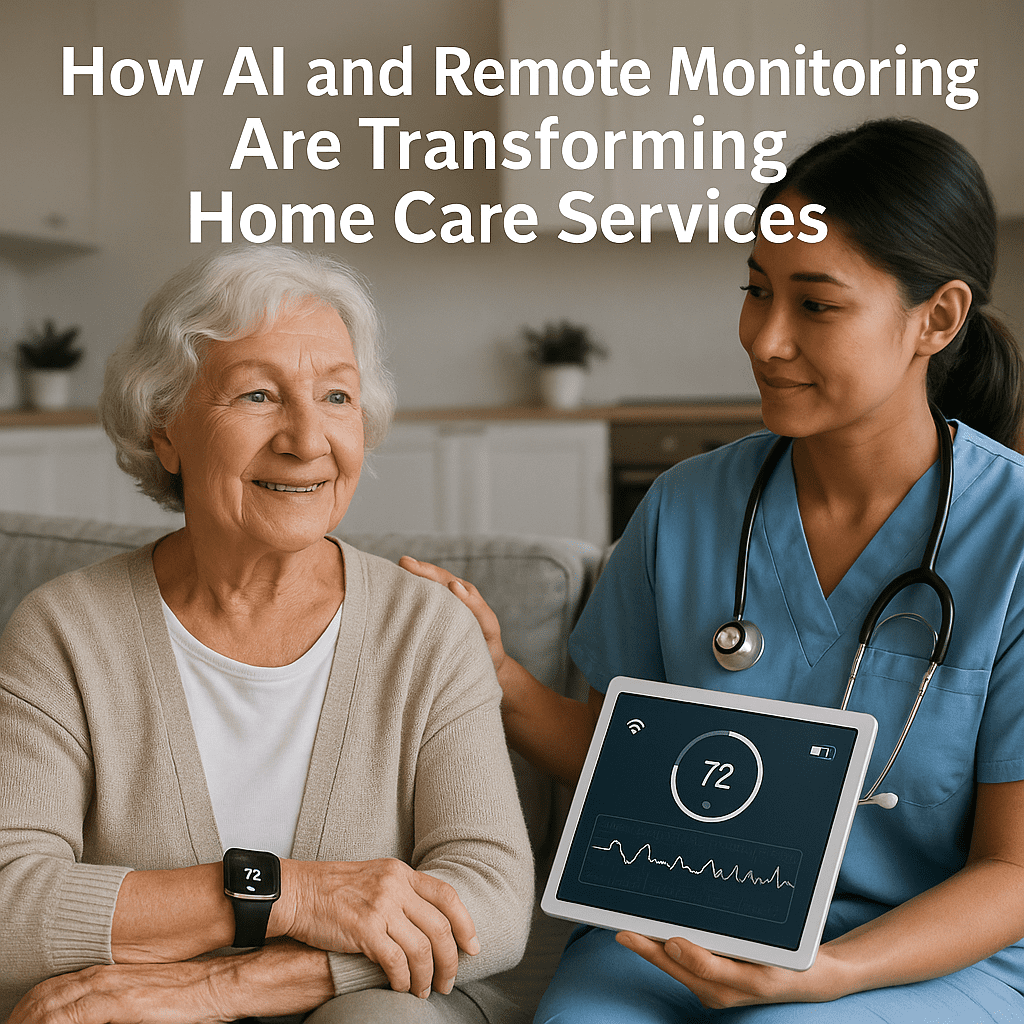
How AI and Remote Monitoring Are Changing Home Care Services
Published by SMPLSINNOVATION – September 2025
Introduction: The Future of Home Care
Health care is not getting easier. People are living longer, more folks are dealing with long-term health problems, and doctors and nurses are already working harder than ever. That’s where Artificial Intelligence (AI) and Remote Patient Monitoring (RPM) step in.
This isn’t science fiction. AI and RPM are already changing how care at home works. From spotting early warning signs of heart problems, to making sure Grandma takes her medicine, the future is here now.
In this article, we’ll look at why home care needs a big change, what AI and RPM really mean, 10 amazing examples of AI in action, 10 new tools in remote monitoring, the benefits for everyone, the risks we need to watch, and what the future may look like.
Why Do We Need Change in Home Care?
Here are three reasons why care at home has to change:
1. People are living longer. By 2050, one out of every six people will be over age 65.
2. More people have ongoing conditions like diabetes and heart disease. This already makes up most health care costs around the world.
3. There aren’t enough health workers. The World Health Organization says that by 2030, we will need 10 million more nurses, doctors, and caregivers.
That means more demand for care at home, not just hospitals. And AI and RPM could be the lifeline we need.
What Are AI and RPM?
AI in health care means smart computer programs that study health data, make predictions, and offer advice. Think of it like a super helper that never gets tired.
Remote Patient Monitoring (RPM) means using tools like smart watches, health trackers, or connected sensors to check a person’s vital signs while they are at home, not at the hospital.
Put together, RPM collects data and AI makes sense of it. The result is easy-to-understand insights that help patients, families, and doctors.
10 AI Innovations in Home Care
Here are 10 ways AI is making a difference in home care:
1. Predicting problems before they get serious, like spotting early signs of heart failure.
2. Giving personal advice on diet, exercise, or medicine.
3. Turning speech or notes into clear medical records.
4. Detecting falls and sending fast alerts.
5. Helping decide which patients need care the most, right now.
6. Checking for signs of depression or stress through voice or text.
7. Sending friendly reminders to take medicine.
8. Acting as a digital companion to fight loneliness.
9. Using cameras to spot safety risks at home.
10. Tracking rehab exercises and giving feedback.
Recent reports show that AI is already catching patient problems up to two days earlier than doctors, and AI rehab tools are helping people stay on track with recovery.
10 Remote Monitoring Tools Changing Home Care
Here are the latest tools used in remote monitoring:
1. Continuous glucose monitors for diabetes care, no more finger pricks.
2. Smart inhalers that track use for asthma and lung disease.
3. Wearable ECG monitors that catch irregular heartbeats.
4. Smart scales that notice sudden weight changes.
5. Smarter blood pressure cuffs that study patterns.
6. Oxygen trackers you can wear like a ring.
7. Smart thermometers that spot fevers early.
8. Motion sensors that notice skipped meals or less movement.
9. Connected pill dispensers that log medicine use.
10. Sleep trackers that notice signs of sleep apnea.
Reports confirm these tools, plus AI dashboards, are already helping doctors act faster and manage long-term illnesses better.
Benefits for Patients, Caregivers, and Providers
Why does this matter? Here are the benefits:
Patients get more independence, fewer hospital visits, and peace of mind.
Caregivers get clearer insights and more time for real human care.
Doctors get better results, fewer patient returns to the hospital, and smoother workflows.
Health systems save money—billions globally by 2030.
Society gets care that can grow without exhausting all our health workers.
Challenges We Must Watch
Of course, there are still challenges to fix:
1. Protecting patient privacy with all this new data.
2. Making sure the technology is affordable and fair for everyone.
3. Making sure AI is trained on diverse data, so it works for all people.
4. Preventing too many device alerts from overwhelming caregivers.
5. Connecting new devices with older health systems smoothly.
The Future of Home Care
Looking ahead, AI and RPM will only work closer together. We can expect:
Home care that adjusts daily in real time.
Voice-based health assistants that people can talk to.
AI that not only gives alerts but also arranges care.
Helper robots that remind, lift, or fetch.
Virtual hospitals where more serious care also happens at home.
Conclusion: A Revolution in Home Care
AI and remote monitoring are not side projects anymore. They are at the center of home care. This means safer patients, less stress on caregivers, and smarter health systems.
At SMPLSINNOVATION, we are excited about what this will mean for our partners and clients. Whether you are a provider adding AI tools, or a health tech company building something new, now is the time to move forward.
The change in home care is not a prediction. It’s already here.