Digital Medication Management Tools for Safer Home Care: Benefits, Challenges and Adoption Trends
By SMPLSINNOVATION, February 2024 | Health Tech Edition
1. Introduction: The State of Home-Based Medication Management
If you have ever watched someone try to manage five pill bottles, two inhalers, and a messy notebook, you know how confusing it can be. Digital medication management is here to fix that chaos. Today, many people receive care right at home, and taking the right medicine at the right time is very important for safety.
The CDC says that every year, over 1 million people in the U.S. go to the emergency room because of medication mistakes, and about half of those happen at home. The WHO also reports that about half of all patients around the world do not take their medicine as told.
But there is good news. New technology is making home care easier and safer. Instead of simple pillboxes and reminder notes, we now have smart devices, apps, and AI helpers that connect everything together.
2. The Rising Role of Digital Tools in Medication Safety
Digital medication management means using software, sensors, and smart systems to make sure people take the right medicine, in the right amount, at the right time.
This new world includes:
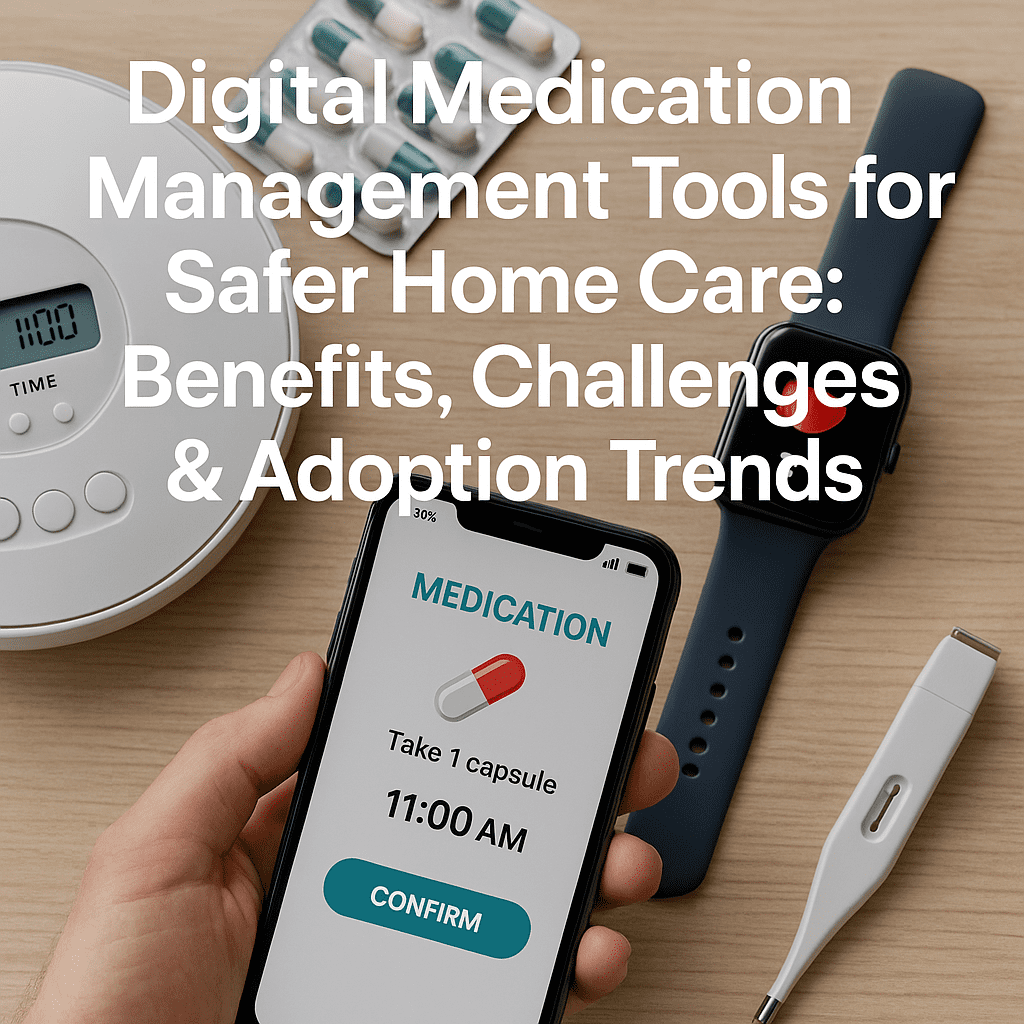
– Smart pill dispensers that open only when it is time for your dose.
– Apps that connect with pharmacy systems, wearables, and electronic health records.
– AI tools that predict when someone might forget or stop taking their medicine.
HIMSS reports that automation and smart analytics now help doctors predict problems before they become emergencies. Seeing patterns, like missed doses or worsening symptoms, lets care teams act faster and help earlier.
3. Top 10 Emerging Types of Digital Medication Management Tools
There are many new digital tools used in 2024. Here are some of the most popular types:
1. Smart Pill Dispensers – Devices like MedaCube or Hero control dosing times, lock missed doses, and send alerts to caregivers.
2. AI-Powered Adherence Apps – Apps such as Medisafe use helpful reminders and smart messages to keep people on track.
3. Connected Inhalers and Injectors – These Bluetooth devices record every use automatically.
4. Wearable-Integrated Reminders – Smartwatches now remind users when to take their medicine.
5. Telepharmacy Platforms – Online services that let people talk with pharmacists from home.
6. Blockchain Medication Verification – These systems help stop fake drugs by tracking medicine safely through the supply chain.
7. Voice-Activated Assistants – Tools like Alexa Health let people ask about their medication schedule out loud.
8. Remote Monitoring Systems – These tools update doctors in real time if doses are missed or side effects appear.
9. IoT Refill Trackers – Devices that notice low pill counts and order refills automatically.
10. Machine Learning Predictive Tools – These programs find out who might stop taking their medicine before it happens.
Together, these tools help create a move from reacting to problems to preventing them before they occur.
4. Evidence-Based Benefits for Patients, Caregivers, and Providers
Research shows digital medication tools really work.
– Better medication tracking: Studies show digital tools increase how often people take their medicine correctly by 15 to 20 percent.
– Fewer hospital visits: Hospitals using these systems have seen readmissions drop by as much as 25 percent.
– Clearer communication: Connecting patients, doctors, and pharmacies helps everyone stay informed.
– More independence: Older adults feel more confident managing their medicine on their own.
– Fewer mistakes: Automation helps health teams check and update medicine lists faster.
These tools build trust between patients and care providers, making health care at home smoother and safer.
5. Key Challenges and Barriers to Adoption
Even with great progress, some challenges remain.
1. Not everyone understands how to use new technology, especially seniors or people in rural areas.
2. Data privacy is a big concern, and protecting personal information is very important.
3. Many systems do not connect easily to existing hospital or pharmacy programs.
4. People can get tired of using too many devices.
5. Some tools are expensive and not always covered by insurance.
6. Some doctors and nurses still see these systems as extra work.
Experts say success depends on making tools easy to use and fit into real life.
6. Insights from Recent Studies and Reports
Recent reports show strong trends toward digital care:
– JMIR found digital pill devices help older adults manage multiple medicines better.
– HIMSS reported faster recovery and less medicine waste when predictive tools are used.
– Over 60 percent of pharmacists now suggest digital tools for patients taking many medications.
– Wearable companies and drug makers are working together to design connected health systems.
– The telepharmacy market is expected to reach 12 billion dollars by 2026.
– WHO warns that digital access must be equal for everyone.
– Future systems may manage doses automatically, without human input.
– New policies may soon support digital care for Medicare and Medicaid users.
– More older adults are starting to use smart medication boxes.
– AI medication tools could save billions of dollars by preventing problems before they happen.
These findings show that home-based digital health is growing quickly and changing how care works.
7. Looking Ahead: Adoption Trends for 2024 and Beyond
The big goal now is better connection, design, and teamwork.
– Automation will make medication care more hands-free.
– Simple, friendly designs with clear messages will help people feel comfortable using the tools.
– Companies from health care, tech, and insurance will work together to create easier systems.
– Virtual digital pharmacists will become personal coaches, guiding people through their daily medication routines.
Digital health tools will keep improving, making home care safer, smarter, and easier for everyone.