AI-Powered Solutions in Aged Care: Making Life Better with Technology
As people around the world get older, the number of seniors is growing fast. The World Health Organization says that by 2050, one in six people will be over 65 years old. But while more people need care, there aren’t enough caregivers to go around. That’s where artificial intelligence, or AI, comes in. AI can help caregivers do their jobs better, keep seniors safe, and give them more independence.
Studies show that AI can help reduce hospital readmissions by up to 30%. This means fewer emergencies and more care that’s focused on prevention. At SMPLSINNOVATION, we believe technology should make life easier and kinder for everyone, not just more efficient.
Current Challenges in Aged Care
Aged care faces a lot of challenges every day:
1. Staffing Shortages and Burnout – There aren’t enough caregivers, and many are overwhelmed.
2. High Healthcare Costs – People are living longer and need more care, which costs more money.
3. Chronic Conditions – Many seniors live with conditions like diabetes, arthritis, and memory loss.
4. Social Isolation – Many older adults feel lonely and disconnected.
5. Uneven Care Quality – Different facilities provide very different levels of care.
6. Manual Data Recording – Many staff still record notes by hand.
7. Poor Communication – Doctors, families, and caregivers don’t always share information properly.
8. Slow Emergency Response – Falls or health problems aren’t always caught right away.
9. Lack of Personalization – Care that works for one person might not work for another.
10. Emotional Fatigue – Caring for others can be emotionally hard for staff and residents.
AI can help solve many of these problems and bring some smiles back to aged care.
AI Transformations in Aged Care
Predictive and Preventive Health Monitoring
AI can help caregivers stay one step ahead.
1. AI Fall Detection – Smart sensors can warn caregivers before a fall happens.
2. Predictive Health Tools – AI can see patterns in health data and warn about possible flare-ups.
3. Smart Wearables – Devices track heart rate, activity, and sleep for better health.
4. Early Dementia Detection – AI can notice small changes in speech or movement.
5. Shared Health Records – AI brings all patient data together so all caregivers stay updated.
6. Virtual Medical Assistants – Digital helpers remind patients about medicine or appointments.
7. Symptom Tracking – AI finds trends and possible hidden health issues.
8. Personalized Alerts – Each person’s health warnings can be set just for them.
9. Emergency Triage – AI can flag urgent cases faster.
10. Real-Time Dashboards – Caregivers can monitor seniors remotely.
This means fewer late-night emergencies, less stress for caregivers, and safer seniors.
Intelligent Assistive Technologies
AI can also make life more fun and connected.
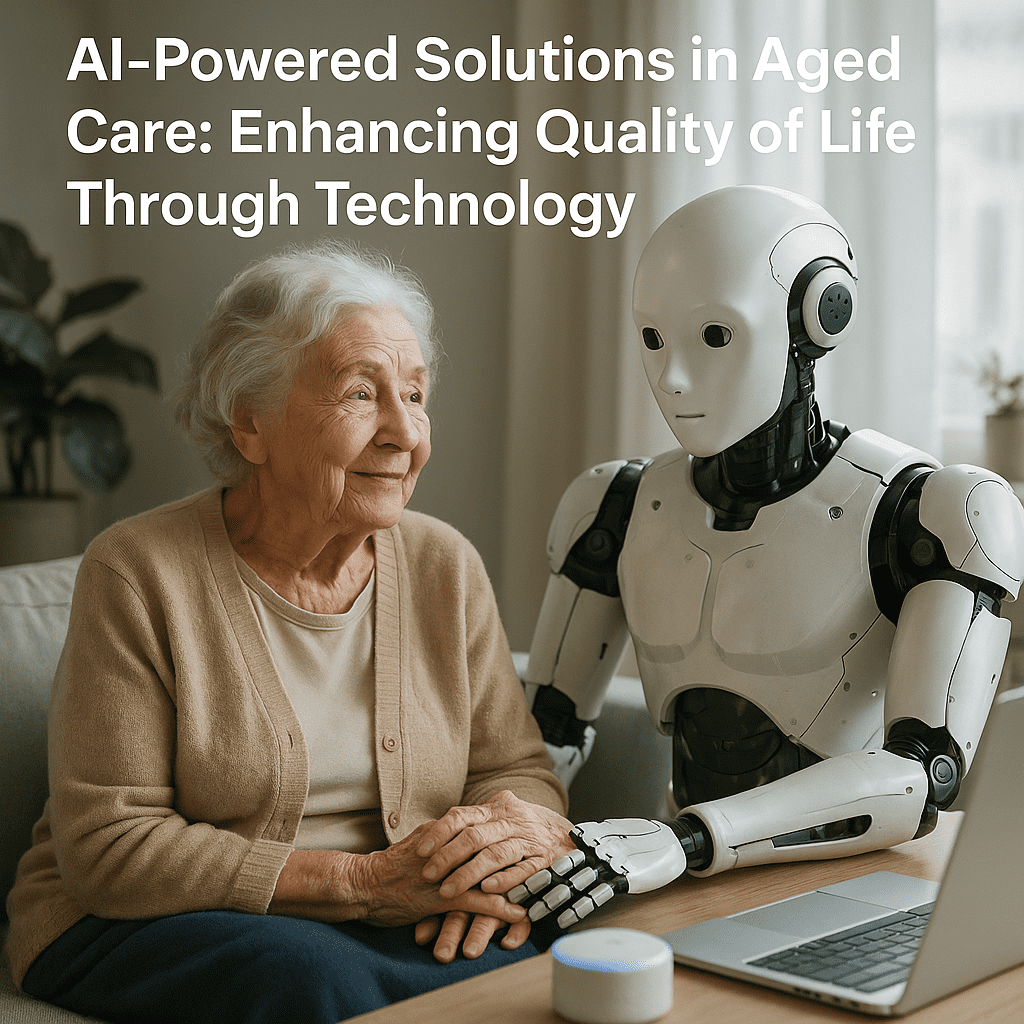
1. AI Companions – Robots like PARO or ElliQ can chat, tell jokes, and keep seniors company.
2. Virtual Assistants – Voice devices help with reminders and connecting to family.
3. Smart Homes – Lights and temperatures adjust automatically for comfort and safety.
4. Voice Controls – Seniors can use voice commands if they have limited movement.
5. Virtual Reality Therapy – VR can bring back memories and improve mood.
6. Helper Robots – Robots can lift patients or deliver food safely.
7. Smart Wheelchairs – Some chairs can now drive themselves using AI.
8. Pill Dispensers – Machines remind seniors to take medicine and alert staff if doses are missed.
9. Mobility Trackers – Devices track changes in movement to prevent falls.
10. Telepresence Robots – Families can visit loved ones through moving, talking robots.
Technology is helping older adults stay independent without feeling alone.
Data-Driven Personalization of Care
AI helps caregivers give truly personal care.
1. Personalized Meal Plans – AI makes meal suggestions based on health needs and taste.
2. Medication Checks – AI makes sure drugs don’t interact badly and are taken on time.
3. Exercise Coaching – AI can create safe, simple routines to stay active.
4. Mood Tracking – AI can sense changes in mood and alert caregivers if something seems off.
5. Sleep Support – AI adjusts lighting and temperature for better sleep.
6. Behavior Insights – Subtle behavior changes can show when extra help is needed.
7. Friendship Matching – AI can connect seniors with others who share similar interests.
8. Brain Games and Music – AI can choose activities that keep the mind sharp.
9. Care Planning – Data helps predict what future care someone might need.
10. Family Dashboards – Families stay informed and involved in care decisions.
AI doesn’t replace kindness—it helps caregivers have more time for it.
Ethical, Privacy, and Regulation Considerations
Using AI safely means protecting people’s rights and keeping trust.
1. Data Security – Health information must be kept safe.
2. Clear Consent – Seniors need to understand how their data will be used.
3. Fairness – AI must work for everyone, not just certain groups.
4. Compliance – AI systems must follow local and international laws.
5. Ethics Reviews – Teams should review how AI is used in care settings.
6. Regular Audits – Systems need to be checked often to stay fair and accurate.
7. Human Oversight – Machines help but do not replace human judgment.
8. Explainable AI – Care teams should understand how AI decisions are made.
9. Cultural Awareness – AI must respect language and cultural values.
10. Dignity and Empathy – Technology should always be used with compassion.
At SMPLSINNOVATION, we believe technology should always serve people, never the other way around.
Case Studies and Recent Implementations
Across the world, hospitals and aged care centers are starting to use AI in new and helpful ways. In Australia, one facility uses AI-powered sensors to monitor residents’ safety at night. In Japan, social robots help elderly people feel less lonely. In the United States, AI systems predict when residents might need extra medical attention.
These examples show that when technology and compassion work together, seniors can live safer, happier, and more independent lives. AI will never replace the human heart—but it can make caring for others a little bit easier, and a lot more connected.