Unlocking Creativity: The Role of AI in Modern Art and Design
Date: February 10, 2024
By: SMPLSINNOVATION
I. Introduction
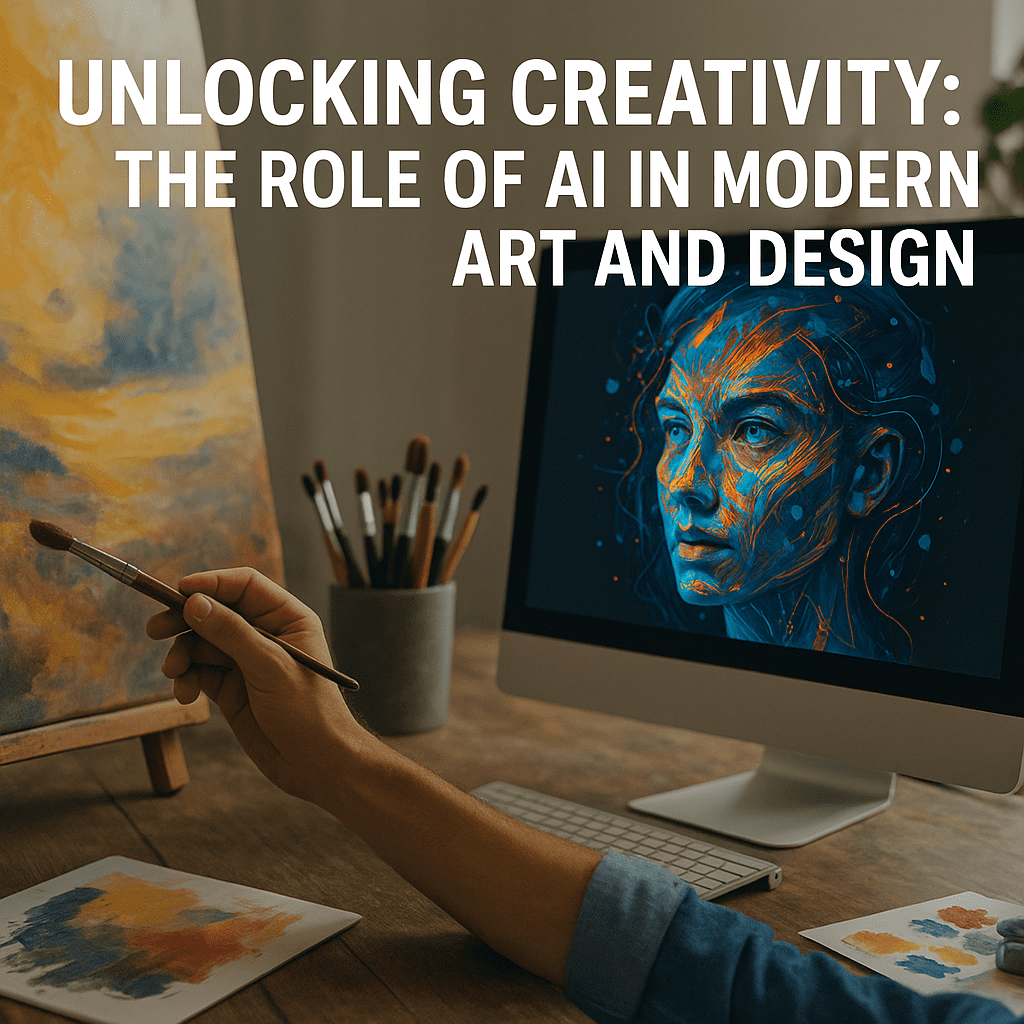
What if Picasso had a laptop and a ChatGPT subscription? In 2024, that idea doesn’t sound so strange. Artificial intelligence is now part of the creative world, showing up in everything from digital paintings to hospital signs. AI isn’t just a tool anymore—it’s becoming a partner and a source of inspiration.
This post looks at how AI helps boost creativity and design. At SMPLSINNOVATION, we see how art and technology connect to make work more creative, efficient, and human-centered.
II. The Current Landscape of AI in Art and Design
The start of 2024 brought lots of exciting changes that are reshaping how artists and designers work.
Key Developments in 2024:
1. Diffusion models now make highly detailed images in just seconds—almost as fast as brewing a cup of coffee.
2. New design tools, like Adobe Firefly and Canva, have smart assistants that understand simple instructions like “make it brighter” or “add more energy.”
3. AI art platforms are growing quickly, giving more people access to creative tools and raising new questions about artist rights.
4. Art galleries in London and Tokyo are showing exhibits that mix human and AI-made art side by side.
5. Surveys show people are becoming more comfortable seeing AI-made visuals as real and authentic, especially in advertising.
Even in health tech, these changes matter. The same creative tools that help artists can also help build better patient portals, easier dashboards, and friendlier digital spaces for healthcare.
III. How AI Enhances the Creative Process
AI doesn’t replace human creativity—it helps it shine. It takes care of the boring parts so humans can focus on imagination and strategy.
Here are 10 ways AI is improving creative work:
1. It handles simple, repetitive tasks like resizing or cleaning up designs.
2. It quickly makes “mood boards” to help spark ideas.
3. It can turn short text prompts into images.
4. It helps create new fonts that fit both style and readability.
5. It finds matching color palettes and suggests combinations that feel right emotionally.
6. It previews realistic materials like glass, marble, or skin tones.
7. It checks composition and balance to make designs more appealing.
8. It adds motion and sound to bring stories to life.
9. It connects different design apps to work together smoothly.
10. It helps teams collaborate in real time, wherever they are.
For healthcare designers, these features can help create patient-centered designs, clearer data visuals, and more emotionally engaging content.
Fun fact: AI never needs a coffee break, but you still should!
IV. Ethical, Aesthetic, and Copyright Considerations in 2024
Every creative revolution brings debates, and AI art is no exception. People are asking big questions about fairness and originality.
Here are 10 major topics being discussed:
1. Who owns an AI-made image—the person who typed the idea or the person who coded the AI?
2. Did the AI learn from other artists’ work, and were those artists asked first?
3. Should AI art have a special label or watermark?
4. Can AI-made art be protected by copyright laws?
5. Is AI mixing old art too closely when it creates new pieces?
6. Are data sets introducing unfair biases or stereotypes?
7. Can AI be used to restore old or damaged art?
8. When does AI help become replacement?
9. How much energy do AI systems use, and is that sustainable?
10. How will creative jobs change as AI grows?
At SMPLSINNOVATION, these issues matter because the same questions apply in healthcare design. We must think carefully about fairness, authorship, and bias when using AI in digital tools for patients.
V. Lessons for Health Technology Innovators
You might wonder what AI art has to do with healthcare technology. The answer: a lot. Creativity helps make digital health tools that feel more humane and easy to use.
Here are 10 lessons from the creative world that can guide healthcare innovation:
1. Prototype quickly and update often.
2. Use color and design to create calm, caring experiences.
3. Encourage collaboration between doctors, designers, and developers.
4. Let AI adjust content based on patient needs and reading levels.
5. Create hospital spaces that adapt light and visuals for comfort.
6. Use AI to produce designs that include and represent everyone.
7. Turn data into visual stories that engage users.
8. Reduce waste by using AI’s efficient design processes.
9. Be open about when and how AI is used in your tools.
10. Give teams freedom to experiment with AI and discover new ideas.
Hospitals may not need graffiti on their walls, but they do need creativity at their heart.
VI. The Human Touch in an Algorithmic Age
No matter how advanced AI becomes, it can’t replace the human heart. Art and design still need emotion and empathy. The best projects combine human care with AI efficiency.
In healthcare design, this means using technology not just to save time, but to inspire trust and connection. By blending creativity with compassion, we can build tools and spaces that truly help people heal.
VII. Conclusion
AI and creativity together are opening a new chapter in both art and technology. It’s a mix of inspiration, challenge, and innovation. From AI-assisted paintings to caring digital tools for patients, one thing stands out—AI isn’t taking away creativity; it’s amplifying it.
The real magic happens when we mix data accuracy with human curiosity and playfulness.
And if Picasso really had that laptop, he might have told it, “Make an abstract picture that smells like coffee and feels like childhood wonder.”
With today’s AI, he might just get his wish.