The Rise of AI in Healthcare: Transforming Patient Care and Diagnosis
I. Introduction
Five years ago, if someone said computers could help find cancer faster than doctors, most people would have laughed. But as we move through 2024, that idea is now becoming reality. Artificial Intelligence, or AI, is no longer just for tech fans or science fiction movies—it has become an important tool in healthcare.
Hospitals and clinics around the world are facing many challenges—staff burnout, aging patients, and the need for faster and more accurate care. The good news is that AI is helping. It can look at medical scans, predict disease outbreaks, and even help hospitals plan their supplies.
At SMPLSINNOVATION, we’ve seen how healthcare groups are using AI to make their work easier and help patients get better care. In this post, we’ll look at how AI is being used today, what it’s changing, who is leading these changes, and what challenges still need to be solved before robots start handing out prescriptions (don’t worry, they’ll be polite).
II. The Current Landscape of AI in Healthcare
According to reports from Statista and Fortune Business Insights, the global AI healthcare market could pass 200 billion dollars by 2030. That’s a huge number, even for an industry used to big budgets.
Why is AI growing so fast? There are three main reasons:
1. Better data systems – Hospitals now hold huge amounts of medical information, which AI can learn from and use to find patterns.
2. Generative AI breakthroughs – New systems like Med‑PaLM 2 and GPT‑4 can read patient notes and other records more quickly and clearly than ever.
3. Clearer rules – Organizations like the FDA and others now have better processes for testing and approving AI tools, making it easier for new technology to reach hospitals.
Major healthcare institutions such as the Mayo Clinic, Cleveland Clinic, and NHS England have already launched large AI programs to help doctors and patients. AI is now a trusted partner in medicine, not just a buzzword.
III. 10 Major Ways AI Is Changing Healthcare
Here are ten ways AI is changing how healthcare works today:
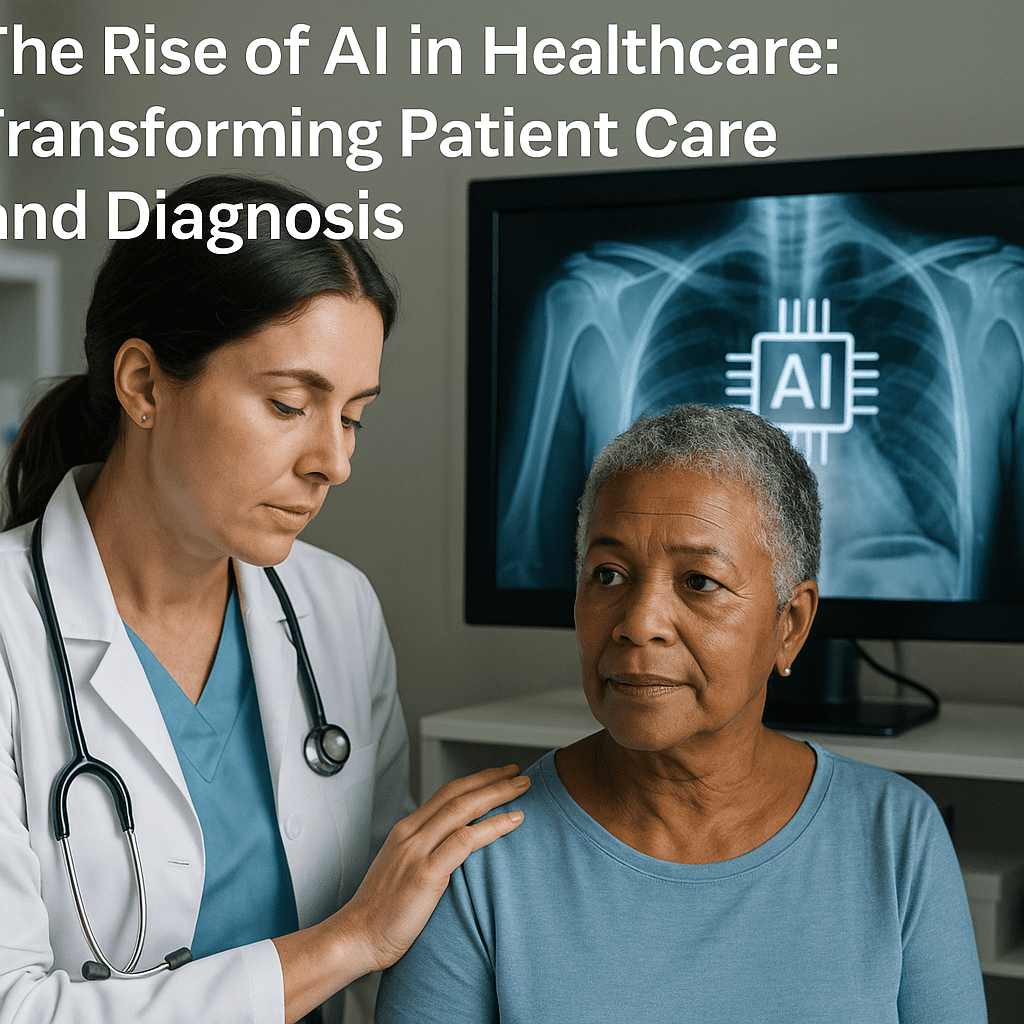
1. Medical imaging – AI helps doctors find tumors or fractures quickly and sometimes more accurately than humans.
2. Predictive analytics – AI can find early signs of diseases like heart problems or diabetes years before they start.
3. Smarter diagnostics – AI tools can study symptoms and patient history to help identify rare illnesses.
4. Drug discovery – AI can help scientists find new medicines in months instead of years.
5. Virtual assistants – AI chatbots can schedule appointments, remind patients about medicine, and answer daily questions.
6. Pathology and genomics – AI studies genetic data to help doctors create treatments designed just for one person.
7. Mental health support – AI can find signs of stress or depression by analyzing speech or messages.
8. Hospital management – AI helps hospitals manage schedules and supplies, saving money and time.
9. Remote monitoring – Wearables and AI can track vital signs in real time and alert doctors before problems appear.
10. Personalized care plans – AI helps create health plans designed for each person’s unique needs.
IV. 10 AI Tools and Startups Leading the Way
Here are ten groups leading the way in AI healthcare innovation:
1. Google DeepMind – Their tool Med‑PaLM 2 can understand and answer medical questions like an expert.
2. IBM Watson Health – Offers AI that helps doctors make better decisions using research data.
3. NVIDIA Clara – Provides tools for medical imaging and research.
4. Microsoft Azure Health Insights – Offers powerful AI linked directly to hospital data systems.
5. Tempus – Uses AI to study DNA and help personalize cancer care.
6. PathAI – Improves how doctors study tissue samples to find diseases.
7. Butterfly Network – Created a small ultrasound device with AI for instant imaging help.
8. Nuance Communications – Lets doctors use voice tools to record patient notes quickly and easily.
9. Babylon Health – Gives people virtual doctor visits through their phones.
10. Epic Systems and Microsoft Copilot – Adds AI to medical records for faster, smarter documentation.
These companies are shaping a health world worth over 200 billion dollars, powered by AI.
V. Ethical, Regulatory, and Technical Challenges
Of course, progress comes with challenges and tough questions. Here are a few:
1. Bias and fairness – AI learns from human data, which can be biased. New efforts are focused on fair and diverse training data.
2. Data privacy – Keeping patient information safe while using AI is a big challenge.
3. Regulation – Governments are working to make clear rules for safe and transparent AI tools.
4. System integration – Older hospital systems can be hard to connect with new AI tools, which is where experts like SMPLSINNOVATION come in.
5. The human touch – AI supports doctors, not replaces them. Training doctors to trust and understand AI systems is key.
When managed well, AI benefits everyone—patients, healthcare workers, and hospitals alike.
VI. What’s Next Beyond 2024
Looking ahead, we’ll see even more AI progress, such as:
• Multimodal systems that can process text, images, and real‑time data at once
• AI that keeps learning securely from new experiences
• Smarter public health systems that spot epidemics before they spread
The future of healthcare is clear—data‑driven, patient‑focused, and faster than ever.
VII. How SMPLSINNOVATION Helps
At SMPLSINNOVATION, we guide healthcare groups to use AI wisely. We help them pick the right technology, connect it to existing systems, and follow all rules. Our goal is to make AI simple and effective.
We believe healthcare innovation should always stay human, combining technology with empathy and clear communication.
VIII. Conclusion
AI in healthcare is not a future dream—it’s happening now. It’s changing how diseases are found, treated, and managed. Although there are still challenges with laws and ethics, there is no doubt that AI is here to stay.
As 2024 continues, hospitals and clinics that embrace AI will be offering smarter, faster, and better care for everyone.