Remote Patient Monitoring in Home Care: Improving Chronic Disease Management with Smart Health Devices
Date: February 11, 2024
By SMPLSINNOVATION — Health Technology Consulting for the Connected Future
I. Introduction
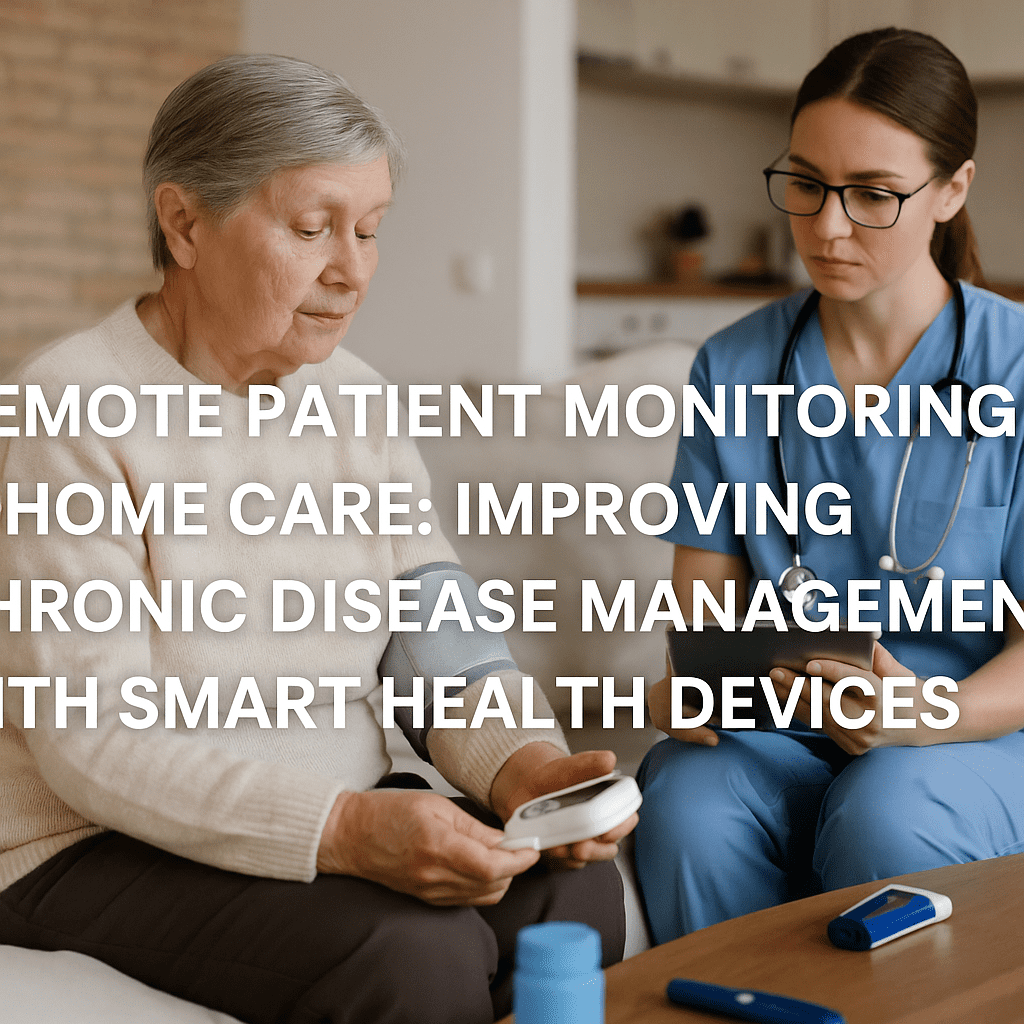
Imagine if your watch cared about your health as much as you do. That’s what Remote Patient Monitoring, or RPM, is all about. It’s not science fiction—it’s real healthcare in action.
Chronic diseases like diabetes, heart failure, and lung problems such as COPD are some of the most common and costly health issues today. The CDC says that almost 60% of adults in the U.S. have at least one chronic disease. Many people also prefer to get care at home, which makes room for new ideas like RPM.
In simple words, Remote Patient Monitoring means using connected health devices to track your health data while you’re at home. This data goes straight to your doctor in real time.
Smart health devices help everyone by improving care, cutting costs, and giving both patients and doctors more control—one smart tool at a time.
II. The Changing World of Home-Based Care
The year 2024 is a big one for home health technology. The HIMSS 2024 Health Technology Report says about 70% of healthcare groups now use some form of RPM for patients with chronic diseases. This is happening because more people want personalized care from home.
Three main reasons are making this happen:
1. Demographic Changes – People are living longer and want to stay independent while managing health issues.
2. Healthcare Costs – Hospitals are busy and expensive, so RPM helps lower costs and keeps care going at home.
3. Digital Comfort – More people are comfortable using smartphones and smartwatches to check their health.
The WHO 2024 Digital Health Brief shows that digital tools help bring care to people who live far from clinics. RPM doesn’t replace doctors—it gives them better tools to help patients stay healthy.
III. How Remote Patient Monitoring Works
RPM is not just one gadget. It’s a mix of smart devices, software, and secure data systems that work together to send important health information to providers.
Here’s how it works:
1. Devices and Sensors – Tools like smart blood pressure cuffs, glucose meters, or inhalers collect health data.
2. Data Transmission – Bluetooth, Wi-Fi, or 5G networks send data safely to cloud systems.
3. Analytics and Alerts – Computer programs use smart analysis to spot problems and send alerts.
4. Clinical Integration – All this connects to electronic medical records so the data is easy to use.
5. Feedback – Doctors and nurses can change treatment, schedule video calls, or respond to concerns without needing an in-person visit.
Security is also very important. In 2024, health tech standards require strong encryption and privacy protection so personal health data stays safe.
IV. Top Smart Health Devices for Chronic Disease Care
Here are some of the most useful devices making RPM possible in 2024:
1. Continuous Glucose Monitors (CGMs) – Track blood sugar levels in real time.
2. Smart Blood Pressure Cuffs – Send results automatically to phones and doctor portals.
3. Connected Pulse Oximeters – Check oxygen levels and send alerts when needed.
4. Smart Scales – Track weight, muscle, and body fluids.
5. Wearable ECG Patches – Watch heart rhythms for early signs of problems.
6. Smart Inhalers – Remind patients to take their medicine and track proper use.
7. AI Temperature Sensors – Notice small temperature changes that may signal illness.
8. Sleep and Movement Trackers – Help track rest and activity for people with heart or nerve issues.
9. Smart Medication Dispensers – Remind patients to take their medicines on time.
10. Remote Spirometers – Measure lung function accurately from home.
Each device sends data to a main platform that helps doctors and patients make better choices every day.
V. Clinical Impact: Better Health and Informed Patients
Research in 2024 proves that RPM really works. Studies show that it improves care and reduces hospital visits.
– Hospital Readmissions are down by 25% for heart failure patients.
– Medication adherence is up by 20–30% thanks to reminders.
– Patient satisfaction is higher, with 85% of people feeling more connected to their doctors.
Three big benefits stand out:
1. Patients feel more aware and in control of their health.
2. Doctors can act sooner to stop problems before they worsen.
3. Health results improve over time with fewer emergencies.
At SMPLSINNOVATION, we say RPM turns “sick care” into “stay well care.”
VI. Benefits for Healthcare Providers
RPM helps doctors and nurses work more efficiently and support patients better.
1. Smarter Workflows – Dashboards highlight which patients need help first.
2. Remote Triage – Teams can monitor several patients at once from one system.
3. Data-Driven Decisions – Continuous data helps doctors see health patterns faster.
4. EMR Integration – RPM tools now connect directly to big health record systems like Epic and Cerner.
5. Population Health – Data from many patients helps organizations design better community health plans.
For busy healthcare teams, RPM is like having an extra helper who never gets tired.
VII. Barriers and Challenges
Even great technology faces challenges. RPM has some speed bumps:
– Privacy and Security – Data must always stay protected against hackers.
– Compatibility – Not all devices work with all systems yet.
– Payment and Reimbursement – Insurance rules are still being updated in some places.
– Digital Skills – Some patients need help learning how to use the devices.
– Start-Up Costs – Initial setup can be expensive, even though it saves money later.
SMPLSINNOVATION helps organizations overcome these hurdles and make RPM a smooth process.
VIII. Policy and Regulation Updates
The Centers for Medicare & Medicaid Services have added new billing codes for RPM and Remote Therapeutic Monitoring, allowing more flexible use of the technology.
The FDA’s 2024 update helps speed up approval for new digital health tools while keeping patients safe.
The World Health Organization’s Global Digital Health Strategy 2024 encourages countries to make RPM accessible and consistent worldwide.
This means the world is moving together toward smarter, safer, and more connected healthcare.
IX. Conclusion: The SMPLSINNOVATION View
Remote Patient Monitoring is not the future—it’s happening right now. It’s the link between the hospital and the home, between the patient and the doctor, and between problems and prevention.
With better devices, stronger systems, and supportive policies, RPM will keep changing healthcare for the better. Patients will live healthier, doctors will have better tools, and healthcare systems will work more smoothly.
At SMPLSINNOVATION, we believe technology should help people—not just collect data. Our focus is on making Remote Patient Monitoring simple, reliable, and full of care.