How AI-Powered Predictive Analytics is Reducing Hospital Readmission Rates in Australian Aged Care Facilities
Published: February 4, 2025
By: SMPLSINNOVATION
1. Introduction
If you’ve ever had a loved one go back and forth between a hospital and an aged care home, you know how stressful it can be. Hospital readmission often feels like reliving a bad moment. It’s not only hard on families and staff but also very costly for Australia’s healthcare system.
According to The Medical Journal of Australia, nearly one in five aged care residents return to hospital within 30 days of leaving. This impacts emotional well-being and puts pressure on care staff and budgets. The Australian Institute of Health and Welfare also says these readmissions cost the system hundreds of millions every year. But beyond money, the true cost is how residents feel—confused, tired, and anxious.
This is where artificial intelligence (AI) comes in. Forget about movie robots—this kind of AI uses data to predict, prevent, and personalize care. Predictive analytics is helping doctors and nurses move from reacting to problems to preventing them before they happen. The results? Fewer hospital trips, better care, and happier residents.
2. The Readmission Challenge in Australian Aged Care
Aged care in Australia has faced big challenges in recent years—staff shortages, stricter quality standards, and the effects of the pandemic. It’s no surprise that care managers often feel like they’re juggling too much at once.
The AIHW’s 2025 National Aged Care Analytics Report showed a 9% drop in hospital readmissions since before 2023, but the national average is still around 18% for long-term residents. That’s similar to global rates, but there’s still room to improve.
The main reasons for readmissions include:
1. Chronic conditions like heart failure, diabetes, and lung disease
2. Falls, often leading to complications
3. Medication mistakes or missed doses
4. Gaps in care plans and poor communication
5. Lingering effects of the COVID pandemic
6. Workforce shortages that delay early action
Thankfully, the 2024 update to the Aged Care Quality Standards now requires data-driven care. This means using technology and evidence to make better decisions is no longer optional—it’s expected.
3. Understanding Predictive Analytics in Aged Care
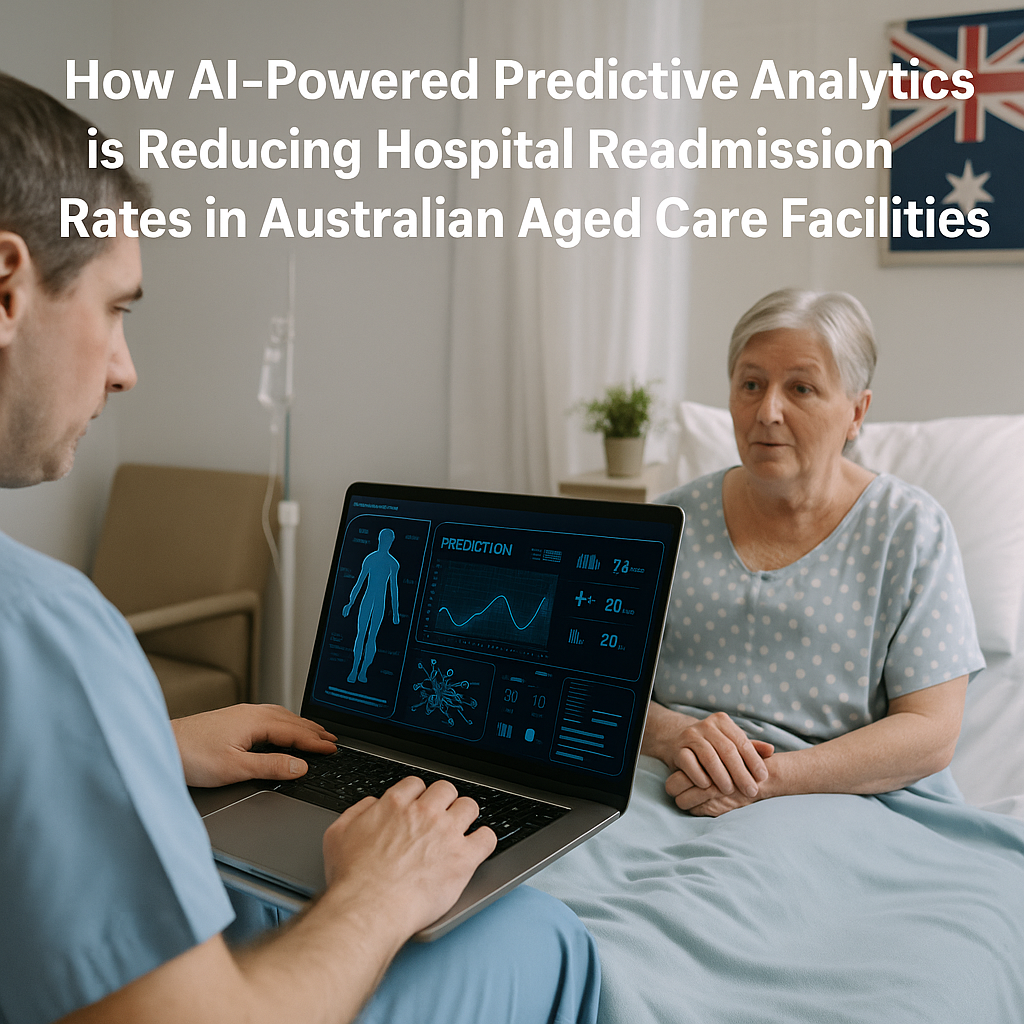
Predictive analytics works a lot like weather forecasting. Instead of predicting rain, it predicts health events. It studies past and real-time data to spot who might need medical help soon, allowing staff to act early.
Key parts of this system include:
1. Machine learning that studies health patterns and gives residents a “risk score.”
2. Natural language processing that reads clinical notes to find warning signs.
3. Sensors that monitor movement, sleep, and vital signs.
4. Cloud platforms that connect different health systems so data flows easily.
5. Digital twins—virtual models of residents’ health—to test care ideas safely.
6. Alerts and dashboards that notify staff in real time.
7. Telehealth tools that allow online medical reviews.
8. Monitoring of social and behavior patterns like appetite and activity.
9. Data checks to make sure predictions are accurate.
10. Clinical experts who review and confirm AI results.
The secret is joining smart technology with human care. AI works best when supported by the experience of nurses and doctors.
4. How AI Is Reducing Hospital Readmissions
Here’s how AI turns prediction into prevention:
1. It collects data from sensors and staff records.
2. It analyzes the data to find small changes that might mean a problem is coming.
3. It alerts staff when a risk level is high.
4. Nurses and doctors adjust care before things get worse.
5. The system tracks results to make sure care is improving.
Predictive analytics is changing aged care in many ways across Australia:
1. Finds early signs of health decline.
2. Uses motion sensors to predict falls.
3. Warns about flare-ups of chronic conditions.
4. Spots residents most at risk of infection.
5. Detects patterns of missed medications.
6. Supports remote health monitoring.
7. Shares hospital discharge updates quickly.
8. Keeps nurses informed with automatic alerts.
9. Helps plan staffing based on data.
10. Cuts down on unnecessary ambulance trips.
These tools help care teams stop problems before they grow. As the Health Informatics Society of Australia said, predictive analytics is “the stethoscope of the digital age.”
5. National Impact and Real Examples
The Department of Health and Aged Care shared results from pilot programs showing hospital readmissions dropping by up to 24%. Facilities in New South Wales, Victoria, and South Australia are already using predictive systems every day.
Great examples include:
1. Sydney North HealthConnect combined hospital and aged care data, reducing readmissions by 18%.
2. A digital twin trial in Adelaide tested medication plans virtually, cutting emergency transfers by 15%.
3. Melbourne’s Aged Care IoT Network used wearable devices to alert staff earlier, lowering night-time hospital trips.
These projects mean fewer emergency calls, smoother care transitions, and calmer, more confident staff.
6. The SMPLSINNOVATION Perspective – Simple, Smart, and Smiling
At SMPLSINNOVATION, we believe technology should make work easier, not harder. It should feel like a helpful teammate—smart, friendly, and always ready. We help aged care providers turn complex technology into simple everyday tools.
Here’s how we support them:
1. Custom dashboards that show each resident’s readmission risk in a clear way.
2. Training programs that make learning about AI fun and useful.
3. Ethical designs that keep predictions fair and transparent.
4. Workshops that connect old systems with new AI tools.
5. Ongoing improvement programs that help facilities get even better over time.
With the right support, predictive analytics doesn’t just change systems—it changes lives. It helps aged care homes stay safer, smarter, and more caring for every resident.