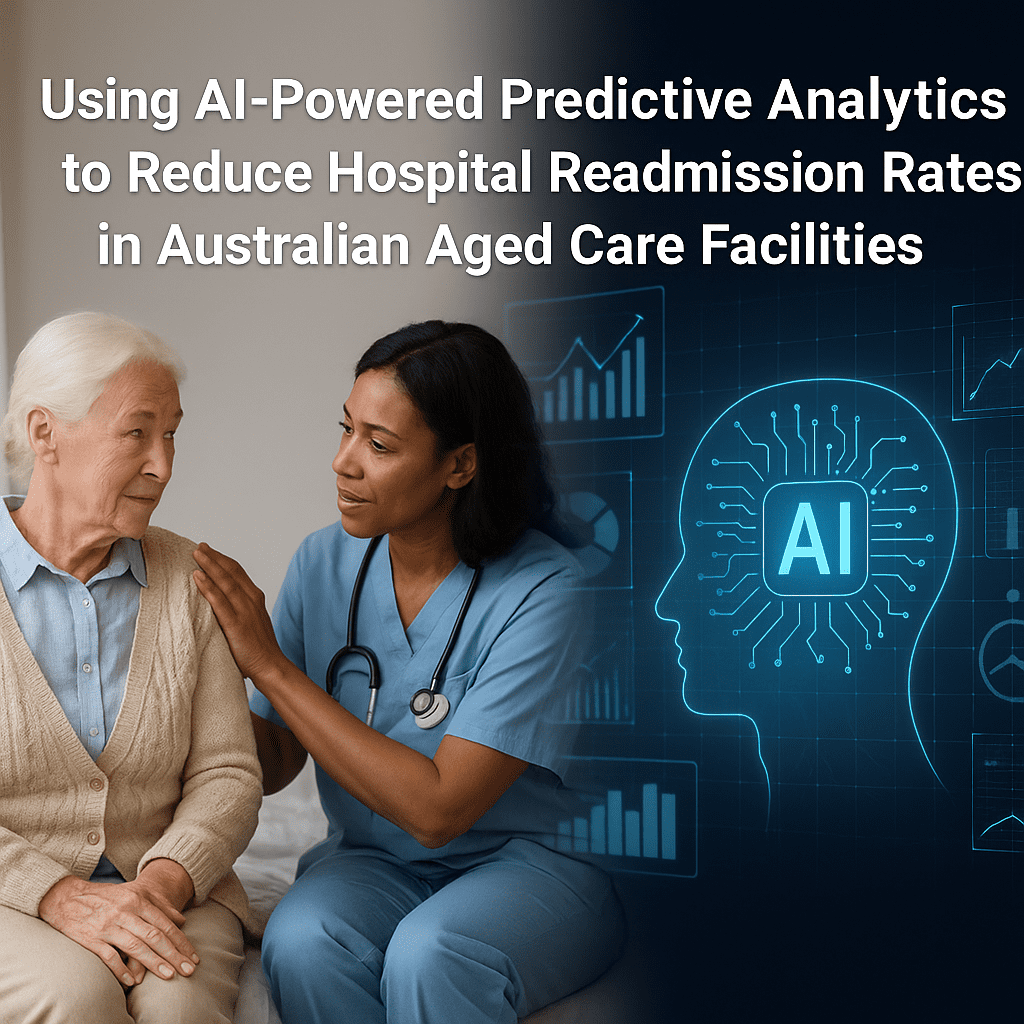
Using AI-Powered Predictive Analytics to Reduce Hospital Readmission Rates in Australian Aged Care Facilities
1. Introduction
If there’s one thing more unpredictable than Australian weather, it’s the health of an older resident after they leave the hospital. Many aged care homes feel stuck in a cycle of admit → discharge → readmit, which is challenging for everyone involved. Hospital readmissions don’t just put pressure on the health system; they also affect the residents’ quality of life and use up valuable resources.
The problem is that aged care homes across Australia still have high hospital readmission rates. But there’s a great opportunity in the growing connection between healthcare, artificial intelligence (AI), and data analytics.
As of May 2024, organisations like the Australian Digital Health Agency (ADHA), HealthDirect, and CSIRO’s eHealth Research Centre are exploring new ways AI can improve healthcare. From predictive analytics tools to telehealth projects, this change is being driven by technology as much as by people.
This article from SMPLSINNOVATION explains how AI-powered predictive analytics can help aged care facilities run better, improve resident outcomes, and meet Australian care standards.
2. The Current State of Readmission Rates in Aged Care
Hospital readmissions are common and cause many problems. Studies from the Australian Institute of Health and Welfare (2023–2024) show that about 20–25% of aged care residents are readmitted to hospital within 30 days of going home. That’s roughly one in four people, which is stressful for residents, families, and staff.
The main reasons for this include:
1. Ongoing health problems like heart failure, COPD, and diabetes.
2. Taking many different medicines at once (polypharmacy).
3. Trouble following medication plans or confusion about prescriptions.
4. Poor follow-up care after leaving the hospital.
5. Not enough staff in care homes.
6. Poor nutrition and hydration.
7. Loneliness and mental health challenges.
8. Weak communication between hospitals, GPs, and care homes.
9. No predictive systems to spot health decline early.
10. Poor data sharing between health providers.
Government plans like the National Aged Care Data Strategy (2023–2030) and upgrades to My Aged Care aim to improve how facilities use data, but predictive analytics is still developing.
3. Understanding AI-Powered Predictive Analytics in Healthcare
Predictive analytics means using past and current data to predict what might happen in the future. In aged care, this means using technology to find out which residents are most at risk of going back to hospital.
These systems use:
– Machine learning, which studies data to find patterns.
– AI algorithms that keep learning as more information is collected.
– Statistical models that calculate how likely a readmission is.
AI tools can work with electronic health records and other systems, using information from nurse notes, telehealth tools, wearables, and care rosters. For example, if a resident’s blood pressure changes, mobility decreases, and eating habits shift, the system can send an alert before the condition gets worse.
In short, predictive analytics helps staff act early instead of reacting once a resident is already unwell.
4. The Australian Context: Current Innovations (2024)
Australia is quickly becoming a leader in using AI in healthcare. Here are some examples from April to May 2024:
1. CSIRO’s Predictive Modelling for Aged Care Data Project – building national models using anonymous health data.
2. Northern Health’s AI Patient Flow Program – using AI to reduce emergency department pressure and prevent readmissions.
3. UNSW’s Aged Care Cognitive Analytics Initiative – studying how cognitive data can improve care planning.
4. NSW Telehealth Predictive Monitoring Trials – using home sensors and wearable devices to catch health decline early.
5. Queensland Digital Health Network – using AI to predict emergency demand.
6. National AI Centre’s Ethical AI in Healthcare Guidelines – making sure technology is used responsibly.
7. Digital Health CRC’s Chronic Disease Predictive Dataset – linking data to predict and prevent long-term illness.
8. SA Health’s Remote Monitoring Pilot – testing wearables in rural areas.
9. Victoria’s 2024 Aged Care Innovation Plan – funding studies on predictive analytics in aged care.
10. Aged Care Quality and Safety Commission – encouraging data-based approaches to manage risk and improve care.
These programs show how data, technology, and compassion can work together to make care better and more efficient.
5. Key Data Inputs and Modeling Techniques
For AI to make accurate predictions, it needs the right kind of data. It looks at many aspects of a resident’s life, not just medical results.
Key types of data include:
1. Vital signs and wearable data — heart rate, oxygen level, temperature.
2. Medication records — when medicines are missed or taken incorrectly.
3. Health history — including chronic conditions and mental health.
4. Staff workload and roster data — high workloads can affect care quality.
5. Nutrition and hydration — poor intake is often an early warning sign.
6. Social engagement — loneliness can harm physical and mental health.
7. Mobility and activity levels — less movement can mean health decline.
8. Sleep patterns — tiredness can signal problems.
9. Environmental data — room temperature, falls, and movement alerts.
10. Past readmission data — previous cases help the system learn.
Common prediction methods include logistic regression, neural networks, random forests, natural language processing, and combining multiple models for better results.
6. Practical Impact: From Prediction to Prevention
With predictive analytics, aged care homes can shift from reacting to problems to preventing them. Reports from pilot programs show:
– A 30–40% drop in unplanned hospital readmissions.
– Faster action because of real-time alerts.
– Better teamwork through shared data systems.
– More confidence for staff, as decisions are based on clear insights.
– Easier compliance with national standards, since actions are recorded accurately.
In simpler terms, predictive analytics helps every member of staff make smarter, faster, and safer decisions.
7. Implementation Challenges and Ethical Guardrails
Predictive analytics is powerful, but it’s not perfect. Some challenges include:
1. Systems not connecting smoothly between hospitals and aged care homes.
2. Managing privacy and consent for residents.
3. Algorithm bias that can unfairly affect certain groups.
4. Staff needing time and training to learn new systems.
5. The cost of setting up and maintaining technology.
6. Cybersecurity risks from connected devices.
7. Relying too much on machines instead of human judgment.
8. Difficulty connecting new tools with older software.
9. Making sure AI decisions are transparent and can be explained.
10. Adapting technology for different regions and facility types.
The National AI Centre and Digital Health CRC are leading work to make sure AI in healthcare stays ethical, fair, and transparent.
8. The Future: Smarter Aged Care, Happier Residents
Imagine aged care homes where every decision is guided by smart, preventive insights. Health issues can be caught before they become serious. Medication can be adjusted according to real risk scores. Staff can focus on care, not just paperwork.
With AI-powered predictive analytics, Australia’s aged care sector can build a future where residents are healthier, care teams are stronger, and hospitals see far fewer unnecessary readmissions.