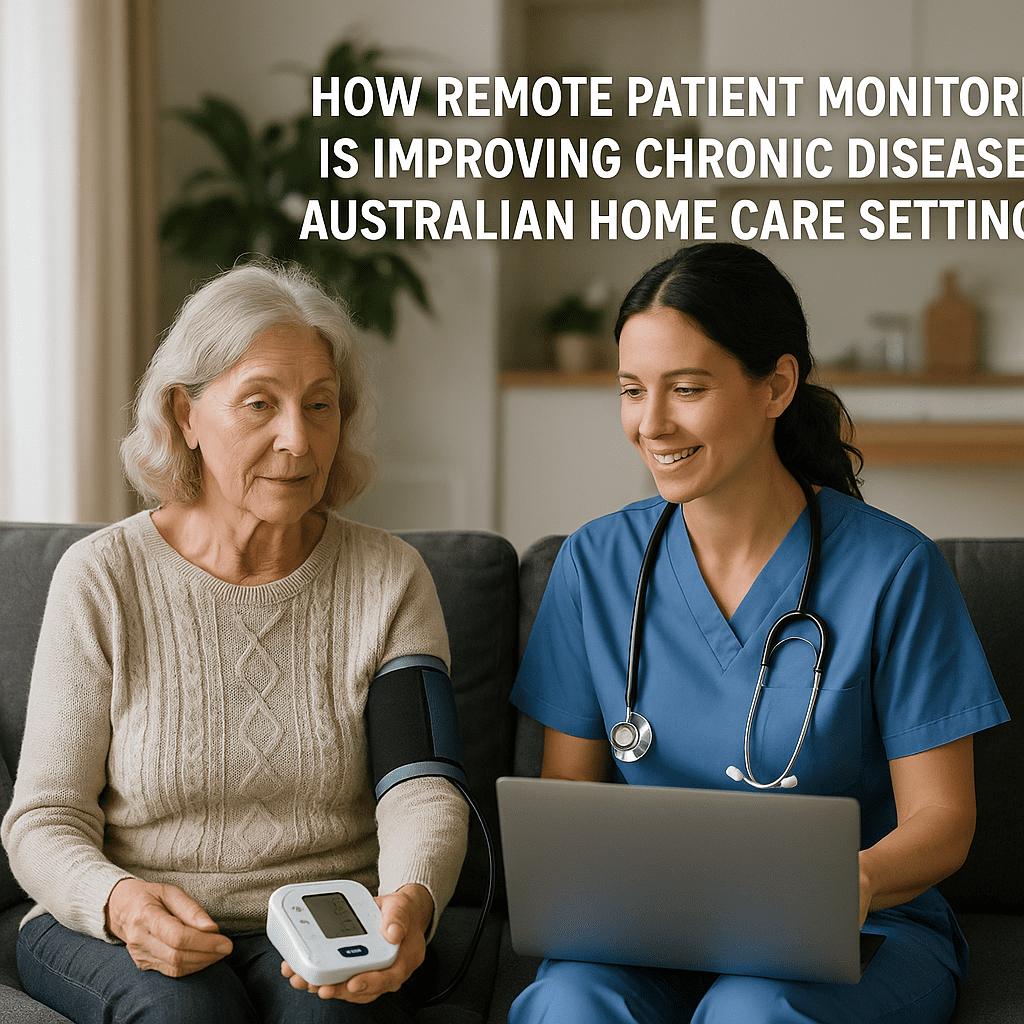
How Remote Patient Monitoring is Improving Chronic Disease Management in Australian Home Care Settings
By SMPLSINNOVATION – Making health tech as simple as it sounds
1. Introduction
Australia’s healthcare system is changing fast. Chronic conditions like diabetes, heart failure, and COPD are on the rise, putting more pressure on doctors, nurses, and hospitals. The Australian Institute of Health and Welfare (AIHW) 2024 report says that nearly half of all Australians have at least one long-term condition. That means lots of doctor visits, medication reminders, and tests.
That’s where Remote Patient Monitoring, or RPM, comes in. It’s like a high-tech helper that allows doctors to keep track of patients’ health from afar. With RPM, medical teams can see important health signs on their screens any time of day. For home care providers, it’s a bit like having a nurse in every home—without the extra small talk.
2. Understanding Remote Patient Monitoring (RPM)
So, what is RPM? In simple terms, Remote Patient Monitoring uses smart devices to track patients’ health data while they stay at home instead of visiting a clinic. Think of wearable watches, smart scales, or apps that send information straight to doctors.
The main jobs of RPM are:
– Collecting health information like heart rate, blood sugar, and oxygen levels
– Sending that data safely to healthcare teams
– Giving real-time updates and alerts so problems can be fixed early
Key tools used in RPM include:
1. Wearable sensors like smartwatches and ECG patches
2. Connected medical devices like blood pressure monitors and glucose meters
3. Digital health platforms like apps and dashboards for doctors and patients
The information travels through secure networks to cloud systems, where doctors and computer programs analyse it. This helps them catch health problems early—before they turn into emergencies.
3. The Chronic Disease Burden in Australia
Australia’s health system is stretched thin. The AIHW 2024 data shows:
– More than 47% of adults have one or more chronic conditions
– Chronic diseases cause about 87% of all deaths
– Hospital readmissions for diabetic and COPD patients have gone up by 12% in five years
These numbers show we need better care outside hospitals. Managing disease doesn’t end at the doctor’s office—it continues every day at home. Remote Patient Monitoring helps by giving patients more control and helping doctors focus on those who need face-to-face care the most.
4. Policy and Framework Overview (Australia, 2024)
Australia’s digital health system is growing stronger. The Australian Digital Health Agency (ADHA) is leading several key projects:
– My Health Record now connects with RPM tools, helping doctors see the full picture of a patient’s health
– The 2024 Telehealth Expansion and Remote Care Pilot is testing large-scale remote care in rural and Indigenous communities
– The National Interoperability Framework makes sure all devices and apps work well together
– New government grants help home care providers start using RPM systems
All of these changes show that Australia is committed to digital, patient-first healthcare—something SMPLSINNOVATION supports every day.
5. Technologies Driving RPM in Home Care
RPM uses a range of clever devices to make remote care possible anywhere in Australia.
Ten key technologies shaping RPM today include:
1. Bluetooth blood glucose monitors
2. Smart blood pressure cuffs
3. Wearable heart and ECG monitors
4. Pulse oximeters that connect to the cloud
5. Smart medication reminders
6. AI dashboards that predict health risks
7. Telehealth platforms that combine video and data
8. Mobile apps that help patients track their own health
9. Home test kits for blood or urine samples
10. Secure messaging tools for doctors and carers
Together, these tools help create a healthcare system that’s smarter and more connected than ever.
6. Benefits of RPM in Chronic Disease Management
RPM isn’t just fancy technology—it delivers real results. Research between January and June 2024 found:
1. Hospital readmissions dropped by 25% among heart failure patients
2. Patients remembered to take their medicine more often
3. Early signs of health problems were caught sooner
4. Patients felt more involved in their care
5. Access to care improved in rural areas
6. Doctors had more time for complex cases
7. Data accuracy improved, reducing guesswork
8. Better teamwork between doctors, specialists, and carers
9. Lower costs from fewer hospital visits
10. Happier patients with better quality of life
RPM helps shift healthcare from reacting to problems to preventing them.
7. Case Studies: Successful RPM Implementations in Australia
Home Care NSW – Heart Failure Pilot (2024):
This program enrolled 250 heart failure patients using wearable ECG patches. After six months, hospital readmissions dropped by 30%, and patients took their medicine 18% more often. Nurses said it gave them a clearer view of patient health.
Western Australia Chronic Care Connect:
This program in Perth used pulse oximeters and smart blood pressure cuffs for COPD patients. There was a 22% drop in emergency visits and an average satisfaction score of 9.4 out of 10.
Queensland Rural Telemonitoring Expansion:
This project brought wearable monitoring to remote towns like Longreach and Mt Isa. The program reduced travel costs and improved results for Indigenous patients.
These examples show that RPM is already making a big difference across Australia.
8. The Role of Consulting and Implementation Support
Starting with RPM isn’t just about buying gadgets online. Health providers must connect systems, follow rules, and train staff. That’s where SMPLSINNOVATION helps.
We support healthcare teams by:
1. Making complex technology simple to use
2. Customising integrations so new tools link with current systems
3. Training staff and improving workflows for smooth change
We take the stress out of using new health technology so that care teams can focus on what matters most—patients.
9. Future Outlook
The next wave of Remote Patient Monitoring in Australia will include:
– AI that predicts health issues before they happen
– Faster 5G connections for live, high-quality healthcare data
– New funding options through Medicare
– Patients leading the way with their own health apps and tools
By 2030, RPM will likely be a must-have for modern healthcare. Australia is on track to become a world leader in connected and proactive care.
10. Conclusion
Remote Patient Monitoring is changing how healthcare works in Australia. It helps people with chronic illnesses manage their health from home, keeps doctors in the loop, and reduces hospital pressure. From busy cities to the Outback, RPM is making care easier, faster, and smarter for everyone.