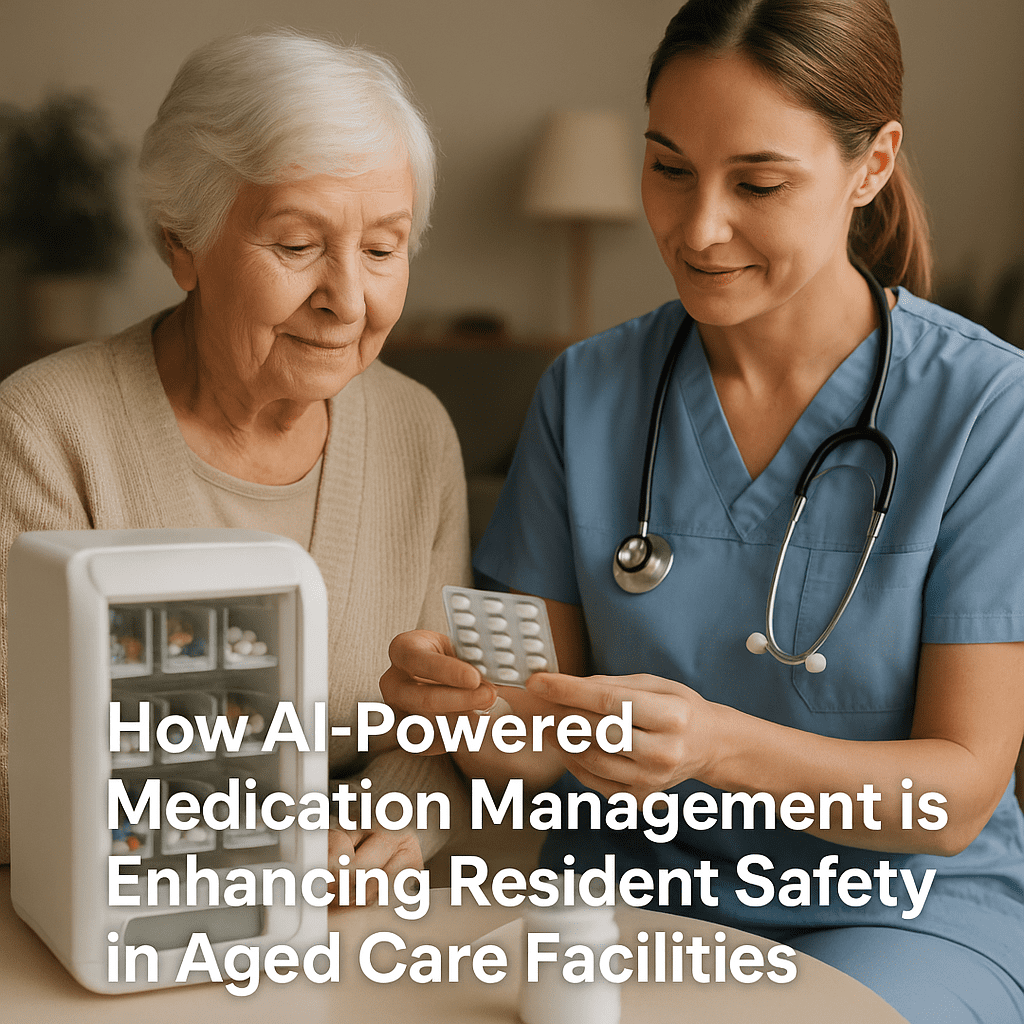
How AI-Powered Medication Management is Making Aged Care Safer
By SMPLSINNOVATION Health Tech Consulting Team
—
I. Introduction
Imagine trying to keep track of hundreds of medicine doses every day. Prescriptions change often, pill boxes look like colorful puzzles, and the paperwork never seems to end. That’s what a normal medication round looks like in a nursing home.
As the world’s population gets older, keeping medicines safe and accurate in aged care homes has become more important than ever. The World Health Organization (WHO) says that medication mistakes are one of the main causes of preventable harm for older adults. These mistakes send thousands of people to the hospital each year. Many older residents take more than ten medicines every day, which makes it easy for things to go wrong.
But there’s good news! Artificial Intelligence (AI) is helping care teams work smarter. AI-powered medication systems can make medication use safer, faster, and easier. Nurses feel less pressure, and residents stay safer.
This article explains how AI technologies are changing the way aged care homes manage medicine around the world. Don’t worry—no robot nurses are taking over just yet!
—
II. The Current Situation in Medication Safety
Before we look at the new technology, it’s important to know where things stand now.
Medication Error Statistics
According to the WHO’s 2024 report, about one in ten older adults in care homes experience some kind of harm from their medicines. Half of these cases could have been prevented.
Main Causes of Mistakes
1. Many Medicines: The average resident takes more than eight medicines a day. That’s a lot to manage.
2. Human Error: Even careful caregivers can misread a prescription or forget a dose when things get busy.
3. Paper Records: Handwritten notes can be messy and hard to read, leading to confusion and missed information.
Government Action
Governments are working to fix this. Australia’s Aged Care Digital Transformation Plan and the UK’s NHS Medication Safety Mandate both encourage safe, digital, and connected systems that include AI tools.
Old Systems Still in Use
Even so, many aged care homes still use outdated or separate systems. Doctors, pharmacists, and caregivers often use different databases, causing mix-ups and delays.
It’s clear that aged care needs a smarter, connected way to manage medicines.
—
III. How AI Helps Keep Medication Safe
AI may sound complicated, but it’s already making a big difference. Here are ten ways AI is helping aged care homes stay safe and organized:
1. Predictive analytics helps find the right dose for each person.
2. Natural language tools read and translate messy handwritten prescriptions.
3. Machine learning detects dangerous drug combinations.
4. Computer vision checks pills to make sure they are the right color and size.
5. Smart electronic health records keep everyone updated in real time.
6. Automated systems remind staff and residents about missed doses.
7. Robotic medicine cabinets sort and check meds with barcodes or facial scans.
8. Voice assistants help nurses confirm orders hands-free.
9. Secure networks protect and check communication between teams.
10. AI systems learn and improve with every new data point.
These tools are already being used in real aged care homes around the world.
—
IV. The Real Benefits of AI in Aged Care
Recent studies from Nature Digital Medicine and McKinsey HealthTech Insights show major improvements in homes using AI in 2024.
Fewer Medication Errors
AI systems have lowered medicine errors by 35–50%. Some facilities saw 60% fewer problems with dosages.
Better Resident Health
Residents in AI-assisted homes had 20% fewer medication-related hospital visits. Staff can now find and fix problems early.
More Time for Care
AI saves nurses 2–4 hours per shift by reducing paperwork and communication delays. That means more time with residents and less stress.
Smarter Monitoring
AI uses data to find risk patterns before they turn into harm. Administrators can spot problem areas early and act fast.
AI is turning medication safety from a reaction to a prevention process.
—
V. Real-World Examples
Here’s how different countries are using AI to improve care:
1. Australia: AI systems with barcode scanners cut medicine errors by 42% in six months.
2. United Kingdom: Camera tracking apps confirm that residents take the right pills, improving follow-through by 33%.
3. United States: Predictive models warn doctors early about risky medicine mixes.
4. Singapore: Robots with AI check packaging for mistakes, saving time and money.
5. Scandinavia: Data-sharing programs connect facilities and track safety improvements.
6. Japan: Voice assistants remind seniors to take their meds, especially in remote areas.
7. Canada: AI tools help doctors reduce unnecessary prescriptions and lower pharmacy costs.
In all of these examples, AI supports people instead of replacing them. Nurses feel calmer, pharmacists stay connected, and residents are safer.
—
VI. What’s Next for AI in Medication Management
At SMPLSINNOVATION, we’ve worked with many care homes to turn big health tech ideas into real improvements. We like to say that AI is the only staff member who never calls in sick—but it’s true, it helps make care more reliable.
Here are three exciting next steps in AI for aged care:
1. Personal medication plans that match each person’s genetics and lifestyle.
2. Friendly voice companions that remind residents when to take their medicine.
3. Truly connected systems that link hospitals, pharmacies, and care homes.
The goal is to use AI to support safety and dignity, not to replace human care.
—
VII. The SMPLSINNOVATION Approach
Choosing the right technology can be hard. Every care facility has different needs, from poor internet connections to staff who still prefer clipboards. That’s where we help.
At SMPLSINNOVATION, we:
– Assess how ready a facility is for AI and plan digital upgrades.
– Connect providers with safe, approved health tech vendors.
– Offer training and support so staff can use new systems confidently.
For us, it’s not about how smart the system is—it’s about improving care, preventing harm, and giving staff more time to care for people.
—
VIII. Conclusion
AI-powered medication management is no longer just a trend—it’s becoming the new normal. From automatic pill dispensers to advanced safety dashboards, every step forward leads to one clear goal: better care through smarter systems.
As more aged care homes embrace AI, we’ll see fewer mistakes, happier caregivers, and healthier residents.
The tools may be digital, but the result is deeply human.